

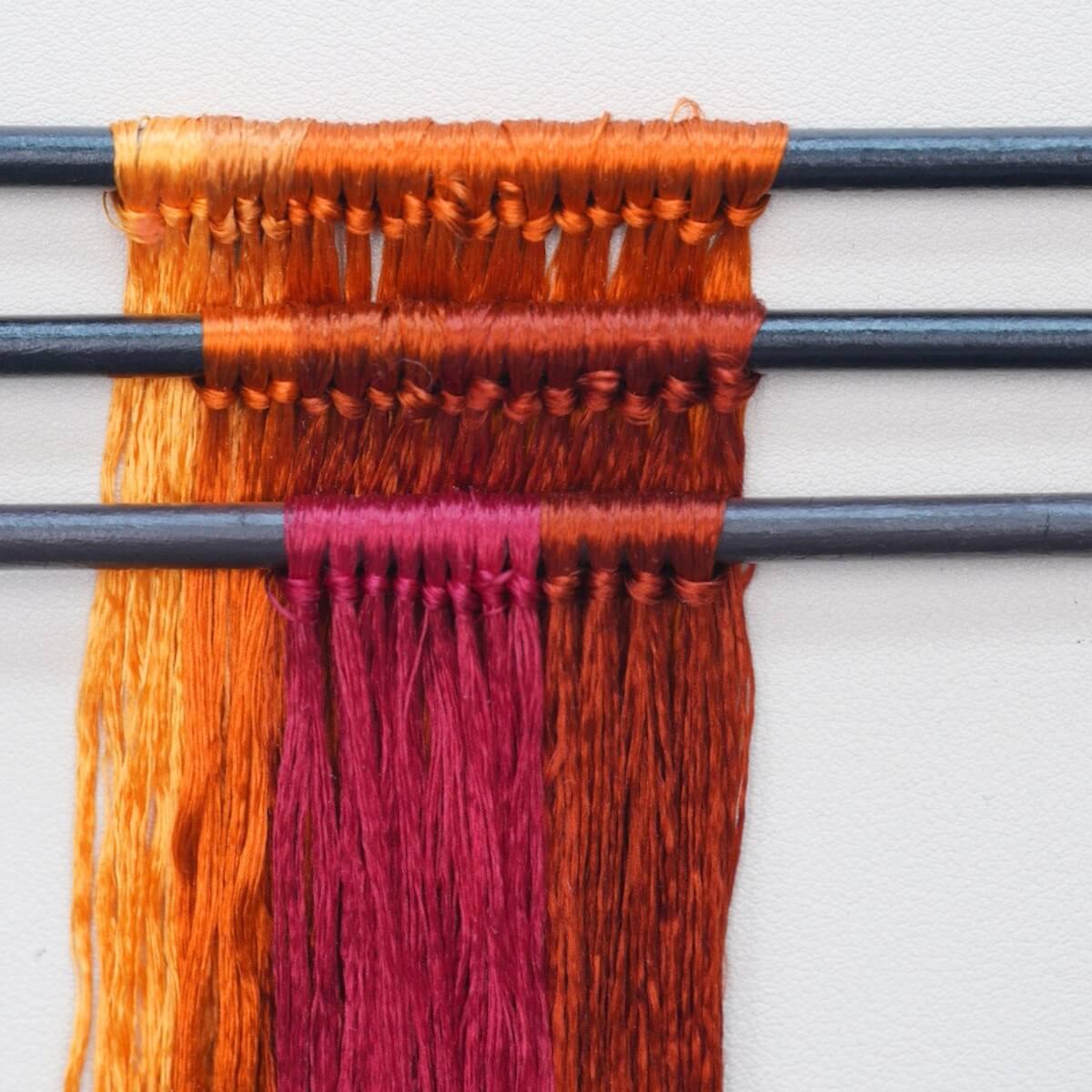
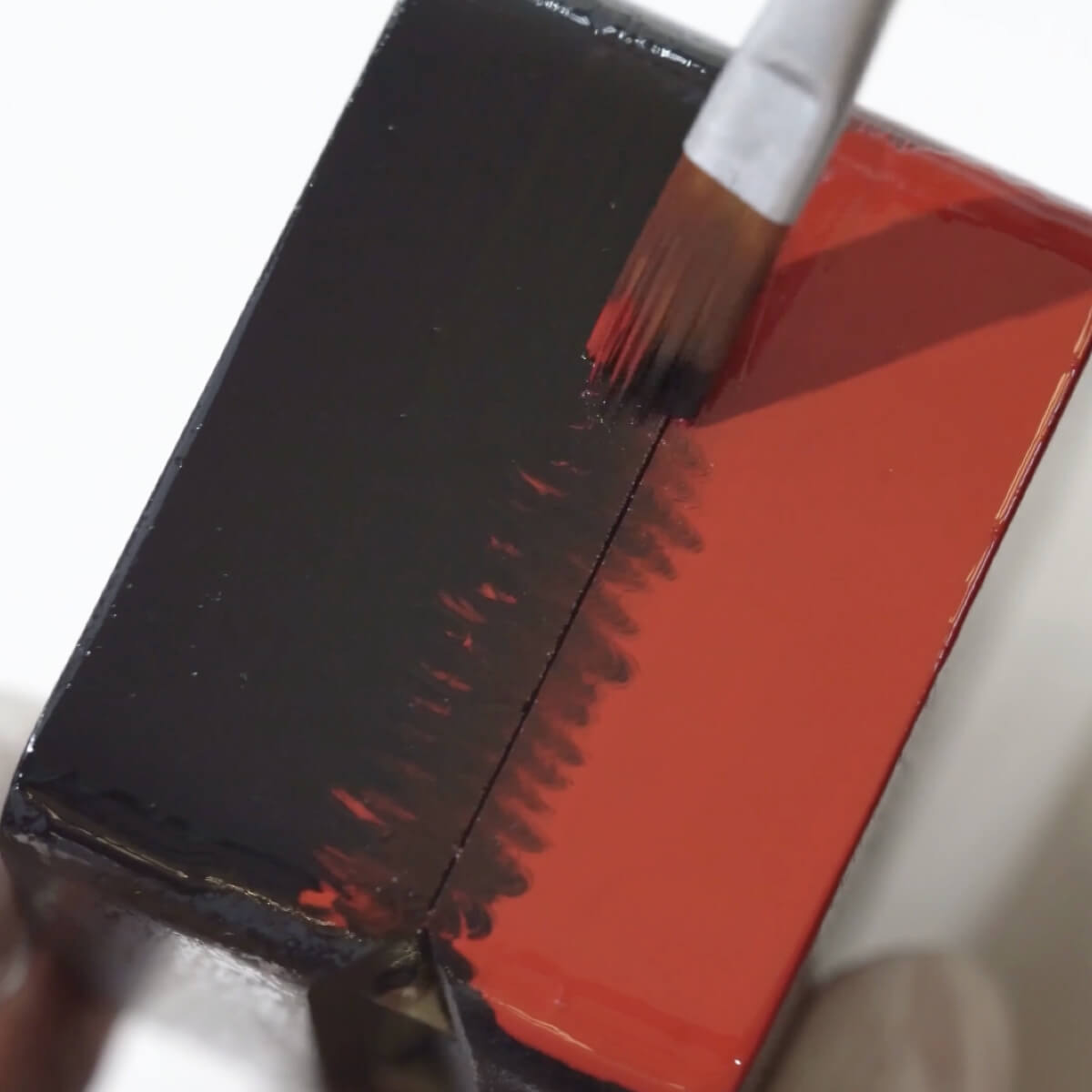
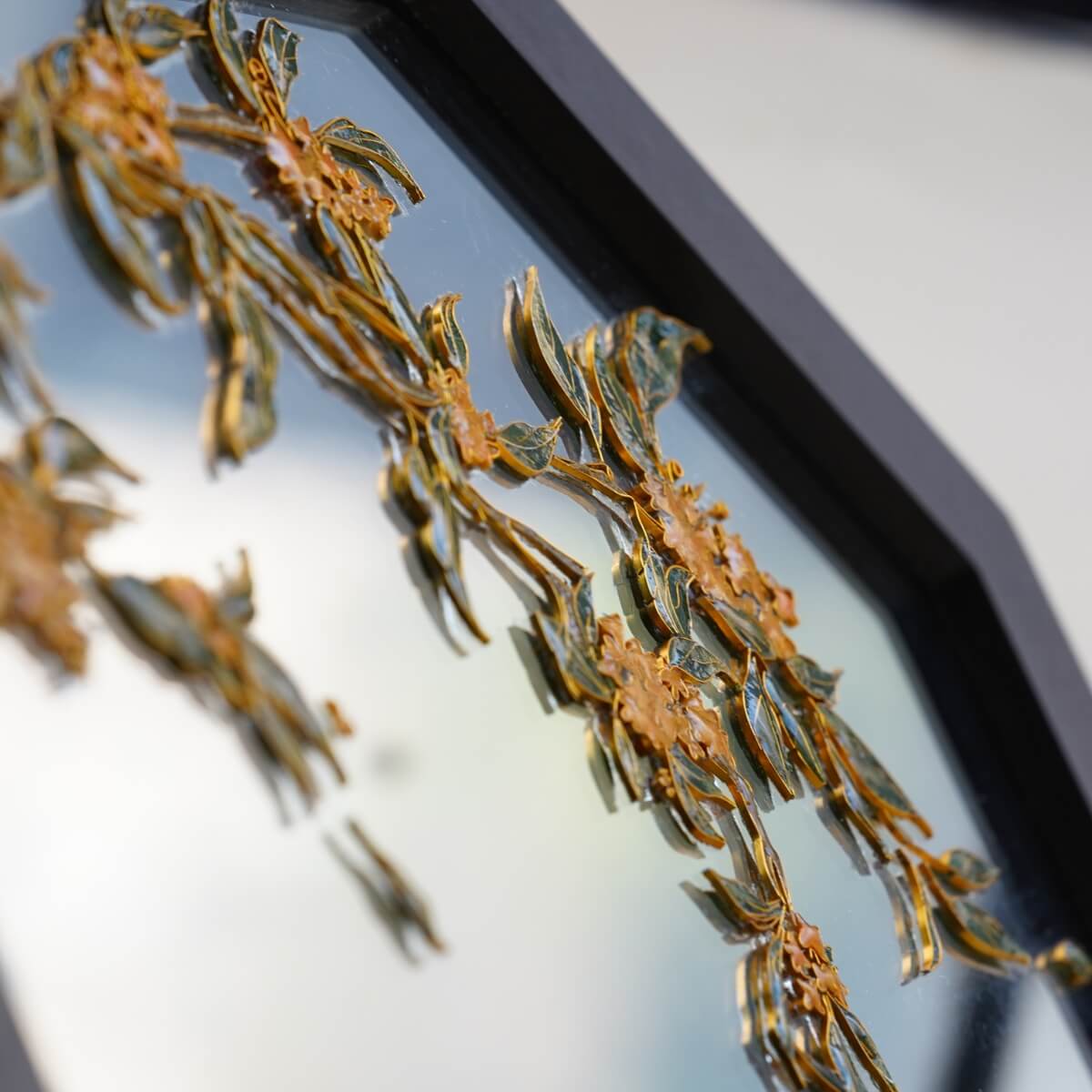
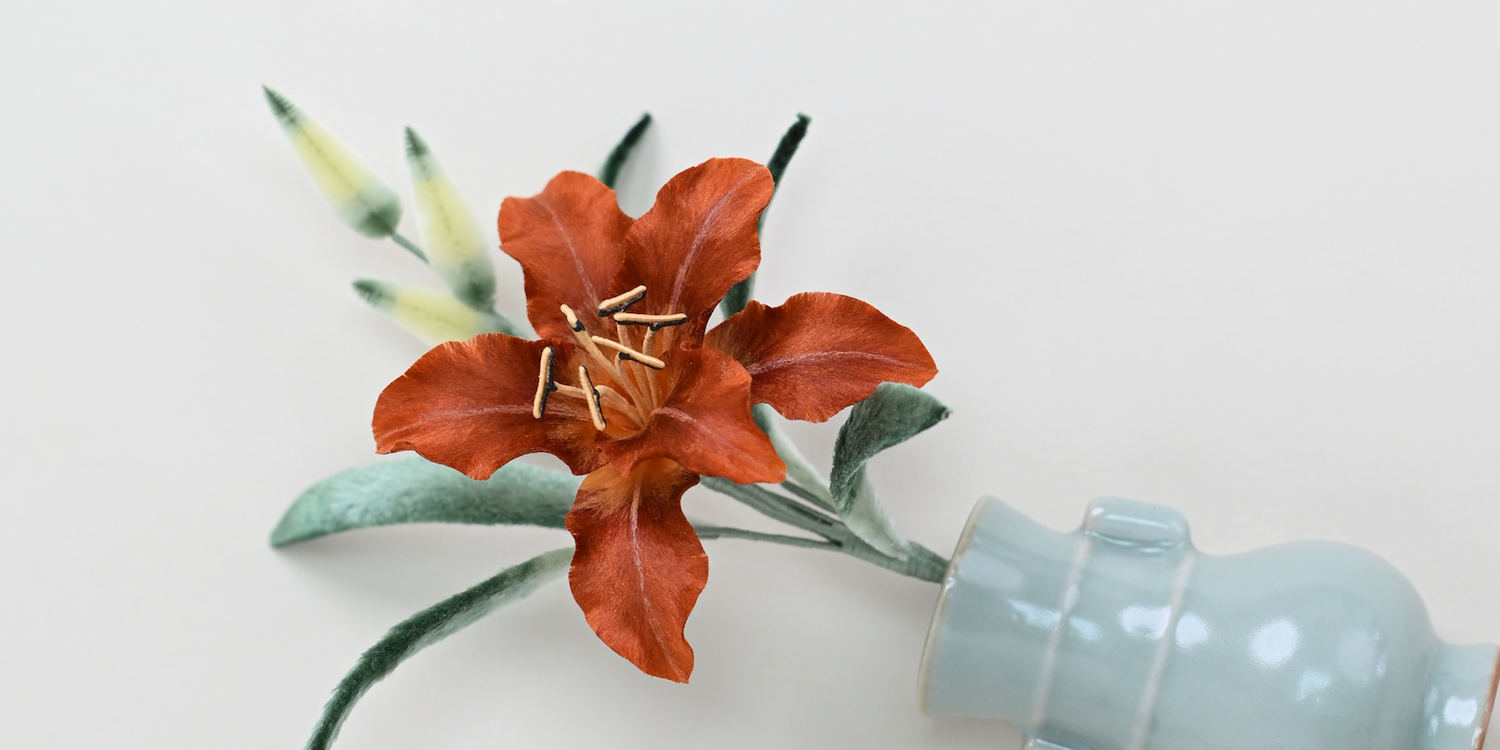
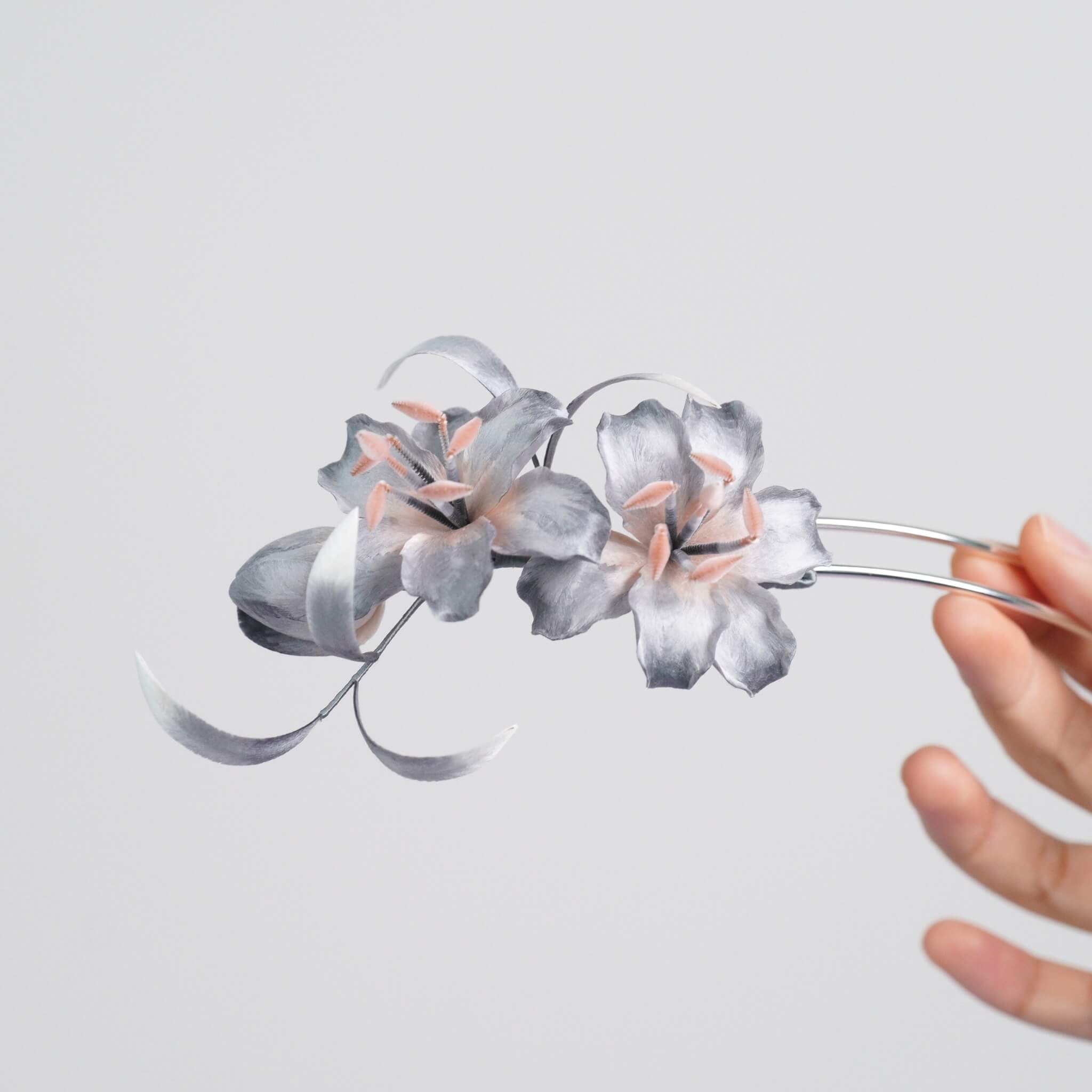
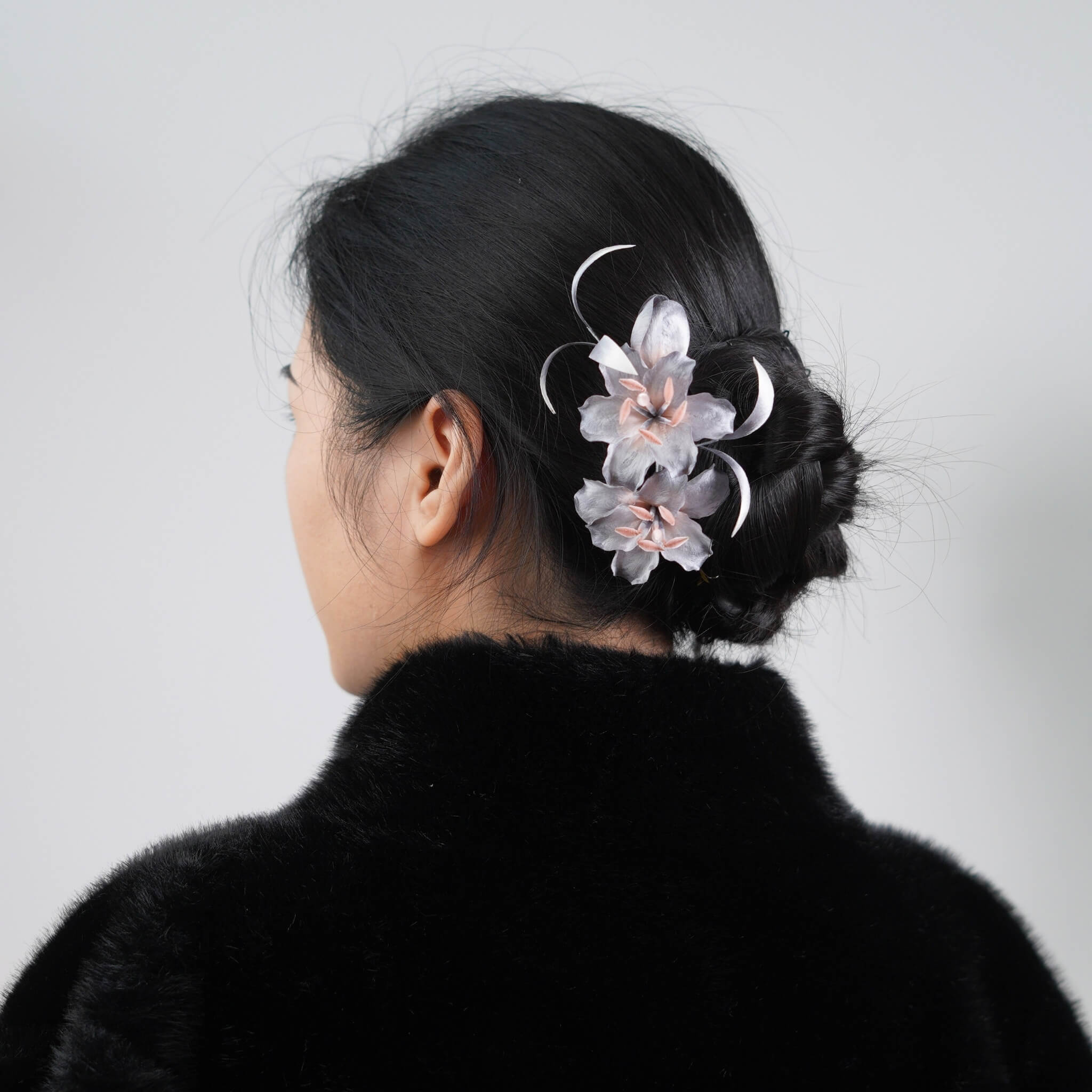
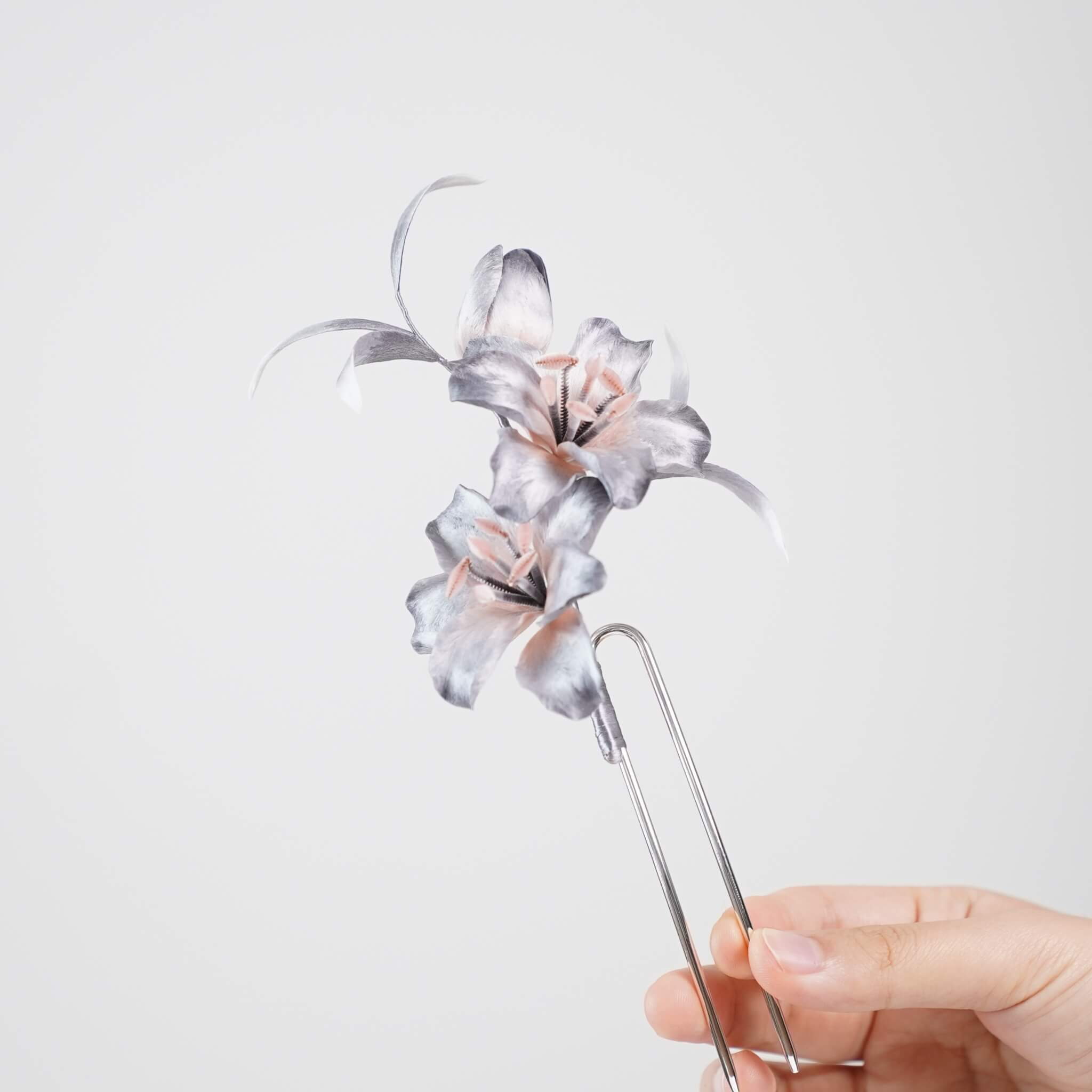
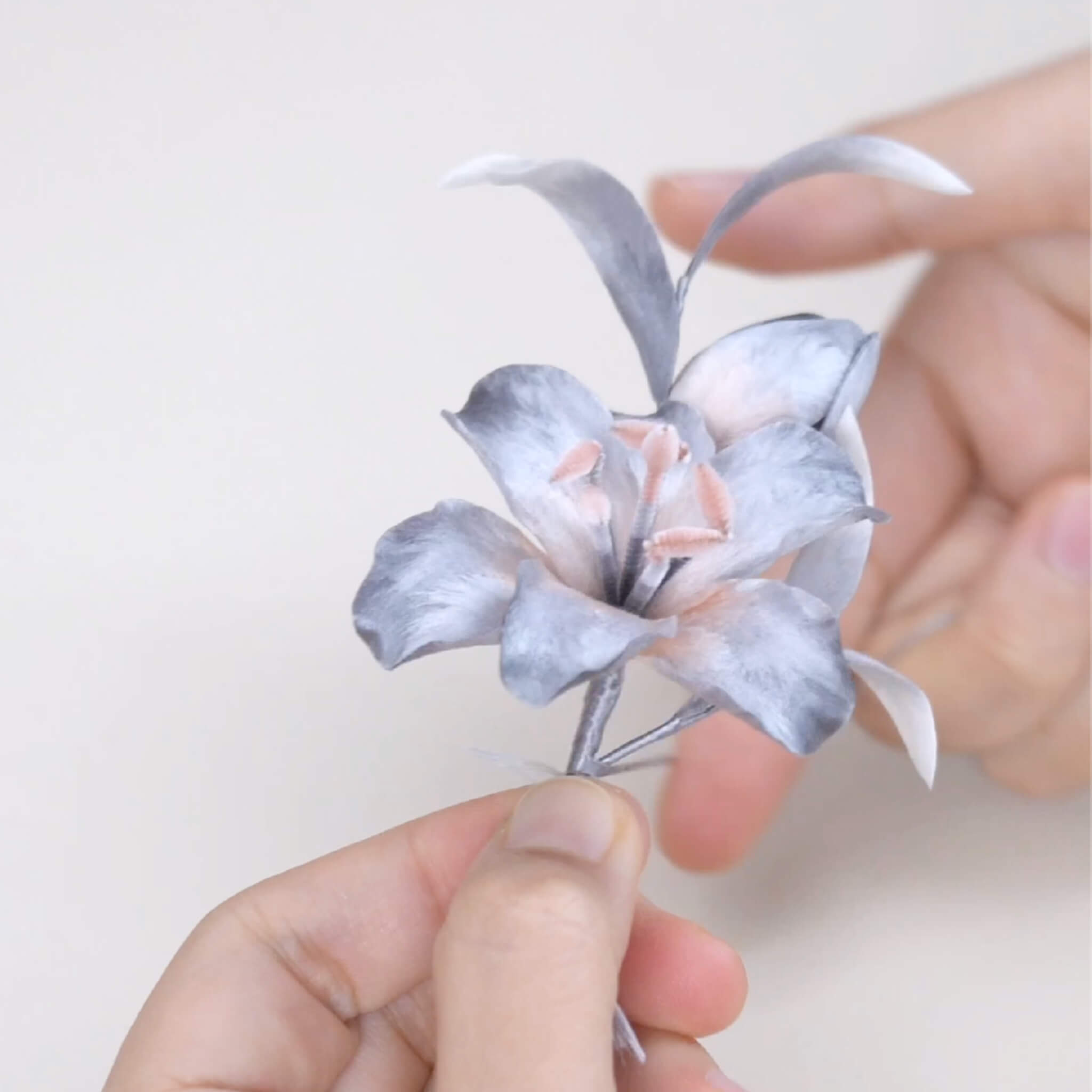
The daylily brooch is inspired by the gentle elegance of 萱草, a flower long loved in Chinese culture. Traditionally associated with comfort, longing, and blessings for family, daylilies often appear in poetry and classical gardens for their quiet, graceful beauty.
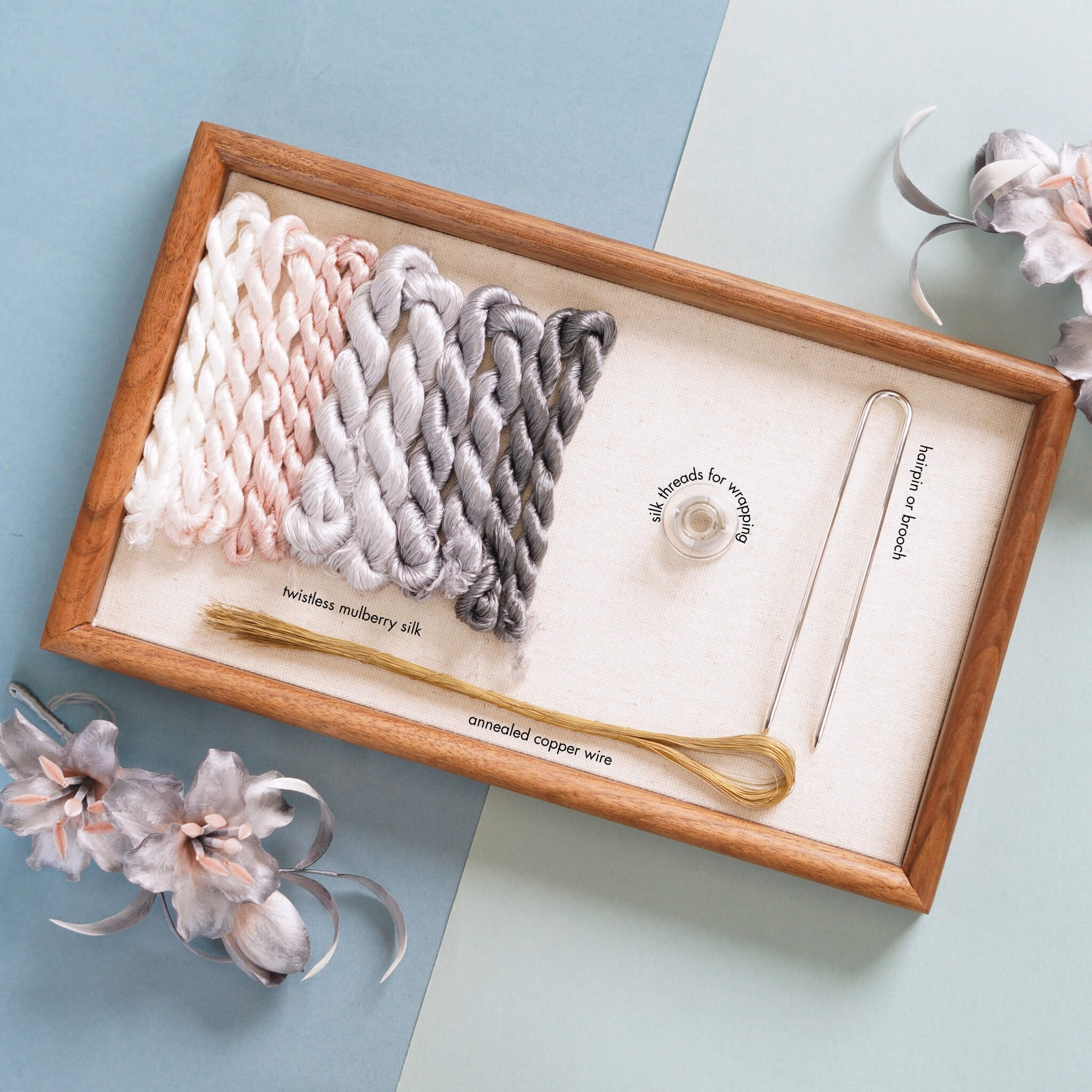
Preparations: What You’ll Need
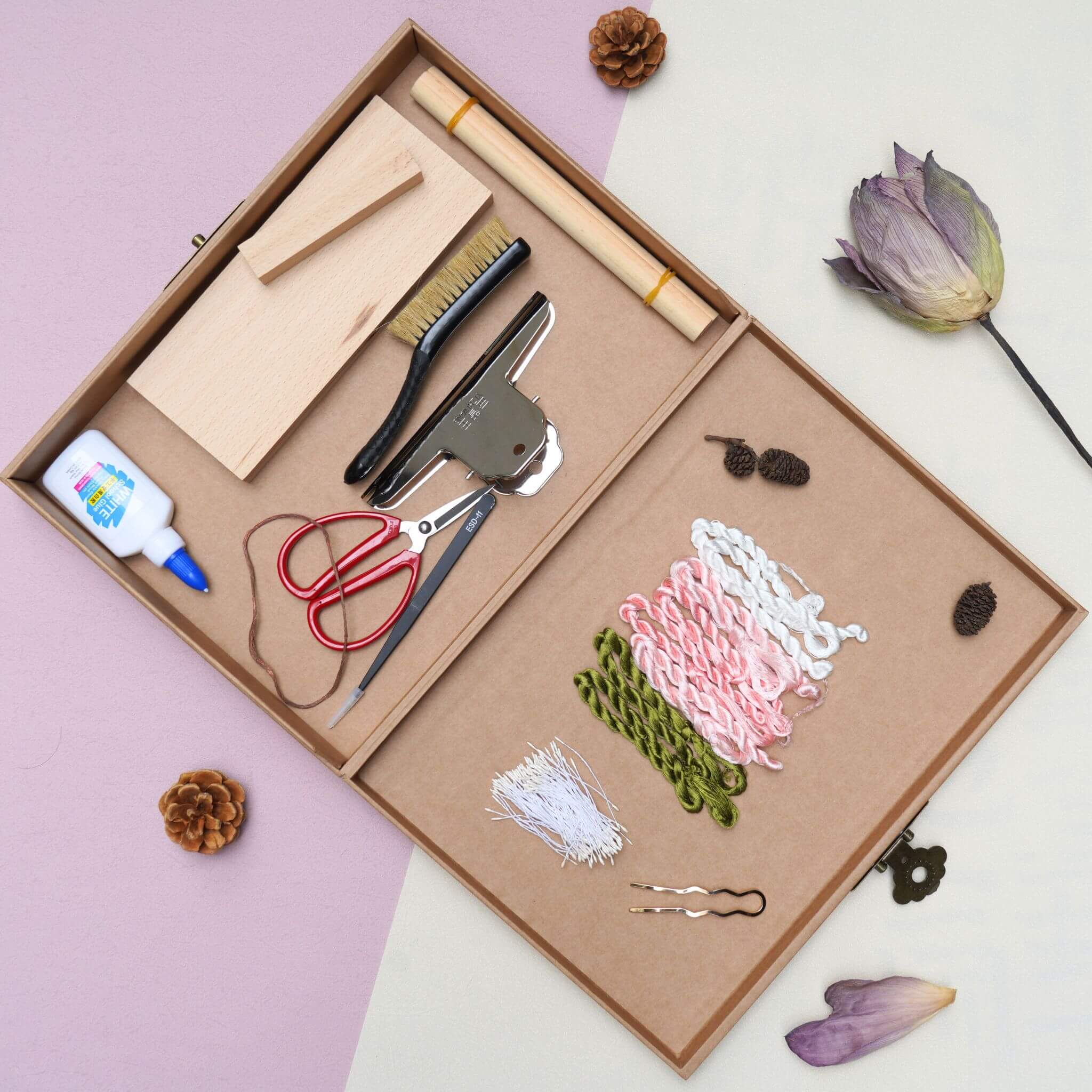
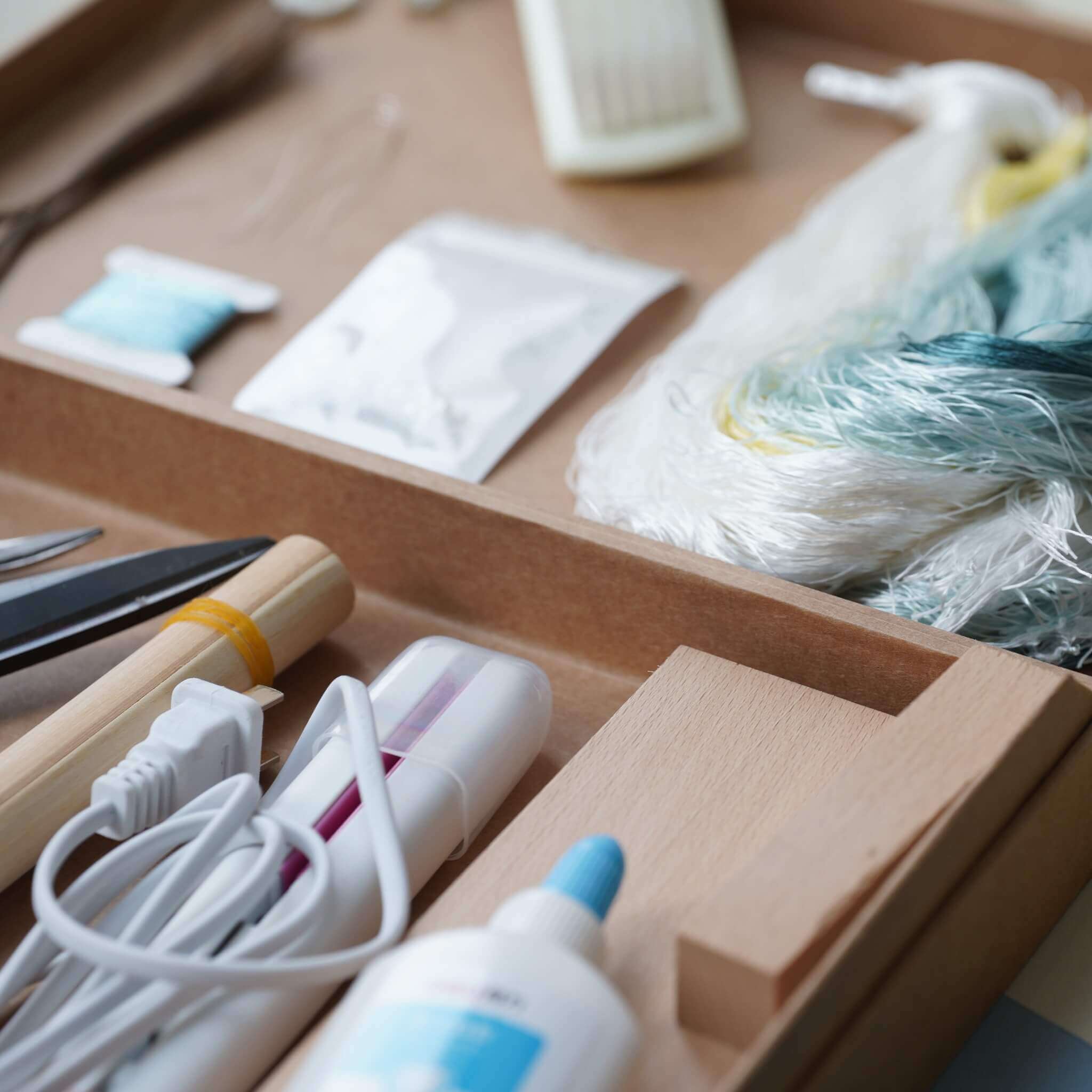
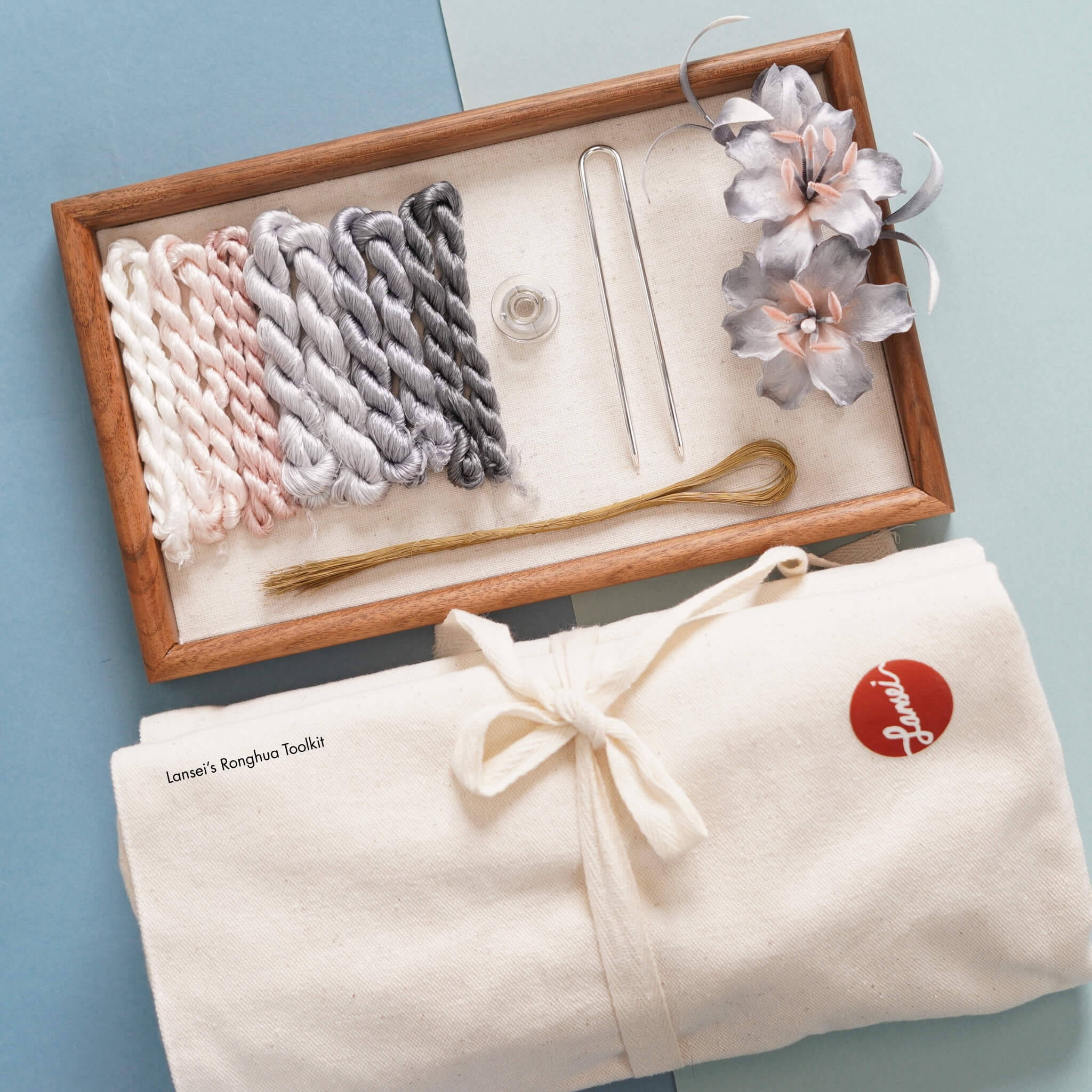
If you’ve purchased our Ronghua Toolkit, you already have everything required!
If not, prepare the following tools:
- Bristle brush (Medium to soft hardness)
- Flat iron (the one you use to straighten your hair)
- Tweezers
- At least 2 pairs of Scissors
- wooden sticks / pencils / chopsticks
- Hair spray or diluted white glue (1:2-1:3 with water or alcohol)
- Big clips (around 15cm)
- Twisting boards and wooden blocks (for even tension)
- Anti-slip powder (optional but helpful)
Full Tutorial Video
Step 1. Align and Arrange the Silk Threads
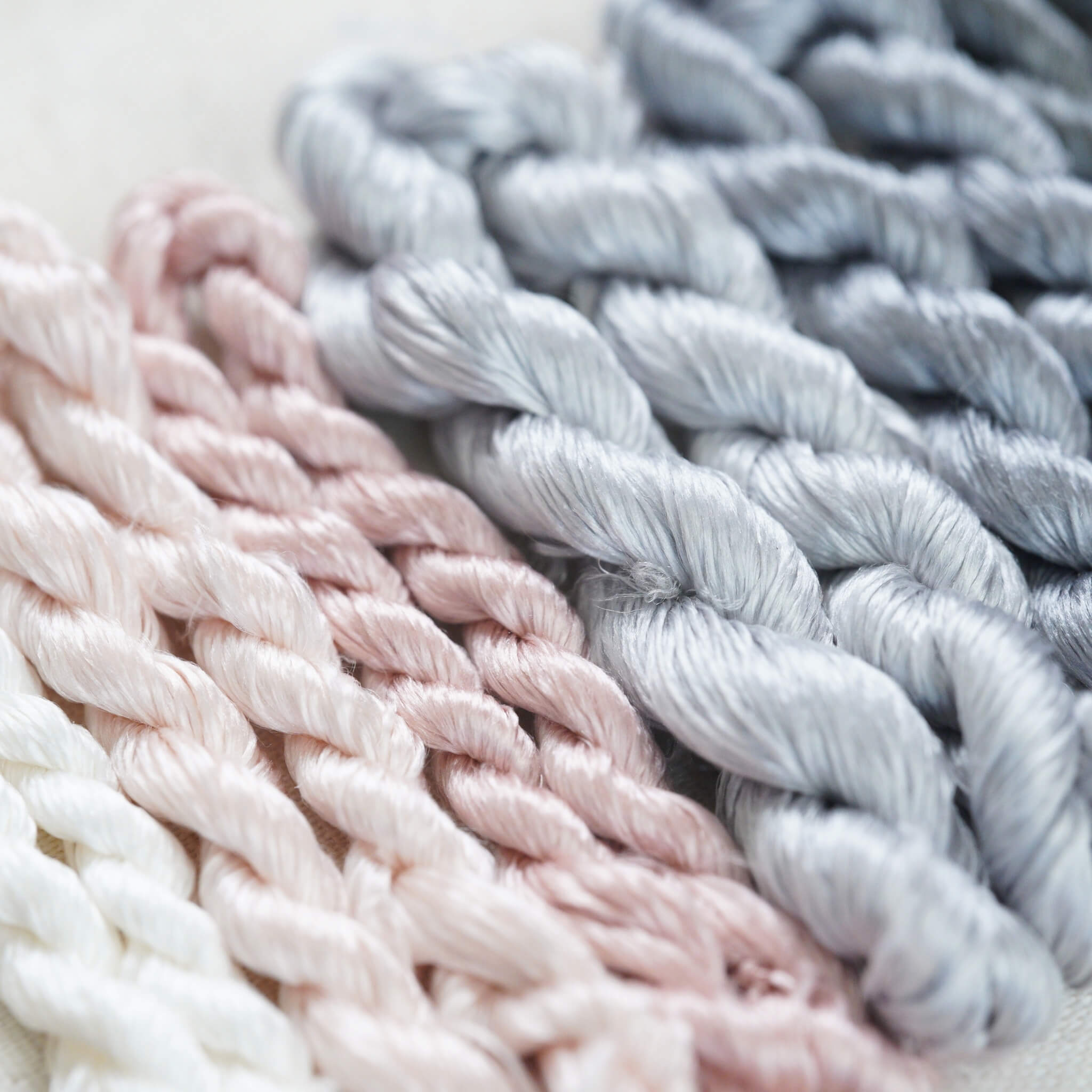
Untie your silk threads and locate the knot at one end of each bundle. Cut it open carefully, keeping the strands stretched straight. Refer to the project diagram for the color combinations needed for the petals, buds, and leaves. For silk thread used for every row, you need to cut them in half once again.

Step 2. Group and Prepare the Threads
Divide the bundles into smaller, manageable groups. Align all strands neatly and tie them around a thin stick or pencil, keeping the ends perfectly even to ensure a consistent texture when brushing.

Step 3. Make Silk Rows
Repeat the grouping process to create your silk rows. You will need separate rows for the petals, buds, and leaves. Ensure the threads are evenly distributed across the rows. Below are the examples of finished rows we made.

Step 4. Brush the Silk
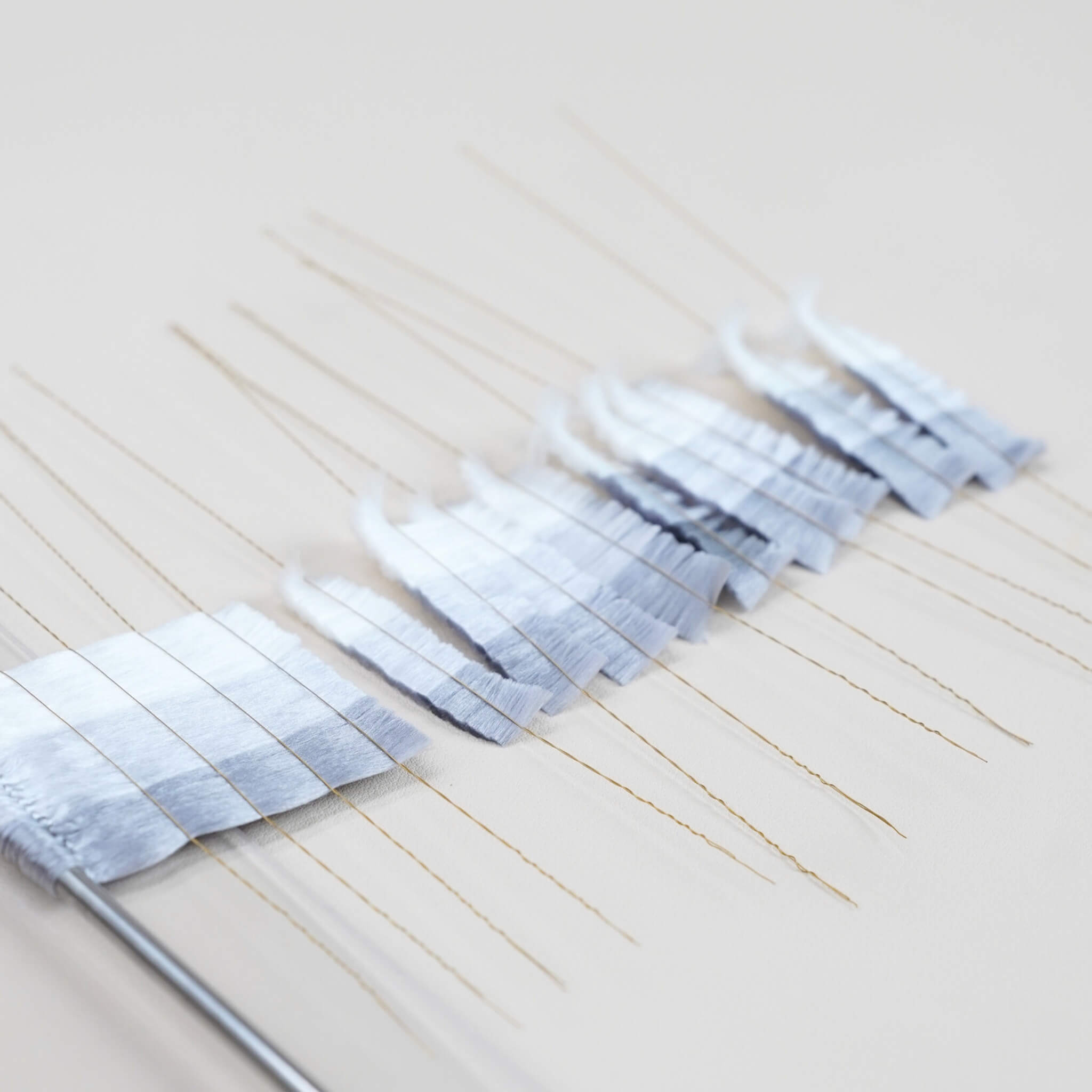
Secure your silk rows to a stand or frame. Use your bristle brush to comb the silk thoroughly from top to bottom until it is smooth, fluffy, and free of tangles. If the silk becomes static, lightly mist the air with water.

Here is how it should look like when you finish brushing.

Step 5. Attach Copper Wires
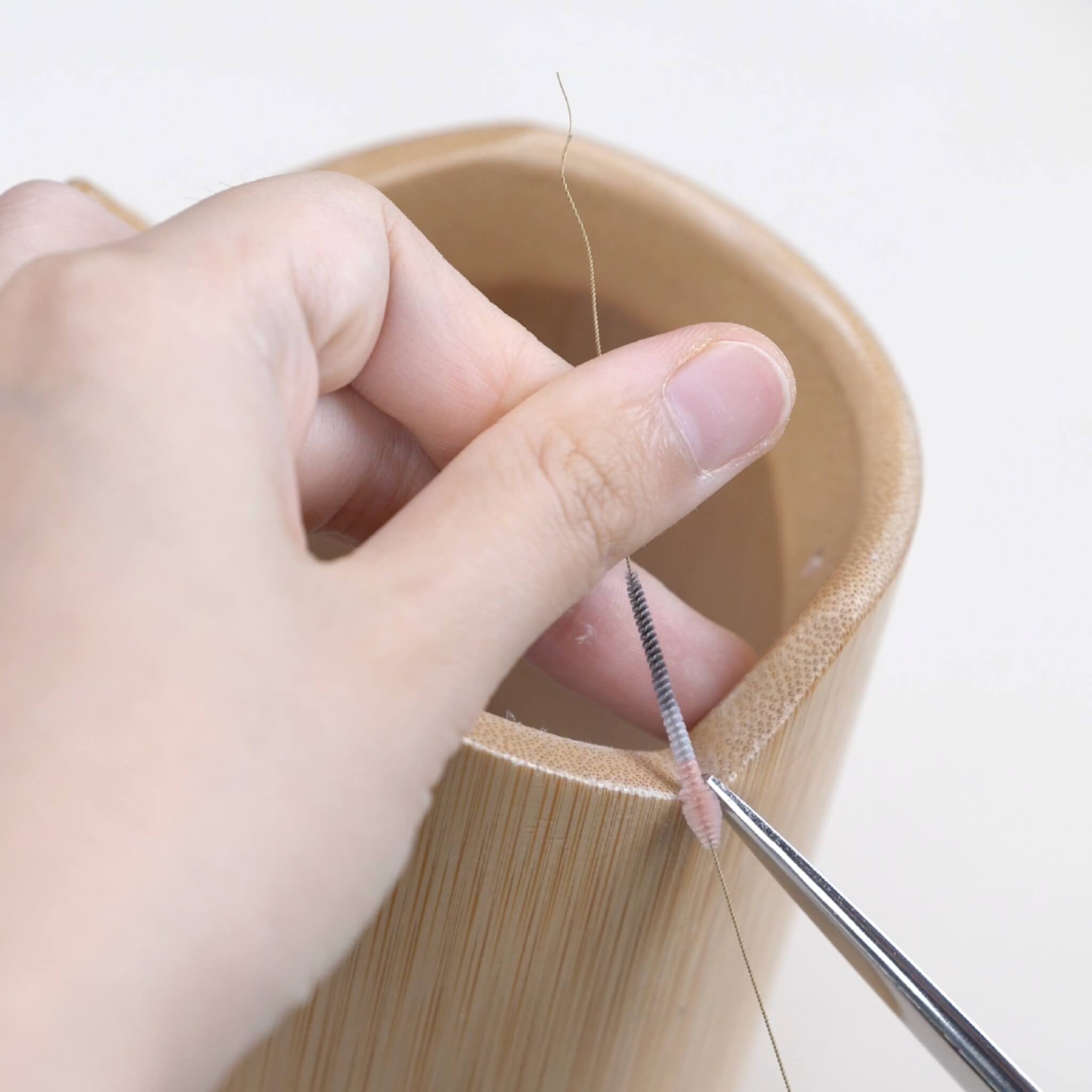
When you feel that the silk is brushed enough, secure its tail with another big clip to your table or anything that can help stretch it taut. Take out one copper wire from the folded end of the row and straighten it. Twist the folded part into a spiral of about 3 cm. Clamp the silk threads between two copper wires and twist the opposite side tightly.
Pull both wires taut and continue twisting until they merge into one. Remember, the twisting direction for the left and right end are opposite.
The spacing should be the same as shown in step 1.
You can watch our video tutorial for this step:)
Step 6. Cut the Silk Strips
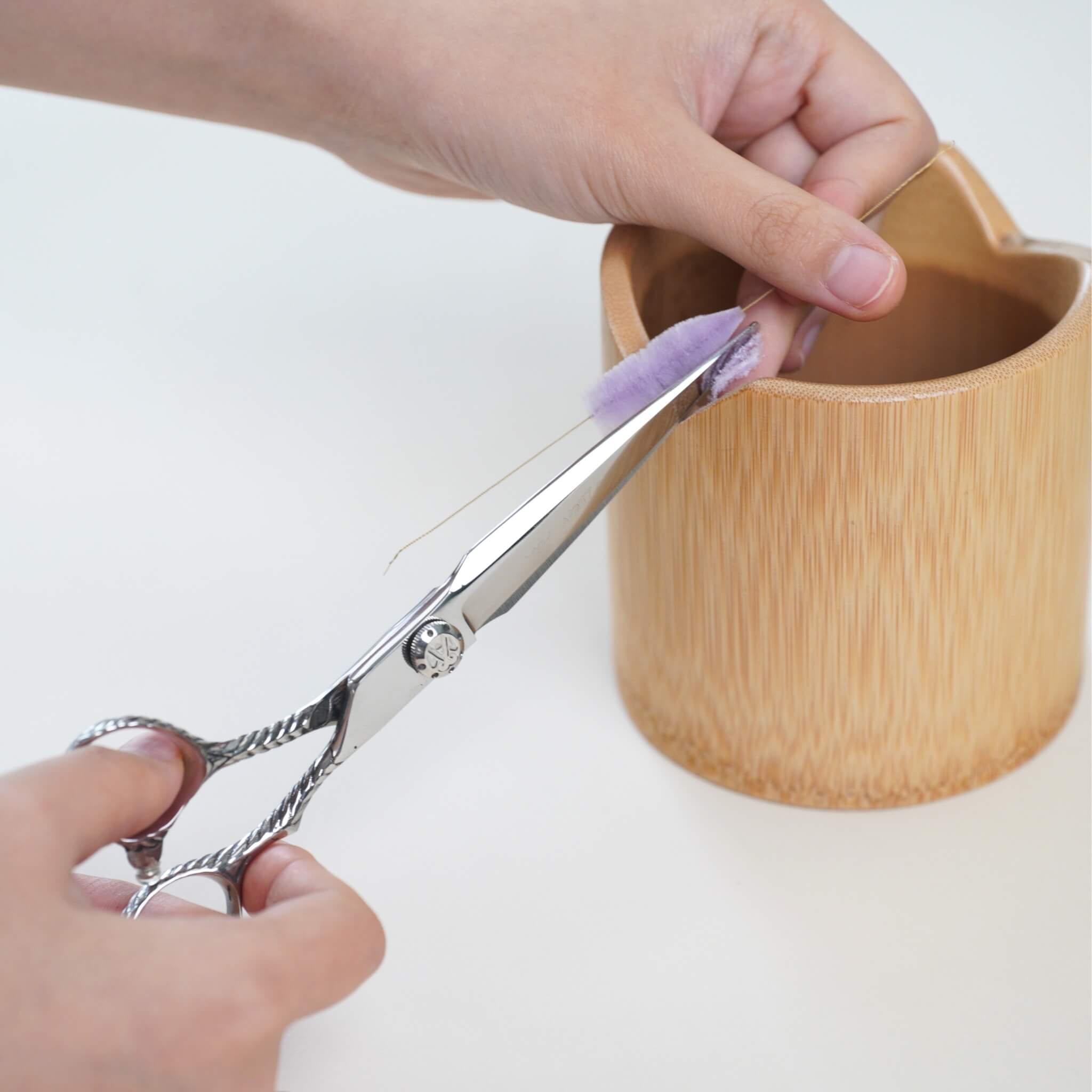
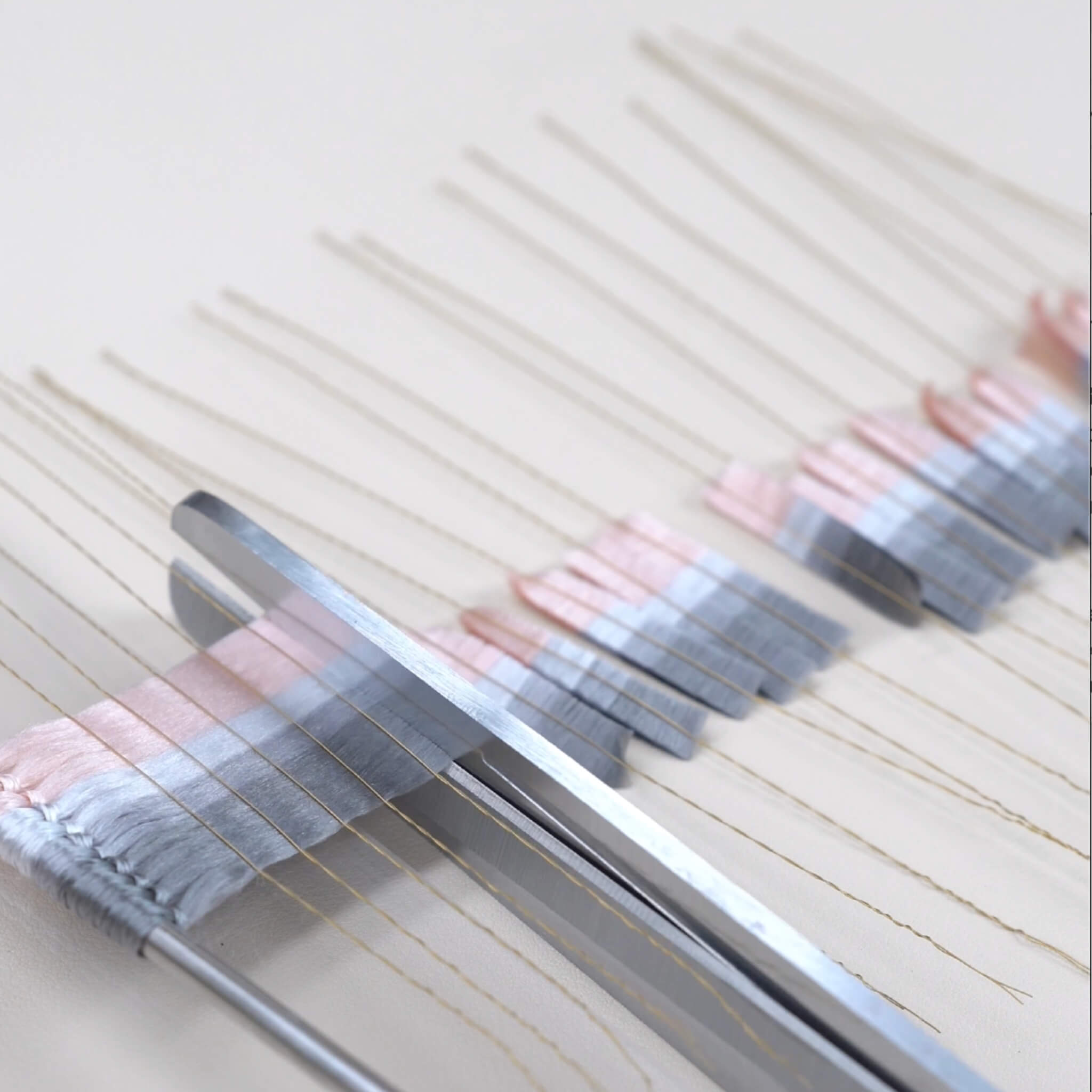
Trim the excess silk from the ends of the row. Using your "silk-only" scissors, cut through the silk exactly in the middle of each wire twist to create individual silk strips. Do not use these scissors to cut copper wire, as this will dull the blades.

Step 7. Center and Twist the Strips
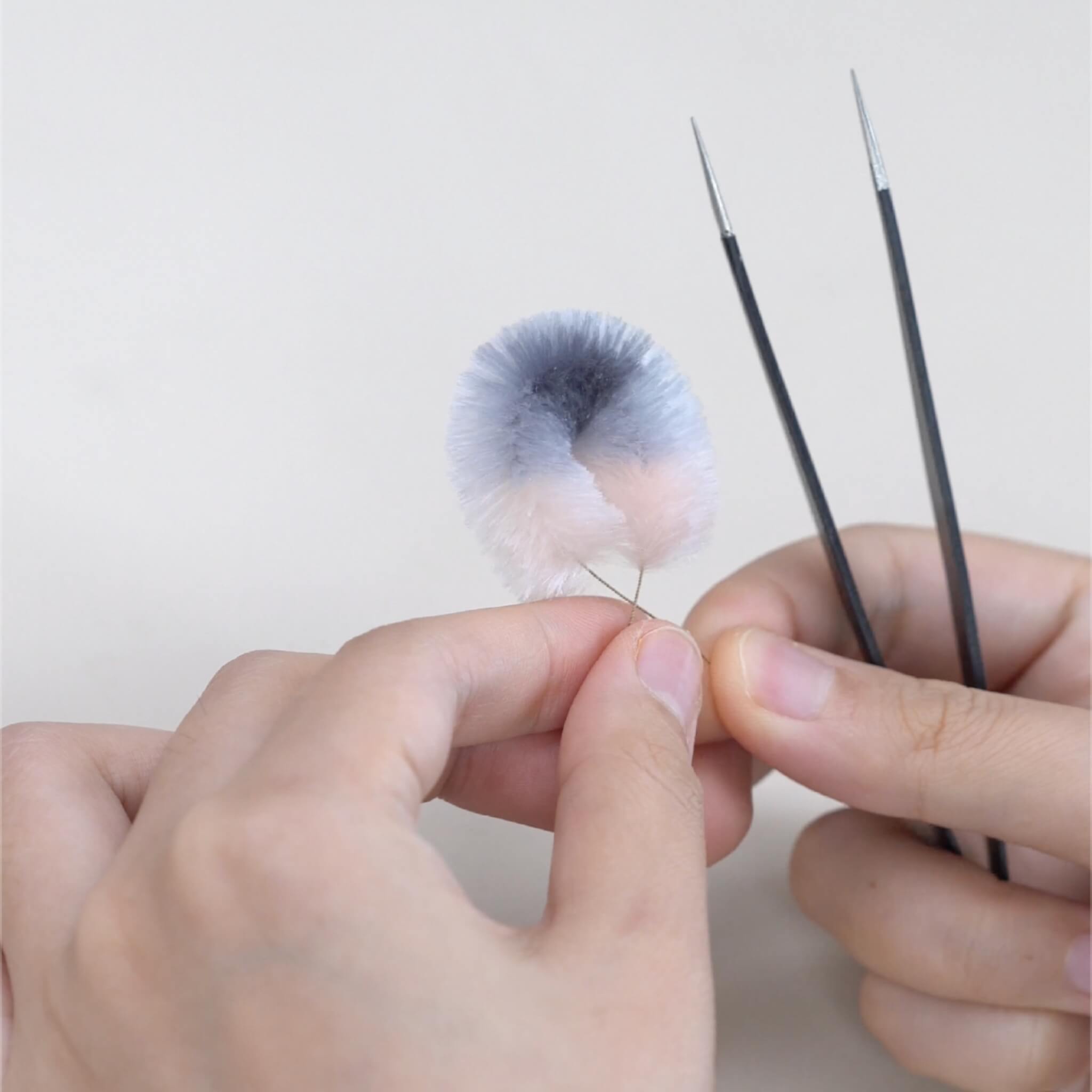
Align the copper wire to the center of each strip. Twist the wires by hand to secure, then place the strip between two twisting boards.

Roll the boards to tighten the wire until it is firmly embedded and almost invisible within the silk.

Step 8. Flatten the Strips
Using a heated flat iron, press the silk strips from back to front. Ensure they look smooth and even from the side, without any visible gaps or layers. This step is crucial for achieving a professional finish. You need to flatten the strips for petals and leaves. But for buds, you can leave them fluffy.

Then we need to strengthen the flattened strips.
Prepare your setting solution:
- Use either hair spray, or
- Diluted white glue with water or alcohol (1:1.2 or 1:3 ratio)

Step 9. Taper the Strips
Leaves: Keep the silk strips steady and angle your scissors to create a symmetrical, pointed shape. Prepare five leaves total, trimming them to vary gradually in length. Here is a demonstration. Later you need to cut the upper part off and flatten it like the petals.

Flower Buds: Trim the buds so they are fuller on one end and narrower on the other. A slightly rounded point is preferred for a natural look. Prepare three in total.

Once shaped, trim away any excess copper wire from these pieces.
Step 10. Shape the Petals
Once dry, press the strips again with a flat iron to make them thinner and smoother.
Trim the petal shapes so they are widest in the center with pointed ends.

Use tweezers to gently curve the petals outward. Create alternating inward and outward waves along the petal edges for a natural, ruffled look.
Step 11. Prepare the Flower Stamens
Cut six pieces of 4mm copper wire (approx. 8cm long). Wrap light-colored silk thread around the middle, reversing direction to cover 1–2cm. Bend the wire into a T-shape and continue wrapping downward. Knot at the bottom. Optionally, paint the tips black.

Step 12. Add Vein Details
Mix white, yellow, and reddish-brown paint to a shade slightly lighter than your petals. Test the color on a tissue first. Using a fine brush, paint a thin, steady line down the center of each petal to create the veins.

Step 13. Assemble the Components
Flower: Arrange two layers of three petals each around the stamens, tying them tightly with light green silk thread. The second layer should cover the gaps of the first. Attach two copper wires at the base for structural support and wrap with silk thread.

Buds: Trim the copper wire from the buds and attach them to a new wire stem, spacing them about 2cm apart.
Leaves: Assemble the leaves of different lengths as the picture.
Here are all the components we need.

Step 14. Assemble the Piece
Using four strands of silk thread for strength, assemble the flower, buds, and leaves. Stagger the flowers and leaves at different heights for a layered appearance. Wrap the silk thread layer by layer, ensuring all copper wire is completely concealed.

Step 15. Attach the Piece to the Brooch
Secure the orchid arrangement onto the brooch base. Cover any exposed copper wire by wrapping with silk thread, moving upward and downward as needed.

To finish: wrap your thread over a folded piece of wire, thread your silk through the loop, pull the wire out to secure the end, and trim.
You can watch our video tutorial for this step:)
Gently press the leaves with a flat iron if they need more curve. Lightly brush hairspray onto the wrapped thread areas to prevent loosening. Once dry, your daylily brooch is ready to wear! 🌸



Deja un comentario
Todos los comentarios son moderados antes de ser publicados.
Este sitio está protegido por hCaptcha y se aplican la Política de privacidad de hCaptcha y los Términos del servicio.