

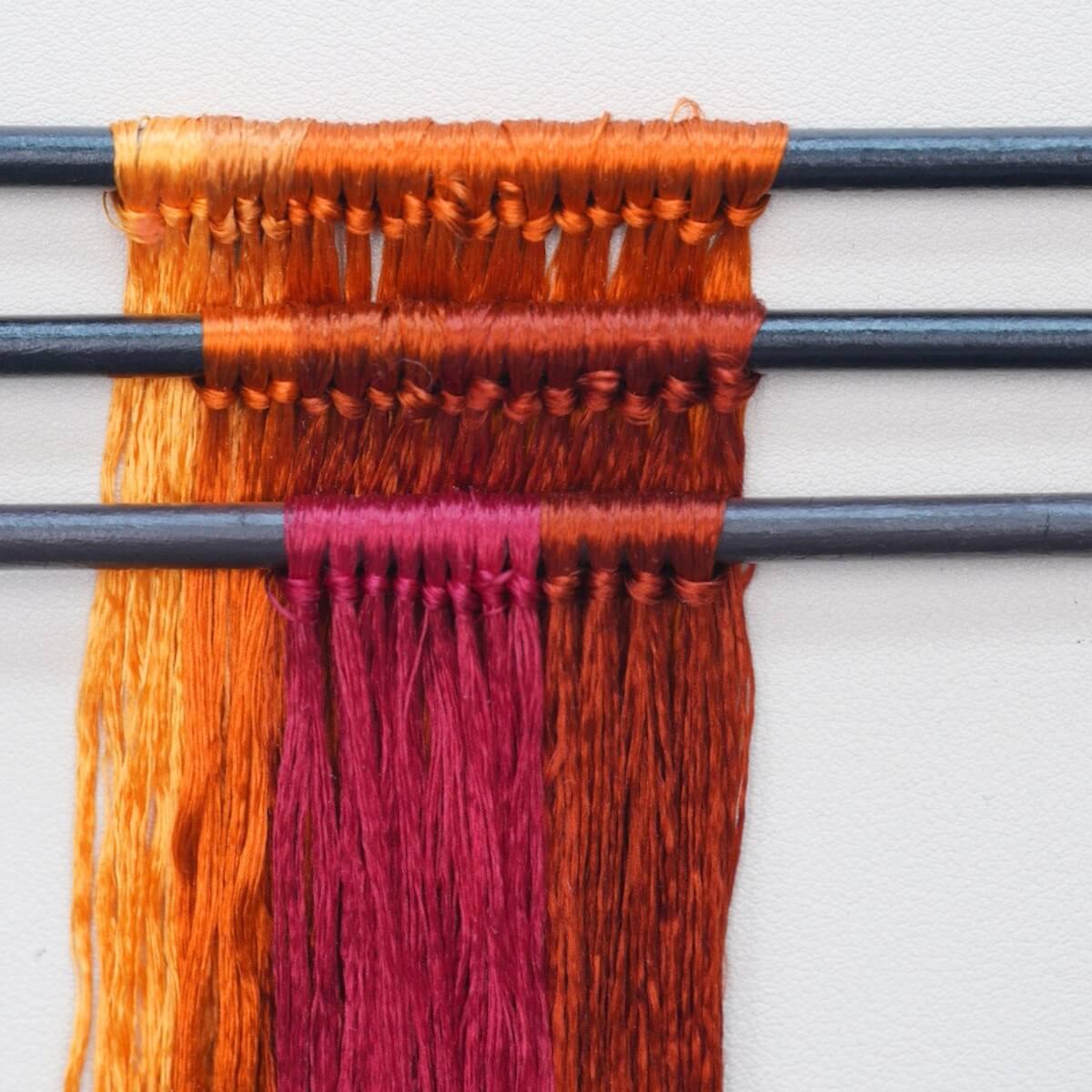
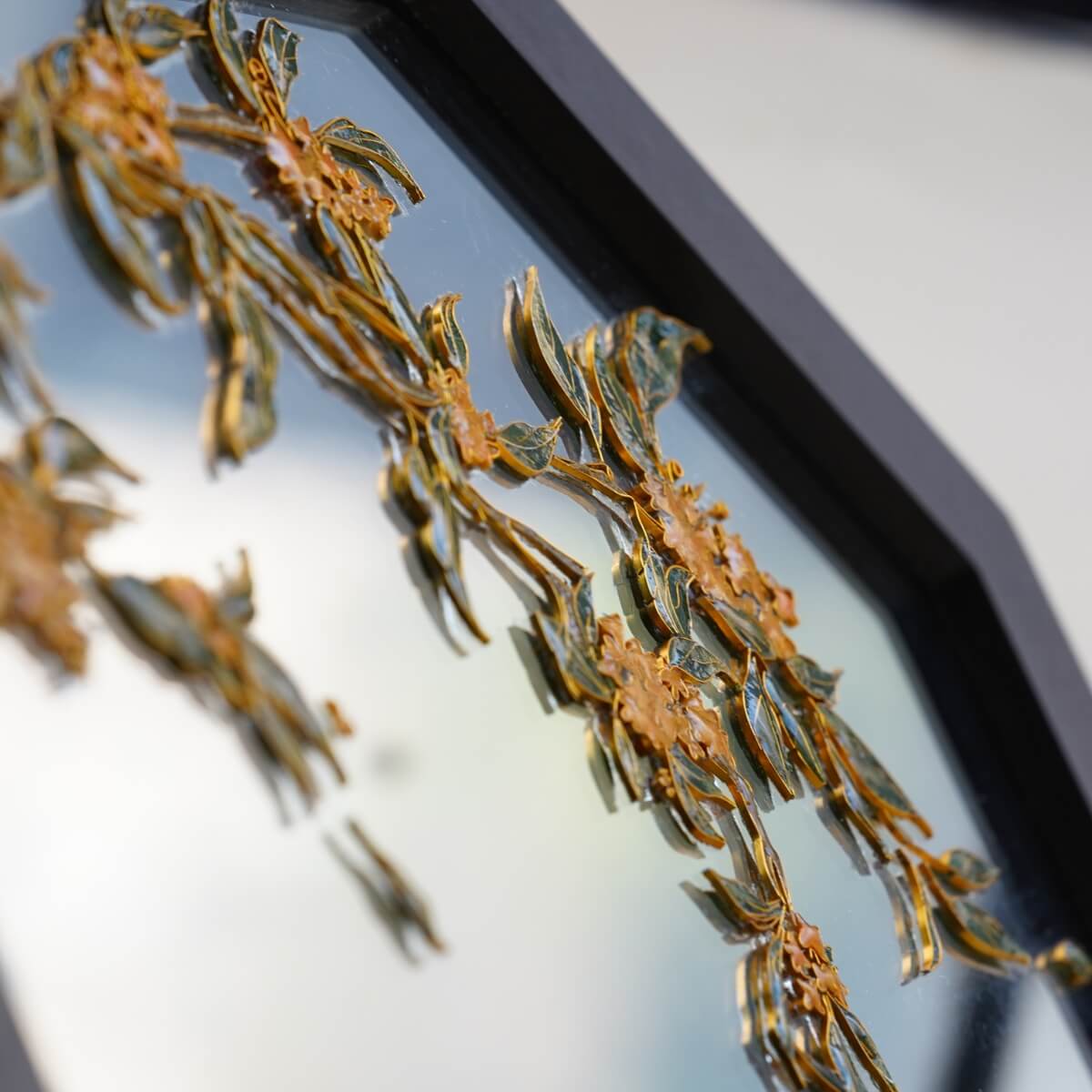
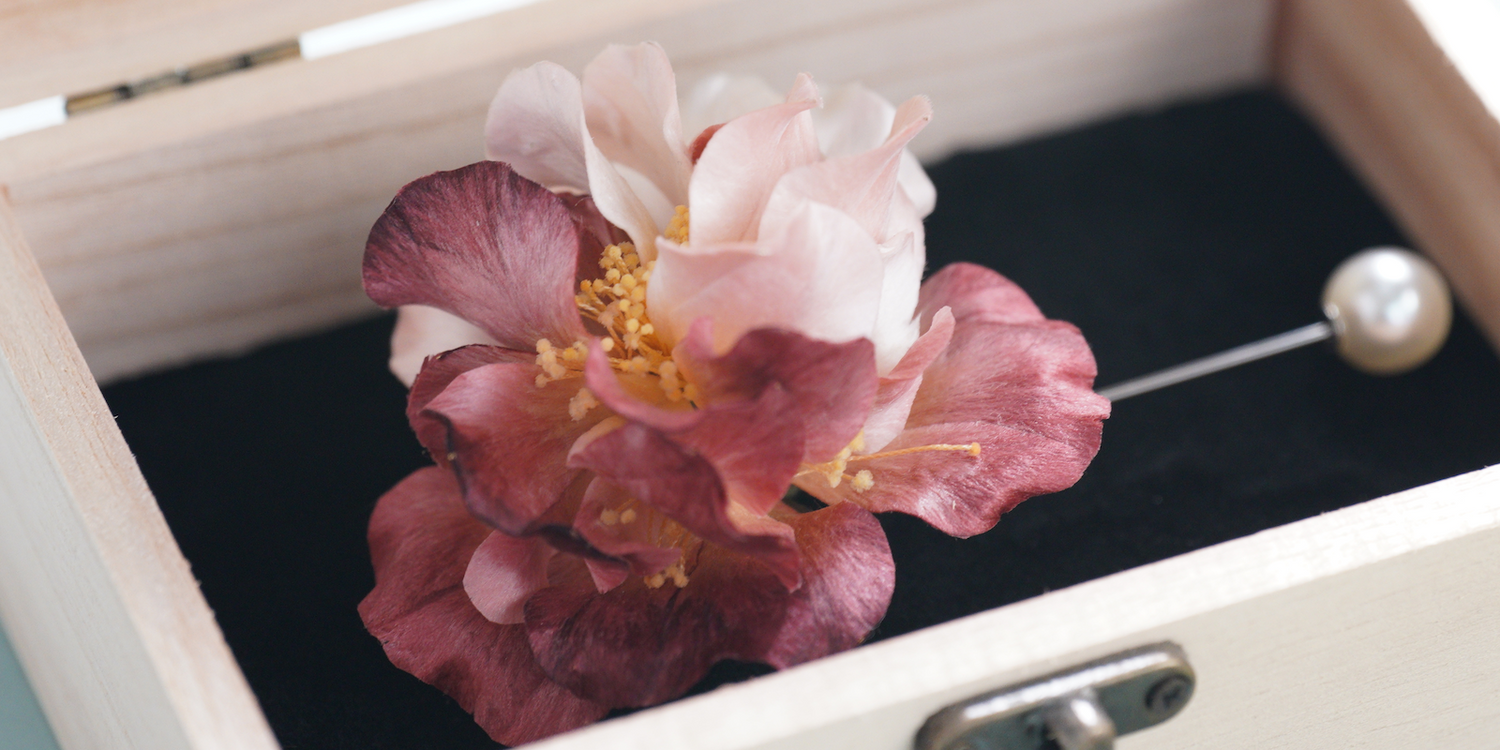
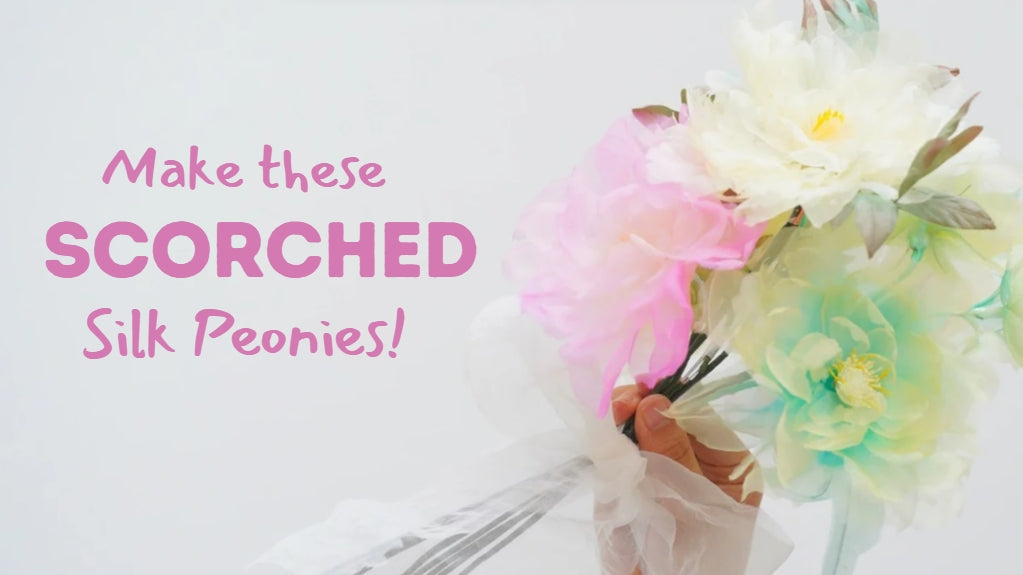
El Fú Róng—el hibisco mutabilis—es una flor de transformación silenciosa. Florece blanca por la mañana, se sonroja de rosa al mediodía y se profundiza en un tono rosa al atardecer. Suave, elegante y siempre cambiante, transmite una sensación de calidez y renovación. En este tutorial, llevaremos esa belleza delicada a la seda, pétalo a pétalo.
Preparación: Lo que necesitarás
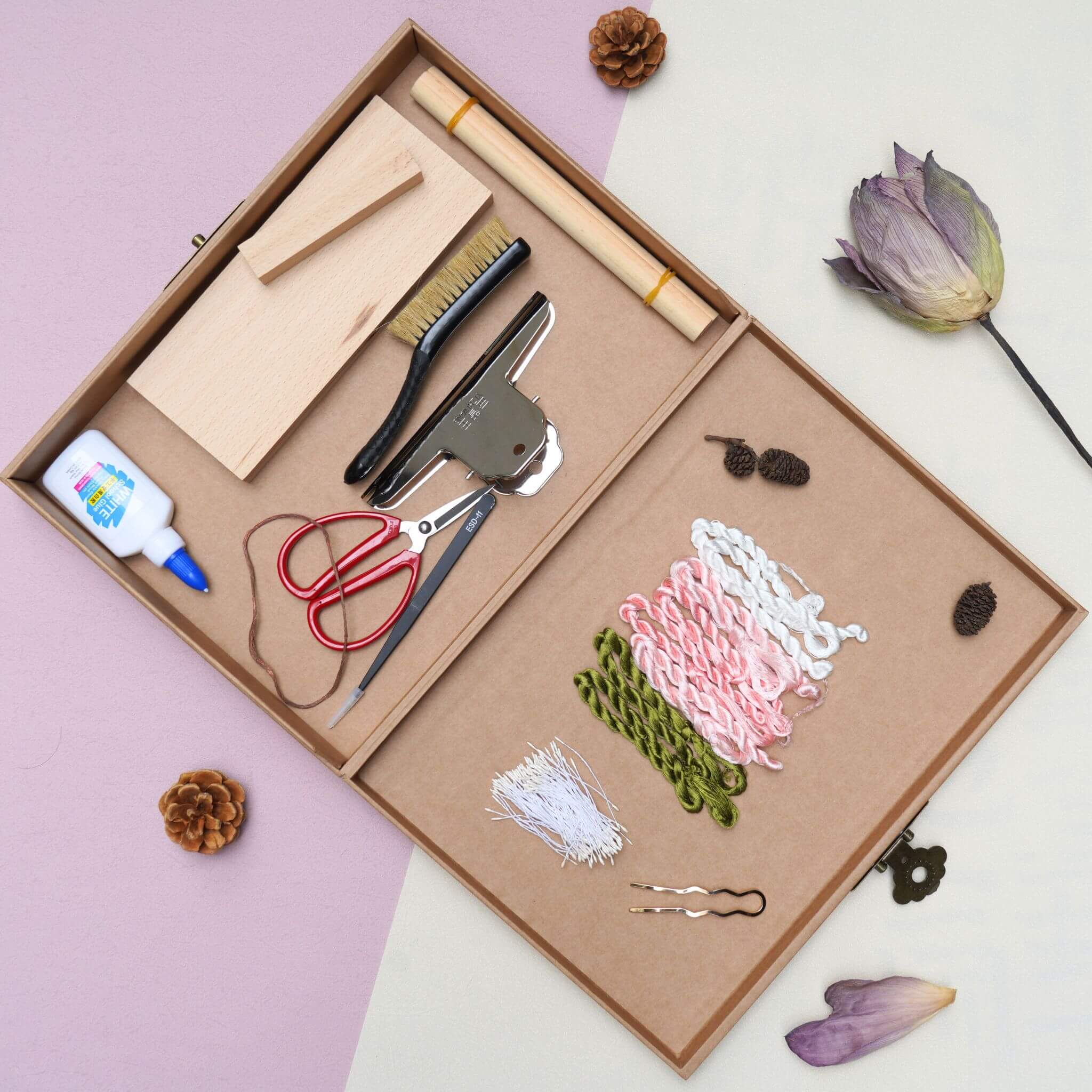
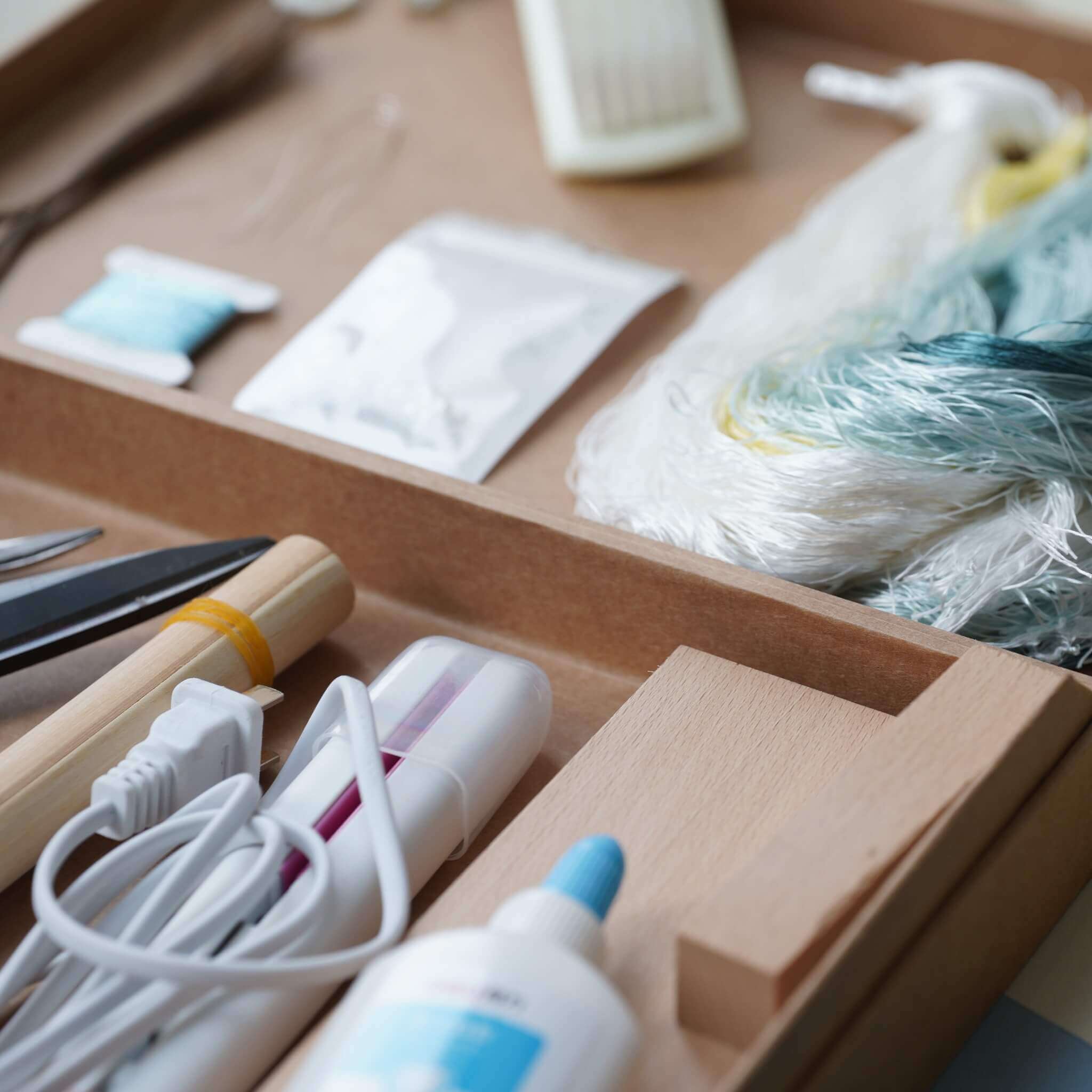
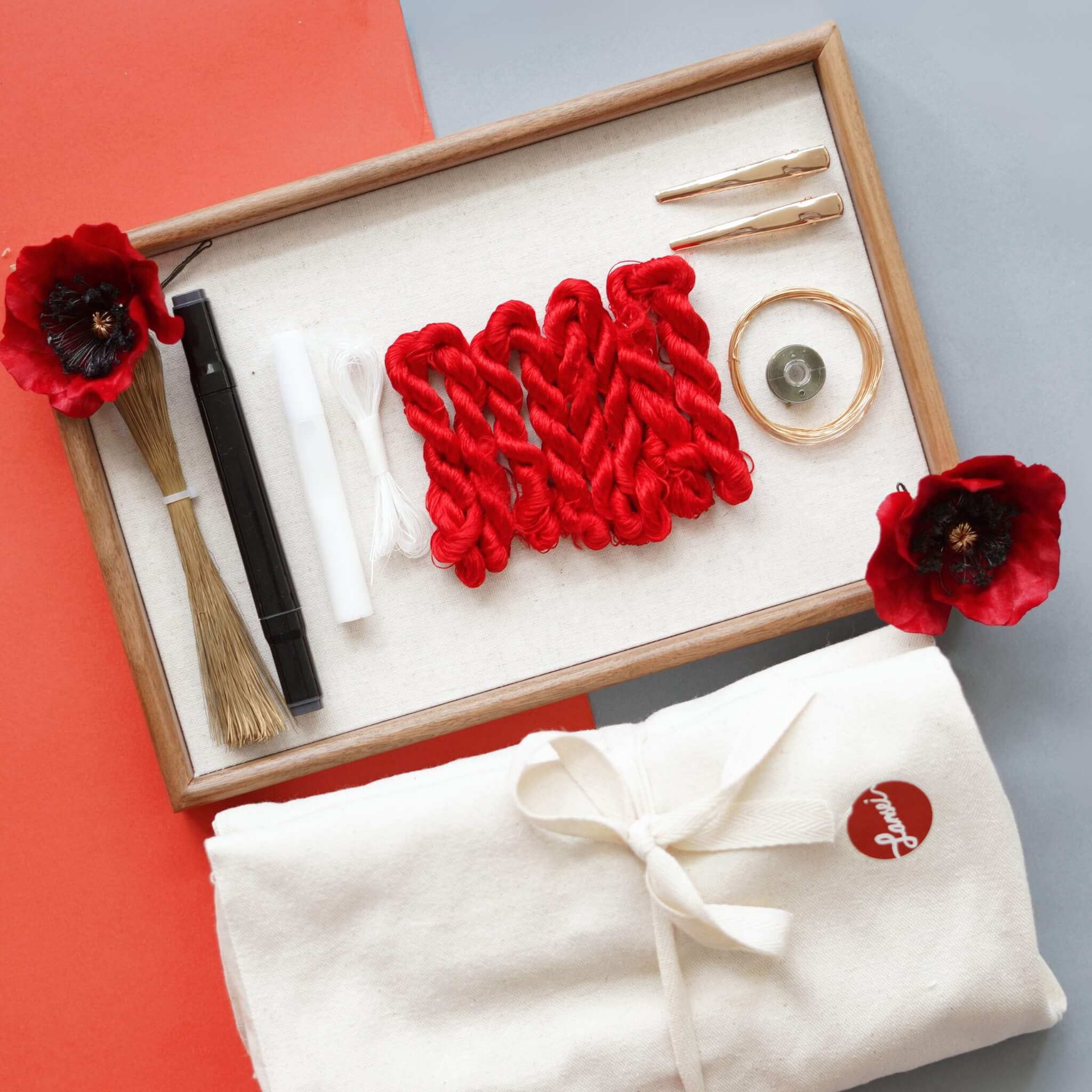
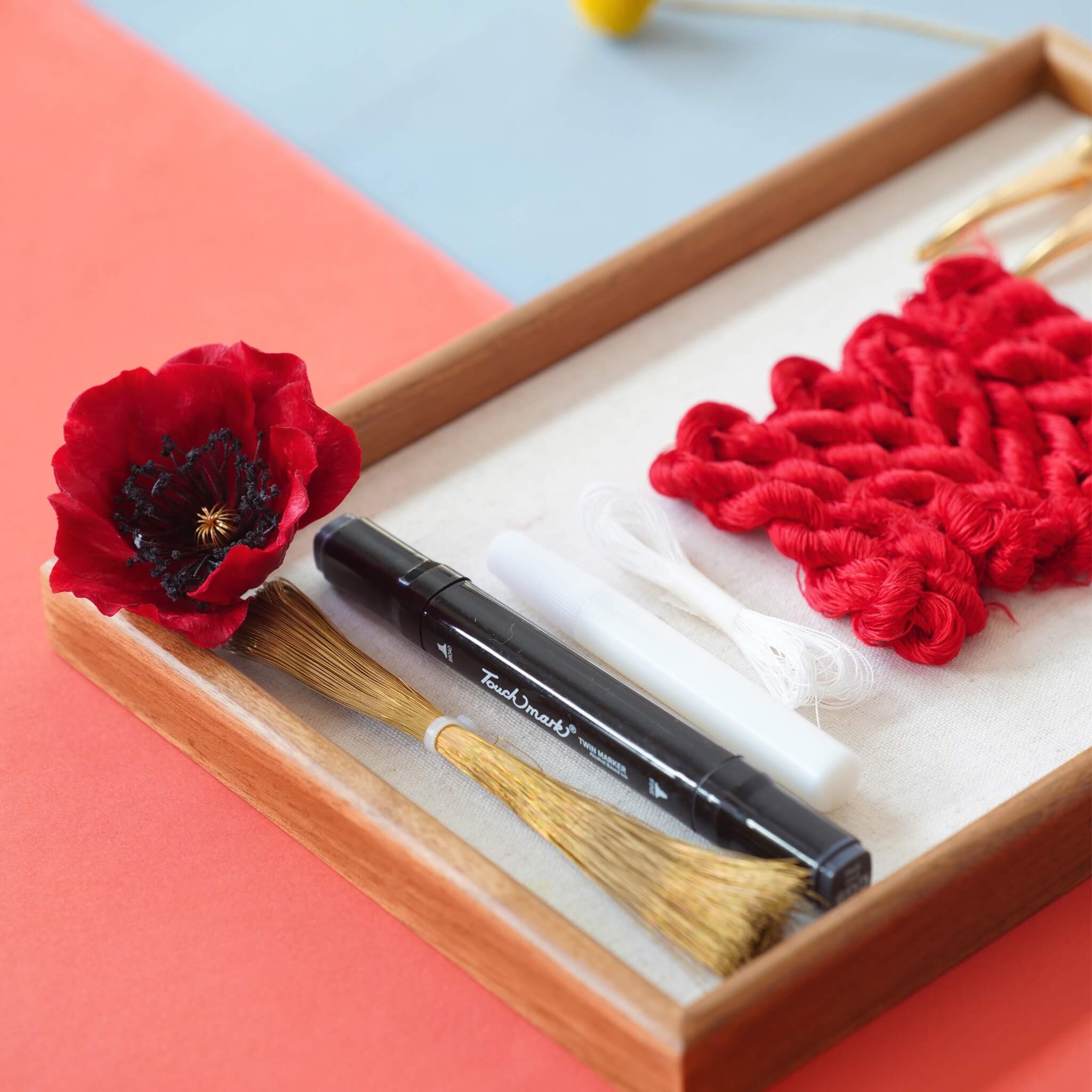
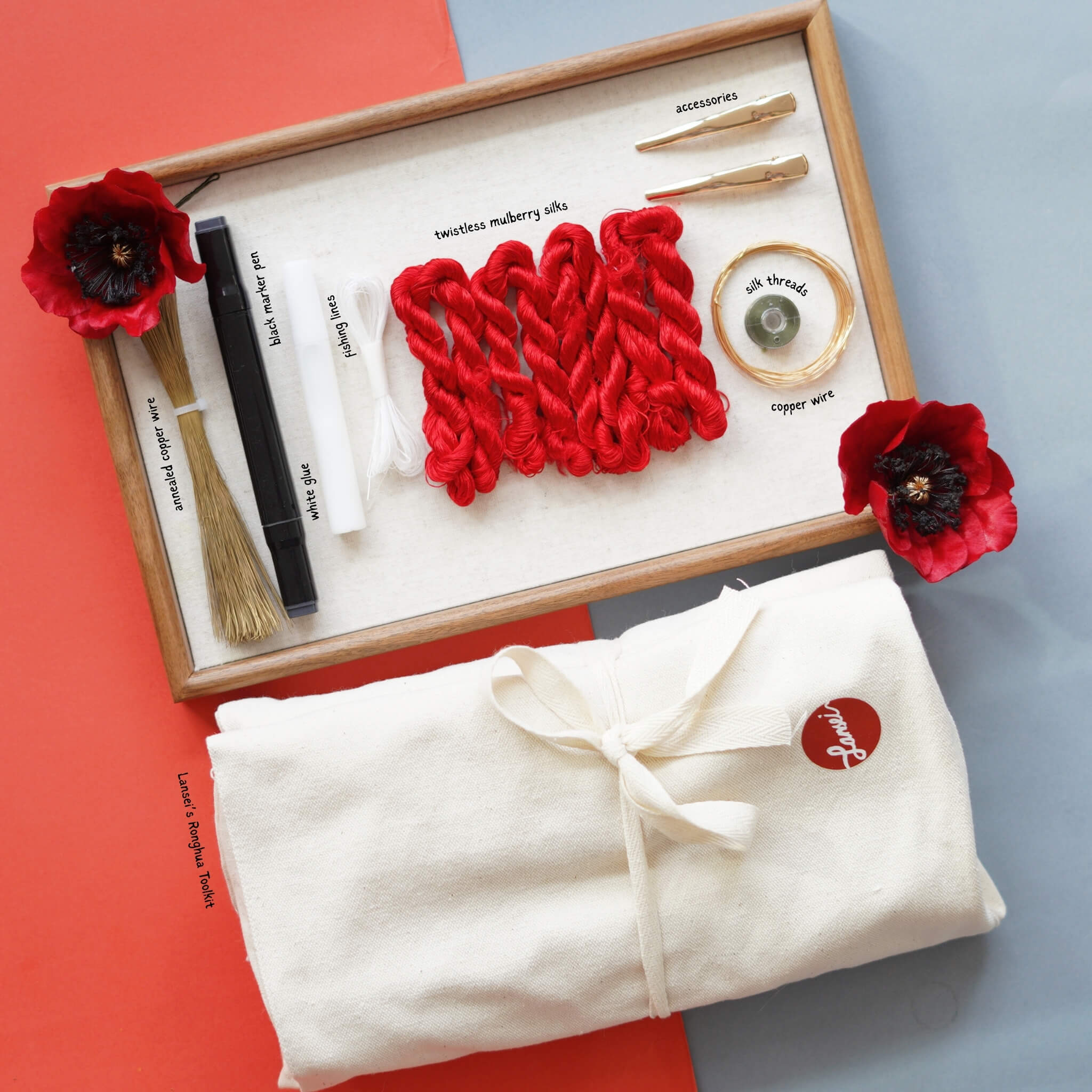
Si has comprado nuestro Kit de herramientas Ronghua, ¡ya tienes todo lo necesario!
Si no, prepara las siguientes herramientas:
- Cepillo de cerdas (dureza media a suave)
- Plancha para el cabello (la que usas para alisar tu cabello)
- Pinzas
- Al menos 2 pares de tijeras
- palitos de madera / lápices / palillos chinos
- Laca para el cabello o pegamento blanco diluido (proporción 1:1.15–1:1.2)
- Clips grandes (alrededor de 15cm)
- Tablas de torsión y bloques de madera (para tensión uniforme)
- Polvo antideslizante (opcional pero útil)
Video Tutorial Completo
Paso 1. Alinea y Organiza los Hilos de Seda
Comienza desatando tus hilos de seda. Localiza el nudo en un extremo de cada paquete y córtalo con cuidado. Este proyecto utiliza 10 colores de seda para crear 6 filas de seda. Consulta el diagrama de colores a continuación para detalles sobre la combinación de hilos.

Paso 2. Agrupa y Prepara los Hilos
Cada paquete de seda consiste en pequeñas estructuras similares a hebras — estas son tus hebras individuales.
Alinea todas las hebras ordenadamente y átelas alrededor de un palo delgado, manteniendo los extremos parejos. Evita longitudes desiguales — esto asegura una textura consistente más adelante.

Paso 3. Haz filas de seda
Repite el proceso anterior para crear 6 filas de seda en total. Recuerda consultar los datos proporcionados en el diagrama para las filas siguientes, ya que cada una será ligeramente diferente. A continuación, se muestran las filas de seda terminadas que hicimos.
La fila verde es para hacer el cáliz. El cáliz se esconde detrás de la flor y no se puede ver desde el frente, así que puedes saltarte esta fila si quieres ahorrar tiempo.

Paso 4. Cepilla las filas de seda
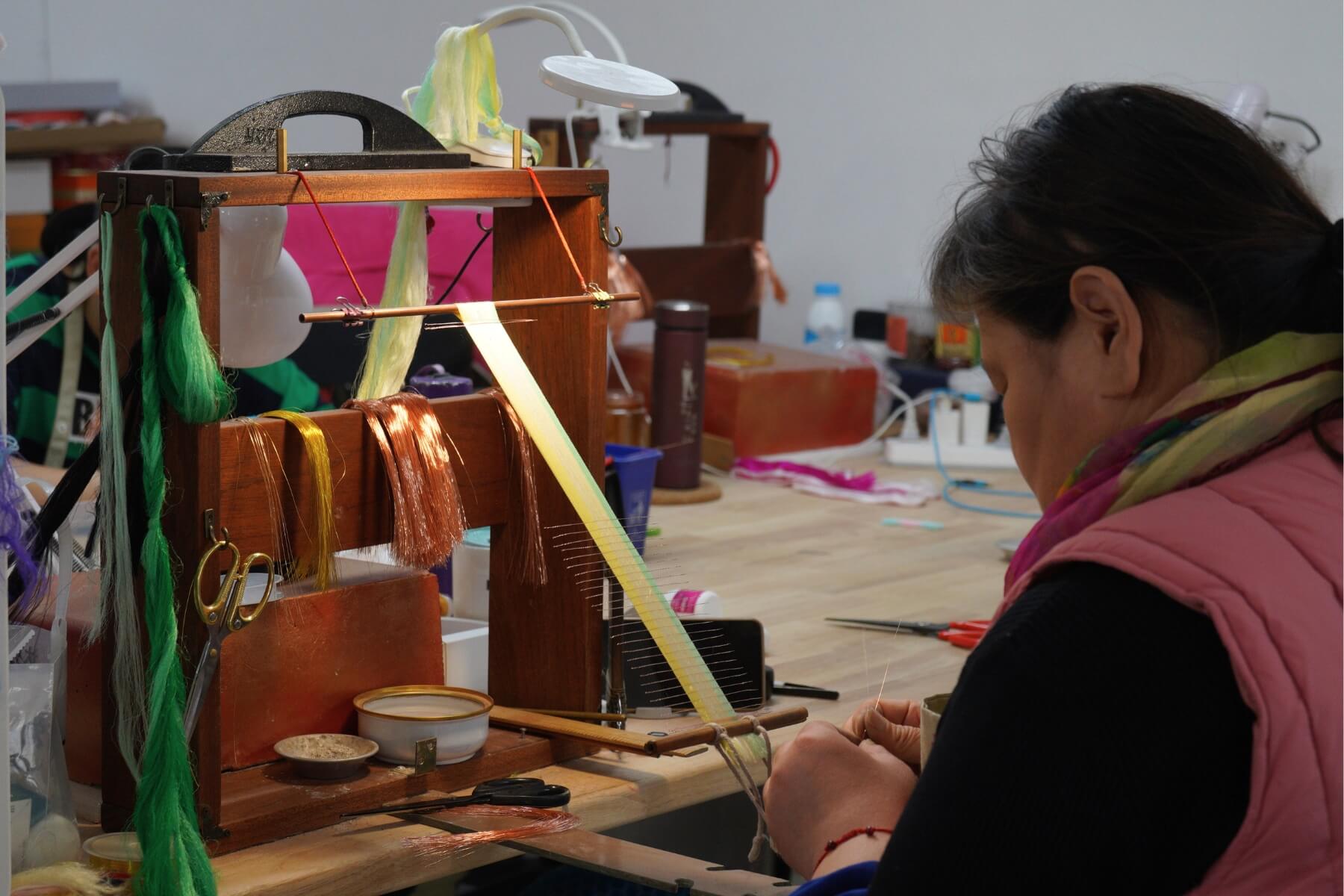
Fija una fila de seda en tu soporte usando clips metálicos grandes - si no tienes el soporte de ronghua de madera, ¡no hay problema! Puedes consultar nuestro video sobre soluciones alternativas para el soporte.
Sujeta los extremos de los hilos con una mano y cepilla suavemente pero con firmeza de arriba hacia abajo. No levantes el cepillo a mitad de camino. Una ligera niebla de agua evitará la estática. Puedes aplicar algo de presión — ¡los hilos de seda son más fuertes de lo que parecen! Asegúrate de cepillar ambos lados, el frontal y el trasero, hasta que la fila se vea suave y esponjosa.

Cada persona usa un cepillo y velocidad de mano diferente, así que el tiempo para completar este paso también varía. A mí me tomó unos 10 minutos cepillar esta fila de seda. Cuando sientas que el cabello está suave y esponjoso, puedes parar y revisar. Cuando no haya una distinción lineal completa entre los hilos y comiencen a pegarse entre sí, está listo :)

Paso 5. Coloca los cables de cobre
Cuando sientas que la seda está lo suficientemente cepillada, asegura su cola con otro clip grande a tu mesa o a cualquier cosa que pueda ayudar a estirarla tensa. Saca un alambre de cobre del extremo doblado de la fila y enderézalo. Gira la parte doblada en una espiral de aproximadamente 3 cm. Sujeta los hilos de seda entre dos alambres de cobre y tuerce el lado opuesto firmemente. Tira de ambos alambres para tensarlos y continúa torciendo hasta que se fusionen en uno solo. Recuerda, la dirección de torsión para el extremo izquierdo y derecho es opuesta.
El espacio debe ser como se muestra en el paso 1.
La fila verde necesita dos tamaños de tiras de seda. En la parte inferior, ata 10 tiras más delgadas con alambre de cobre espaciado alrededor de 5 mm. Sobre ellas, las otras tiras tienen un espacio de 1.5 cm. Una vez que los alambres de cobre estén atados, puedes cortar todas las tiras. Trata de cortar cada tira a la misma longitud.
Si tienes polvo antideslizante, será mucho más fácil mojar tus dedos en él y torcerlo. Recomendamos mucho que veas el tutorial en video para este paso:)
Una vez terminado, retira la fila de seda del soporte y colócala plana.
Paso 6. Corta las tiras de seda
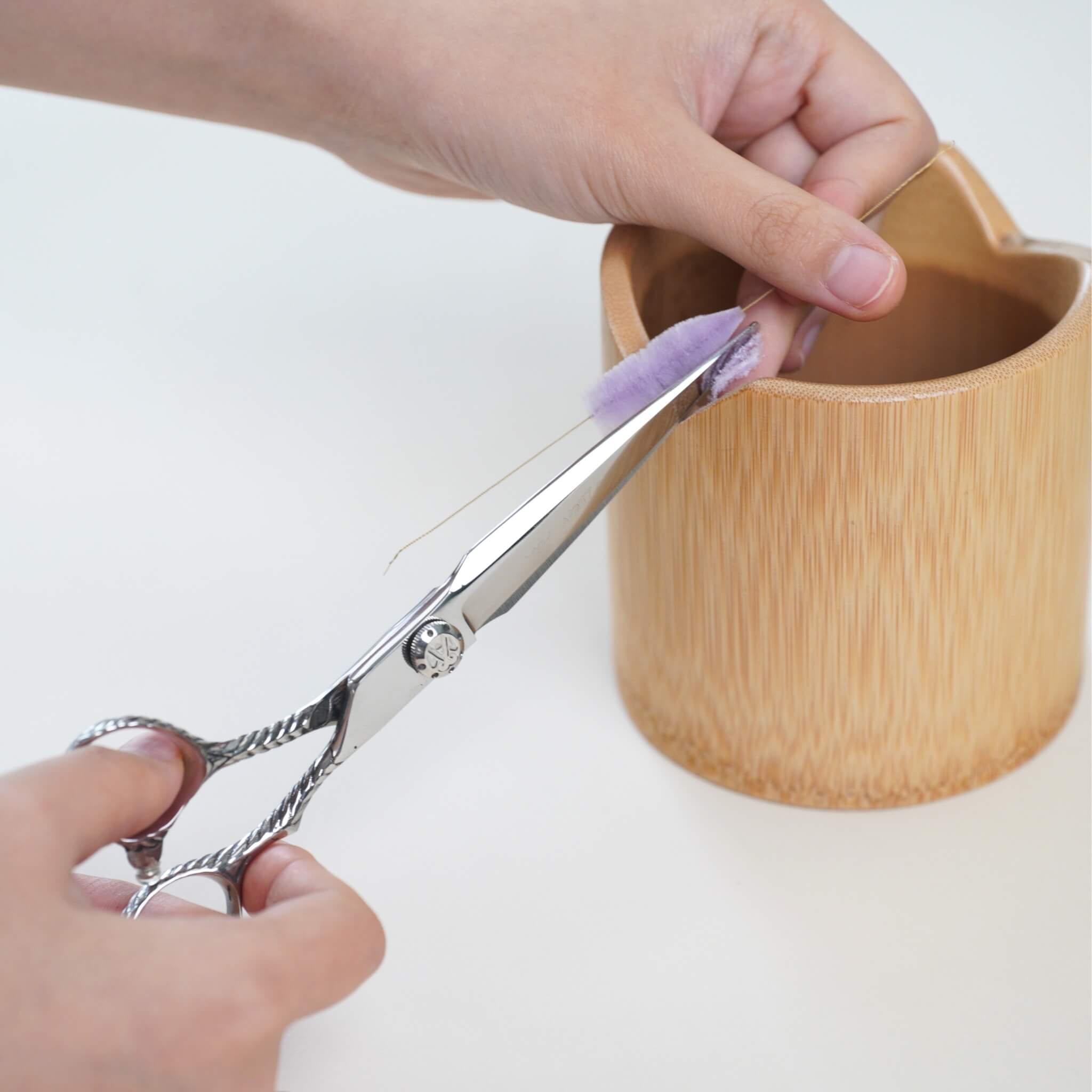
Recorta el extremo de la fila de forma ordenada, luego corta entre cada par de cables de cobre para crear tiras de seda uniformes. Al cortar, las tijeras deben colocarse en el medio de dos cables de cobre, de lo contrario el ancho de las tiras de seda será inconsistente. Si los hilos se pegan a tus tijeras, límpialas — generalmente es causado por estática o residuos. Corta rápido y limpio para obtener bordes suaves. No toques el cable o podría desplazarse.

Paso 7. Centra y tuerce las tiras
Alinea el alambre de cobre al centro de cada tira usando una superficie plana o un bloque de madera.
Una vez centrado, tuerce ambas manos en direcciones opuestas para apretar.

Luego, coloca la parte de cobre entre las tablas para torcer y continúa torciendo en la misma dirección. Detente cuando el alambre se sienta firme — torcer demasiado puede hacer que se rompa. ¿Cómo sabes si está lo suficientemente apretado? Si está bien apretado, el alambre de cobre solo debería verse ligeramente. Si el alambre de cobre es muy visible, no está lo suficientemente apretado.

Paso 8. Aplana las tiras
Corta el alambre de cobre del lado más oscuro de cada tira. Para las tiras verdes, corta el lado más claro. Las tiras delgadas deben cortarse por la mitad. Aplana todas las tiras usando una plancha.
Luego necesitamos remojar las tiras aplanadas.
Prepara tu solución fijadora:
- Usa laca para el cabello, o
- Pegamento blanco diluido con agua (proporción 1:1.15 o 1:1.2)
Remoja las tiras de seda aplanadas, deja que absorban la solución, luego raspa el exceso.

Paso 9. Haz los Pétalos
Ahora podemos moldear los pétalos. Antes de empezar, te recomendamos mucho ver primero el tutorial en video, ya que necesitamos hacer diferentes tamaños de pétalos con diferentes filas y puede ser un poco confuso explicarlo solo con palabras.
1. Comienza doblando las tiras y moldea los pétalos pequeños internos. Dobla el pétalo en un arco, pellizca el lado izquierdo hacia adentro con pinzas, empuja el lado derecho hacia afuera y añade ondas suaves. La forma debe sentirse natural y ligeramente irregular. Una vez seco, recorta ligeramente siguiendo la curva natural — solo lo suficiente para limpiar los bordes irregulares.

Para otras tiras rosas del mismo tamaño, simplemente rocía con líquido fijador para el cabello—no es necesario moldear. Asegúrate de que las tiras permanezcan completamente planas.
Para las tiras espaciadas a 2 cm, también déjalas sin moldear; solo aplica líquido fijador.
Para las tiras más pequeñas, rocíalas y déjalas secar directamente.
2. Corta la tira más pequeña en un triángulo afilado. Usa la plancha para doblar la tira moldeada.

3. Endereza las tiras que no se moldearon antes. Recorta los bordes para que se vean limpios y uniformes.
Aplica pegamento blanco a lo largo de los bordes de las tiras. Usa una punta de alambre de cobre para aplicar el pegamento cuidadosamente entre dos tiras adyacentes. Pega las tiras juntas. Usa una plancha para alisar y presionarlas suavemente — esto ayuda a que el pegamento se adhiera con más firmeza.

Los pétalos de tres tiras son para la capa exterior, y solo necesitas 1–2 pétalos grandes de cada color. Las tiras restantes deben pegarse en pares para crear pétalos pequeños. Todas las demás tiras rosas siguen el mismo método.

Recorta la parte superior de esos pétalos.

4. Sumerge los pétalos recortados una vez más en laca para el cabello. Los pétalos de color claro pueden revelar el alambre de cobre debajo — esto es normal.
Da forma a los pétalos exteriores doblando la parte inferior hacia adentro y volteando la parte superior hacia afuera. Tira del borde hacia adentro y añade unas ondas suaves e irregulares. Estos pétalos exteriores son las piezas de tres tiras. Los pétalos interiores están hechos de las piezas de dos tiras. Tendrás cuatro colores para la capa exterior (cinco pétalos en total — un color tiene dos), y puedes elegir qué color tendrá el pétalo extra. Deja secar todo.

Paso 10. Haz los estambres
Envuelve línea de pesca alrededor de tu pulgar unas quince veces. Usa alambre de cobre para asegurar el paquete, luego corta los lazos.

Si no tienes alambre de cobre que preserve el color, el alambre recocido funciona bien.
Haz siete de estos, coloréalos con un marcador amarillo y quema ligeramente las puntas con un encendedor para sellarlas.

Paso 11. Ensambla la flor
Comienza con los pétalos de color más claro. Mientras ensamblas, tira ligeramente los estambres hacia afuera. Coloca los pétalos en un ángulo suave hacia afuera. Usa dos o tres pétalos de cada color mientras avanzas por el degradado. Usa estambres para llenar espacios más grandes, luego inserta los pétalos pequeños en los espacios más estrechos.

Continúa agregando estambres cuando haya espacio vacío.
Una vez que la estructura interna esté completa, fija los pétalos más externos en orden de claro a oscuro. Usa un pétalo de tono medio como la pieza final exterior para equilibrar.

Agrega también las hojas terminadas. (Puedes omitir una de las hojas si no será visible desde el frente.)

Envuelve todos los cables de cobre expuestos con hilo de seda apretadamente. Dobla los cables hacia atrás para acortarlos y asegurarlos, luego continúa envolviendo hasta cubrir todo. Recorta el exceso de cable y haz un nudo al final. Corta el hilo restante limpiamente. Gira la flor para revisar la parte trasera.
Paso 12. Fija la pieza a la base
Usa hilo de seda para sujetar la flor firmemente a la base de tu broche (o cualquier accesorio que prefieras). Envuelve apretadamente para que no queden espacios.

Para terminar sin dejar rastro, toma un trozo de hilo de seda doblado y colócalo en el punto de envoltura. Continúa envolviendo para cubrirlo, luego pasa tu hilo de seda de trabajo a través del lazo doblado. Tira del lazo doblado — esto oculta el hilo de acabado dentro de la envoltura. Recorta el exceso de hilo y quema ligeramente los extremos deshilachados.
Te recomendamos mucho ver el video tutorial para este paso :)
Ajusta el ángulo de la flor.
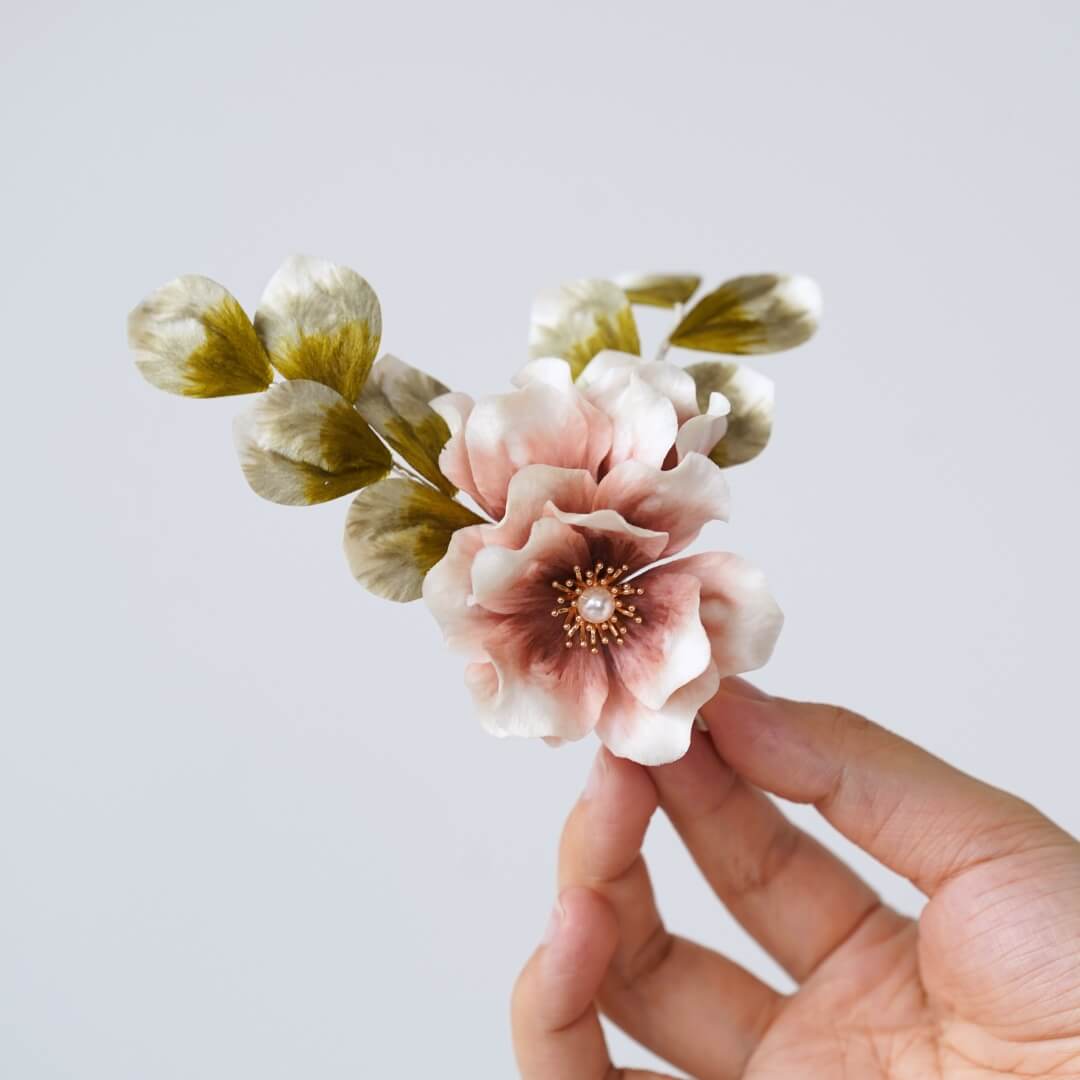
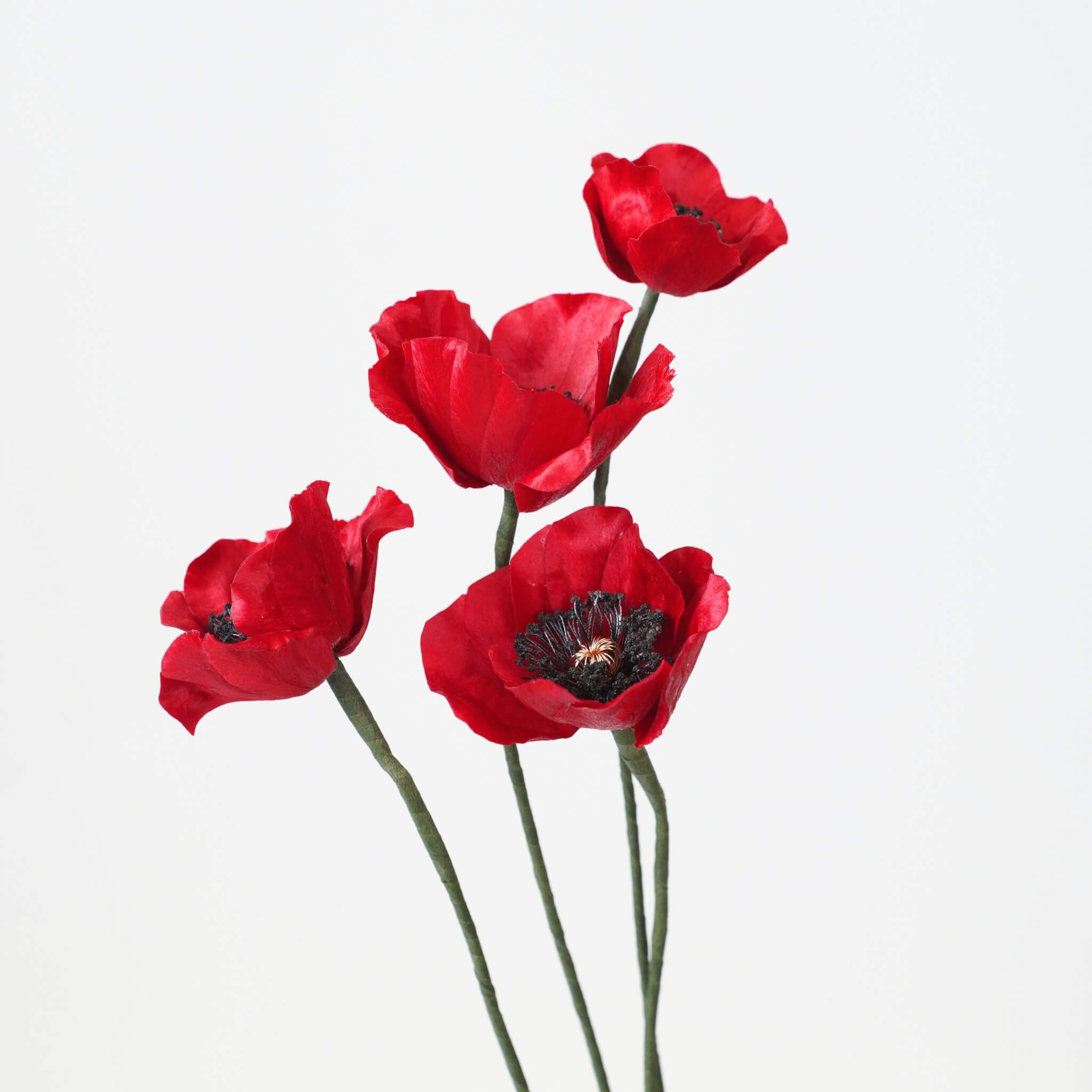
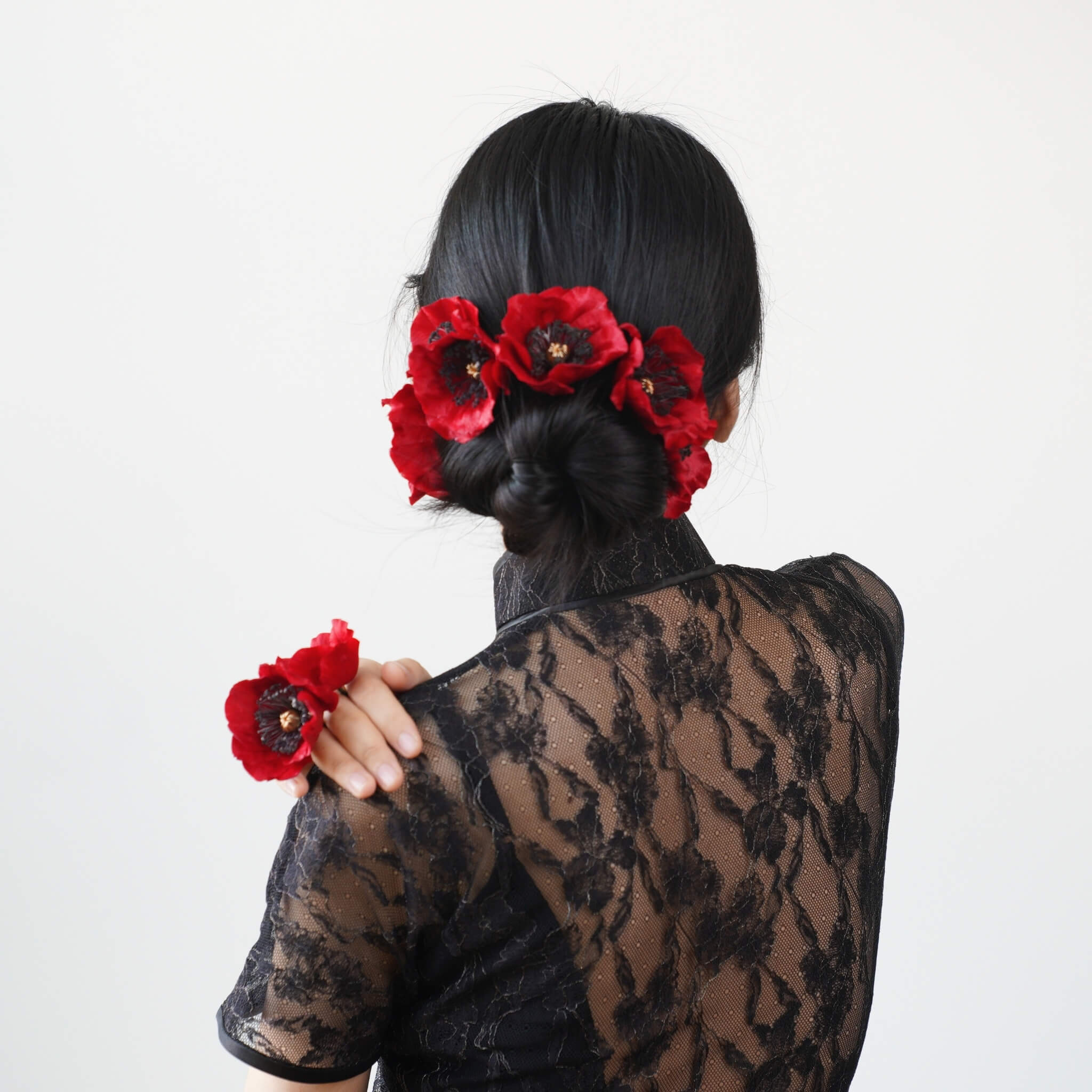
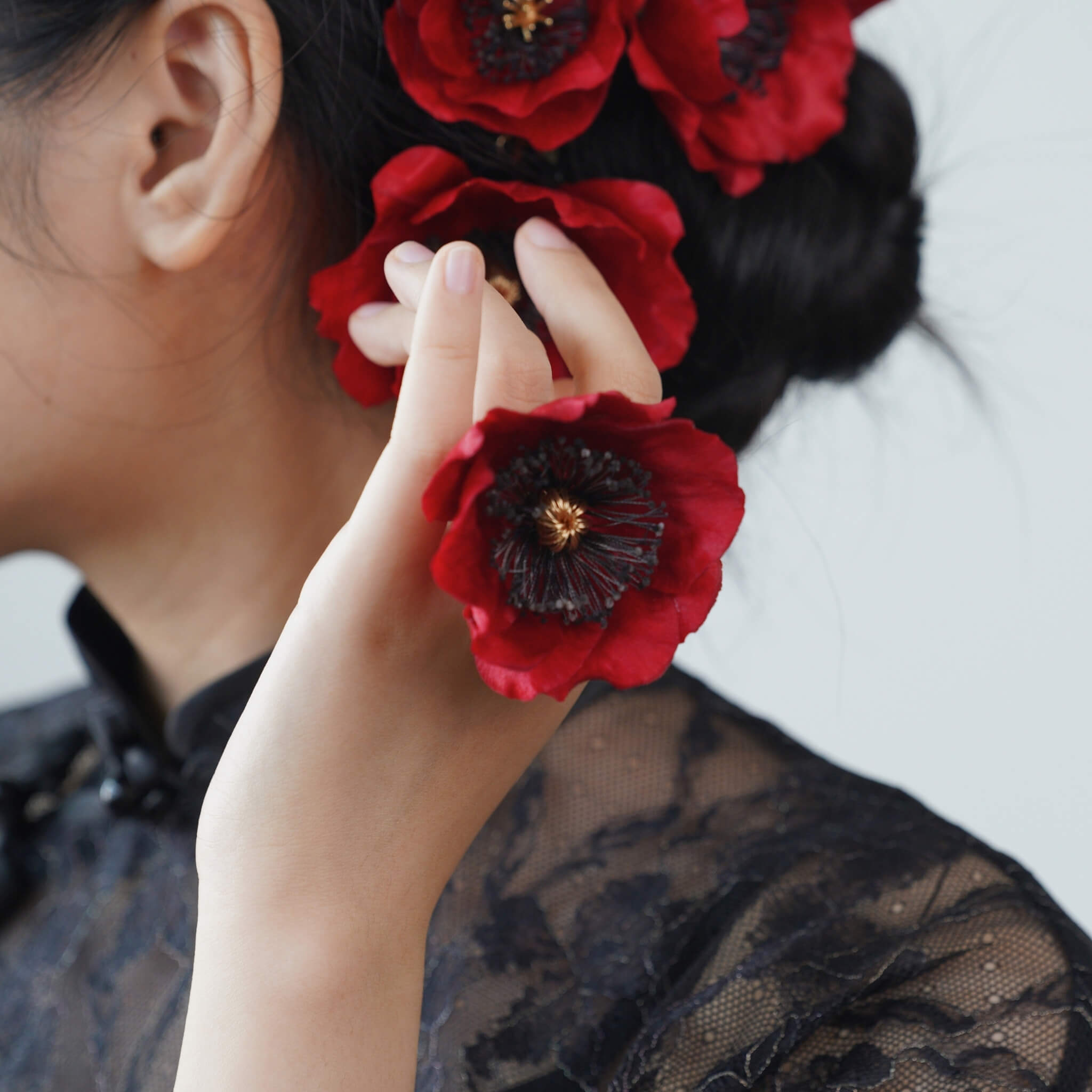
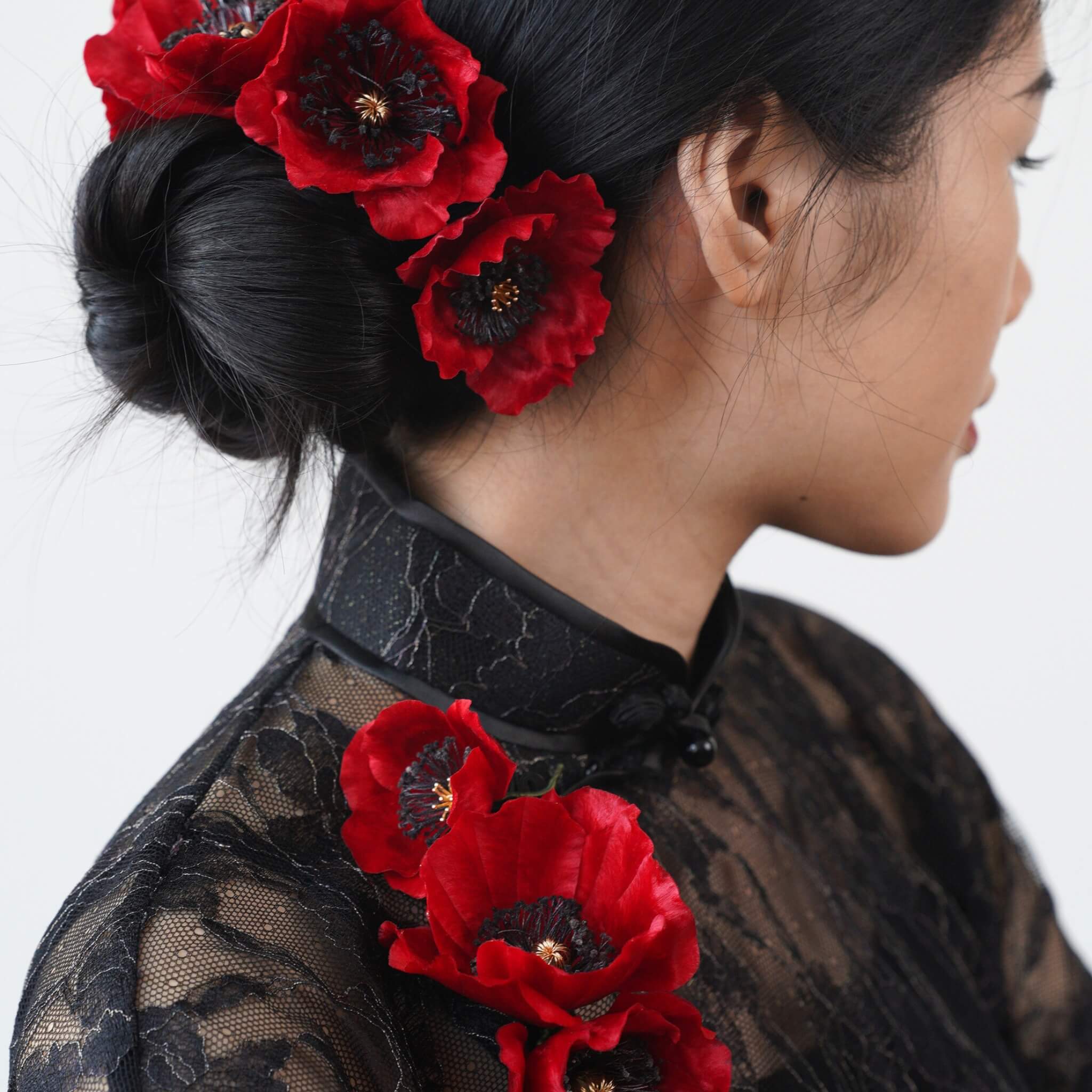
¡Tu Fu Rong Hibiscus está completo!


Deja un comentario
Todos los comentarios son moderados antes de ser publicados.
Este sitio está protegido por hCaptcha y se aplican la Política de privacidad de hCaptcha y los Términos del servicio.