


Calm, balanced, and quietly alive — the lotus pond captures a moment of stillness on water. Floating leaves, gentle curves, and layered textures come together to create a peaceful miniature scene. This project invites you to slow down and enjoy the rhythm of assembling each element, just like watching ripples settle on a pond.
Preparation: What You’ll Need
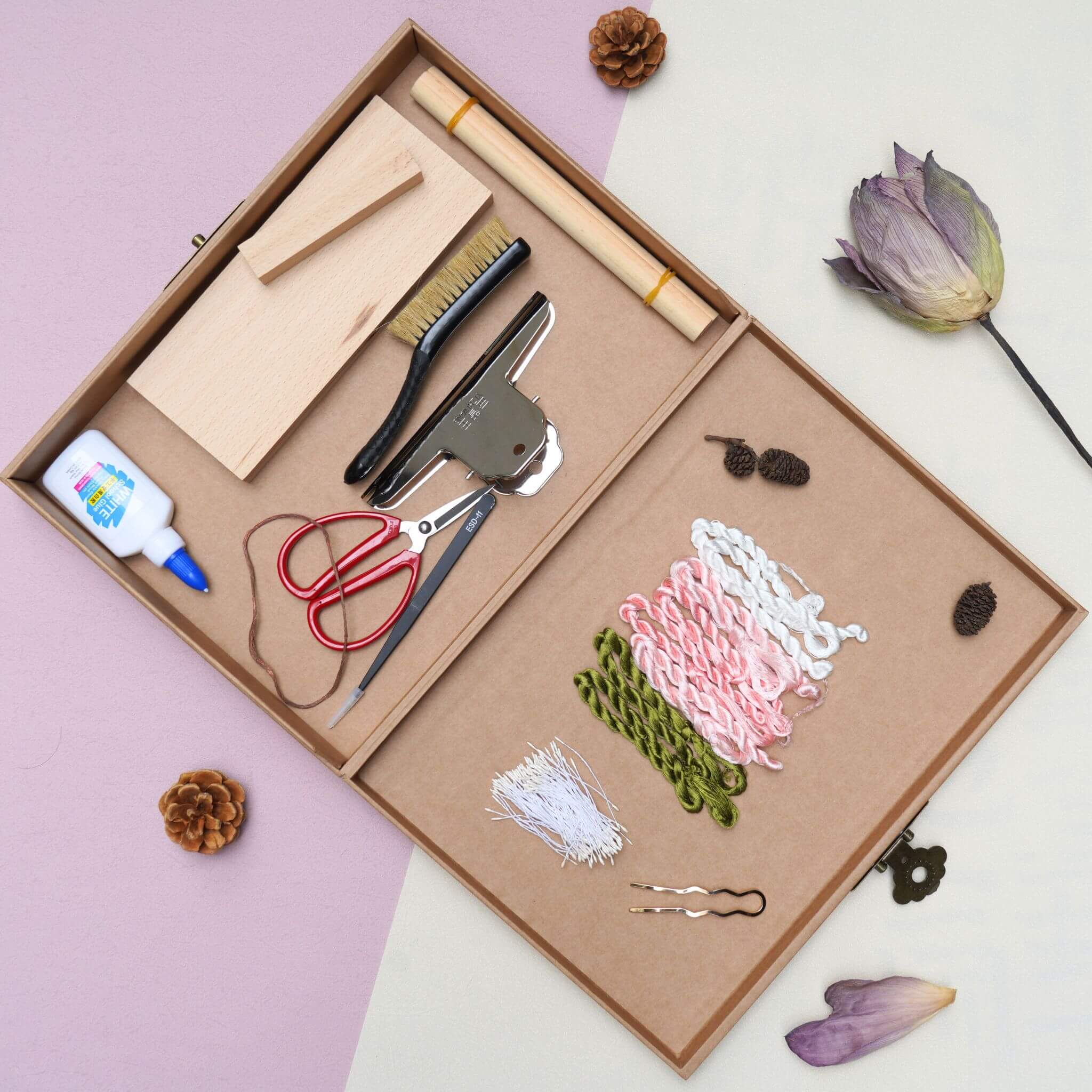
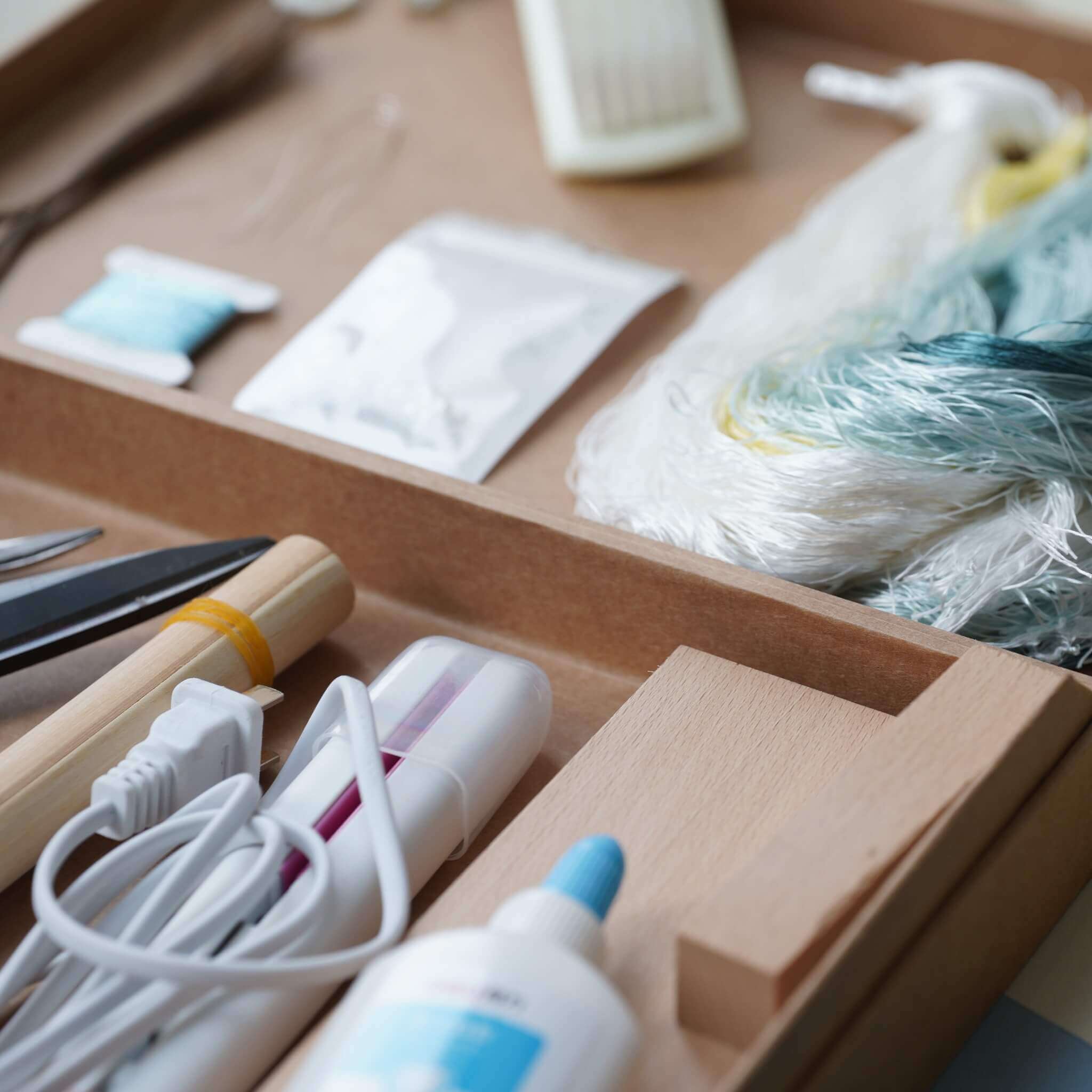
If you’ve purchased our Ronghua Toolkit, you already have everything required!
If not, prepare the following tools:
- Bristle brush (Medium to soft hardness)
- Flat iron (the one you use to straighten your hair)
- Tweezers
- At least 2 pairs of Scissors
- wooden sticks / pencils / chopsticks
- Hair spray or diluted white glue (1:1.15–1:1.2 ratio)
- Big clips (around 15cm)
- Twisting boards and wooden blocks (for even tension)
- Anti-slip powder (optional but helpful)
![]() Important Note Before You Start
Important Note Before You Start
Our material kit currently has an old version and a new version.
If your kit contains silk threads in multiple thicknesses (old version), you can simply follow the video tutorial when arranging the threads.
If your kit contains only one thickness of silk thread (new version), then you’ll need to refer to the Ronghua Manual for the correct thread arrangement.
How to tell the difference between the two silk thread types:
One type feels slightly rougher to the touch. Each individual strand is finer, and several strands may stick together easily.
The other type feels smooth. Each individual strand is thicker, and strands do not stick together.
Full Tutorial Video
Step 1. Align and Arrange the Silk Threads
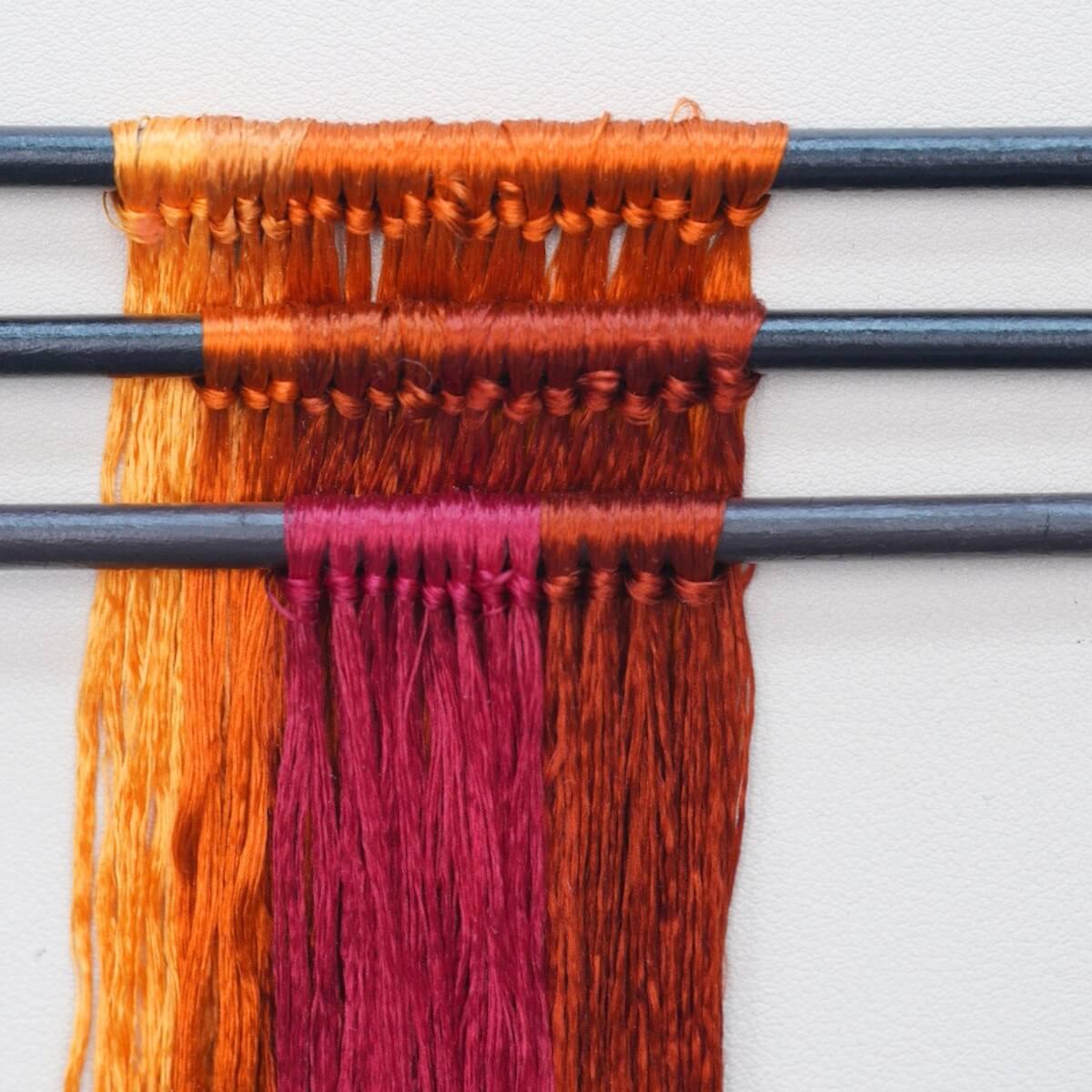
Start by untying your silk threads. Locate the knot at one end of each bundle and cut it open carefully. This project uses 10 colours of silk to create 4 silk rows.
If you have received the updated Ronghua kit, refer to the colour diagram below for thread combination details. Otherwise, just follow the instructions in our video tutorial.

Step 2. Group and Prepare the Threads
Each silk bundle consists of tiny strand-like structures — these are your individual strands.
Align all strands neatly and tie them around a thin stick, keeping the ends even. Avoid uneven lengths — this ensures consistent texture later on.

Step 3. Make Silk Rows
Except for the widest silk section, the silk threads for the rest of the silk sections should be cut twice. Repeat the above process to create four silk rows in total.
Remember to refer back to the data provided in the diagram if you have gotten the new version. If not, just follow our video tutorial.

Step 4. Brush the Silk Rows
Fix one silk row onto your stand using big metal clips - if you don't have the wooden ronghua stand, that's totally fine! You can refer to our video about alternative solutions to the stand.
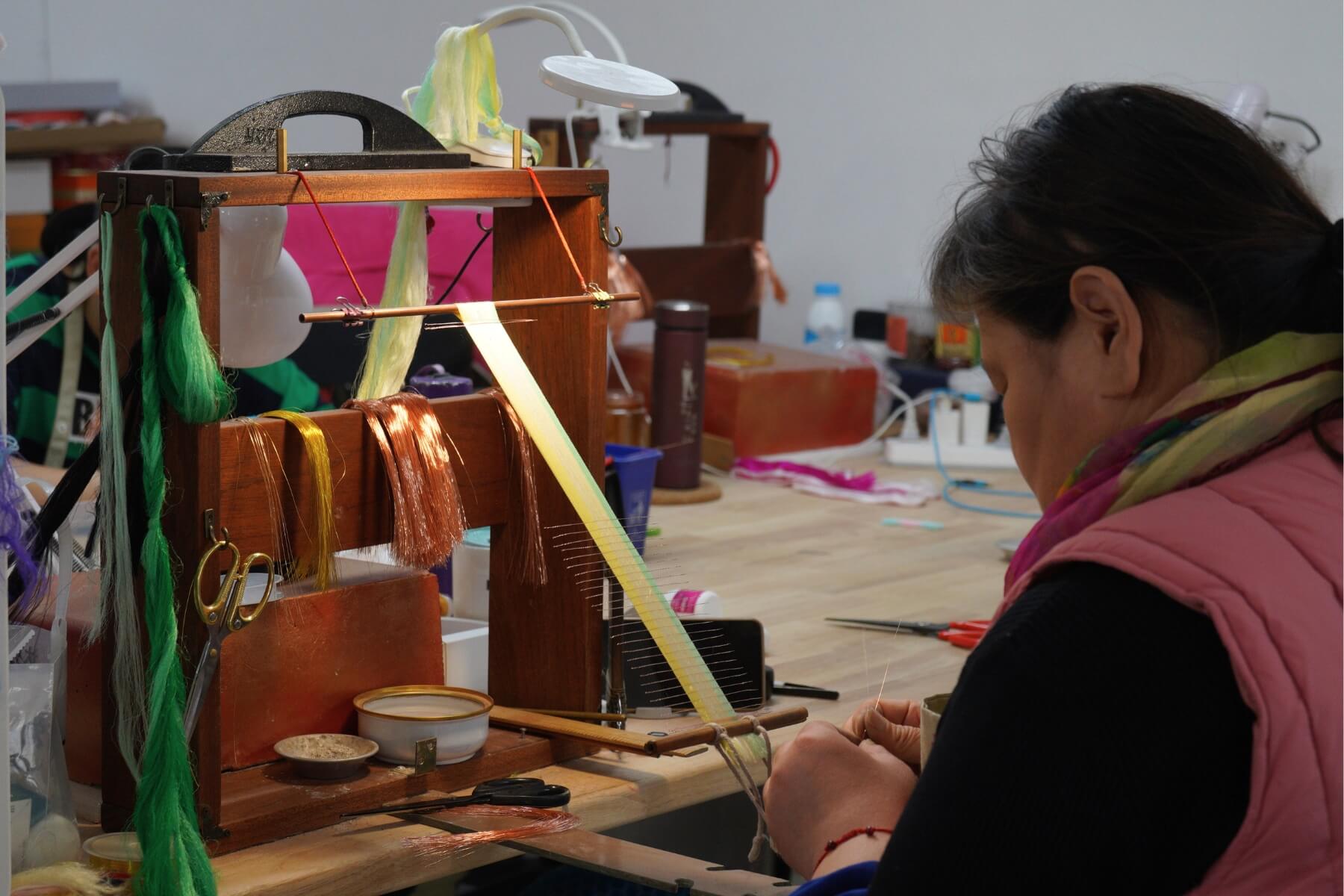
Hold the ends of the threads with one hand and brush gently but firmly from top to bottom. Don’t lift the brush midway. A light mist of water will prevent static. You can apply some pressure — silk threads are stronger than they look! Make sure to brush both the front and back sides until the row looks smooth and fluffy.

Everyone uses a different brush and hand speed, so the time it takes to complete this step is also different. Taking my situation as a reference, it took me about 10 minutes to brush this silk row. When you feel the hair is soft and fluffy, you can stop and check. When there is no complete linear distinction between the threads, it's ready:)

Step 5. Attach Copper Wires
When you feel that the silk is brushed enough, secure its tail with another big clip to your table or anything that can help stretch it taut. Take out one copper wire from the folded end of the row and straighten it. Twist the folded part into a spiral of about 3 cm. Clamp the silk threads between two copper wires and twist the opposite side tightly. Pull both wires taut and continue twisting until they merge into one. Remember, the twisting direction for the left and right end are opposite.
The spacing should be as shown in step 1.
If you have anti-slip powder, it will be much easier to dip your fingers in it and twist it.
We highly recommend you watch the video tutorial for this step:)
Once done, remove the silk row from the stand and lay it flat.
Step 6. Cut the Silk Strips
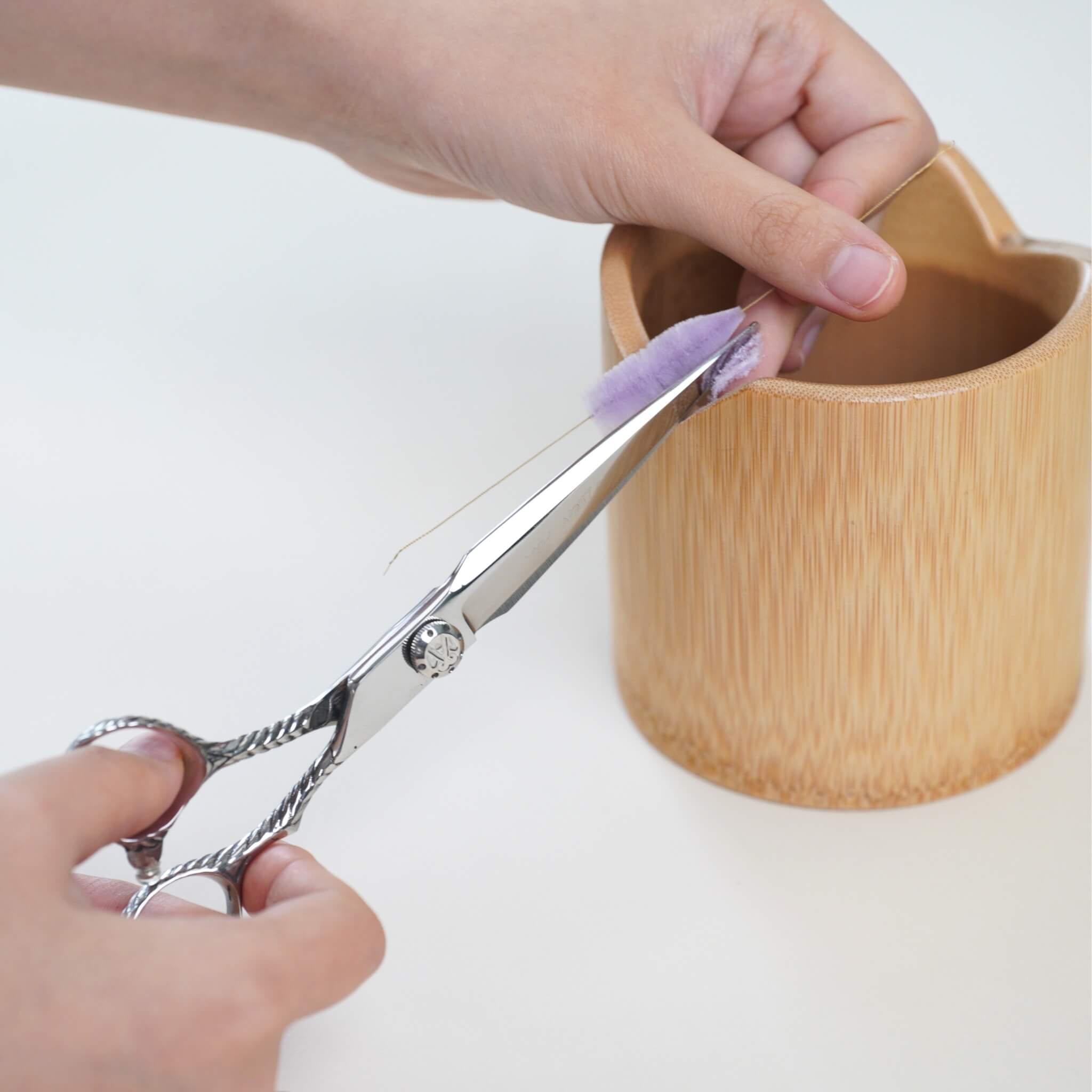
Trim the row’s end neatly, then cut between each pair of copper wires to create even silk strips. When cutting, the scissors must be placed in the middle of two copper wires, otherwise the width of the silk strips will be inconsistent.
If threads stick to your scissors, clean them — it’s usually caused by static or residue. Cut quickly and cleanly for smooth edges. Don't touch the wire or it may get displaced.

Step 7. Center and Twist the Strips
Align the copper wire to the middle of each strip using a flat surface or wooden block.
Once centered, twist both hands in opposite directions to tighten.

Next, place the copper part between the twisting boards and continue twisting in the same direction. Stop when the wire feels firm — twisting too far may cause it to break. How do you know if it is tightened enough? If tightened properly, the copper wire should only faintly show. If the copper wire is very visible, it’s not tight enough.

Step 8. Shape the Silk Strips
Trim the strips slightly thinner on both ends.

Fold the silk strips at the base and align them evenly. Use tweezers to gently organize the threads so they sit neatly together.
For the lotus stamens (yellow strips), first trim into this shape:

Then cut in the middle, so one end is thicker and the other thinner. Bundle about 16 strands together and wrap them tightly with silk thread to secure. For the seed pods, use around 10–15 strips. Trim the top edge flat.

Apply a small amount of glue to fill any gaps, and wrap the exposed wires to keep everything in place. Make two sets of this.

Take out the flower center, cut it in half, and wrap it around the seed pods. This is for making the flower center for the main flower.

Step 9. Flatten the Strips
Use a mini iron to flatten the prepared strips.
 Once flattened, soak them in shaping liquid, or gently brush the liquid on if you’re worried about shrinkage.
Prepare your setting solution:
- Use either hair spray, or
- Diluted white glue with water or alcohol (1:1.15 or 1:1.2 ratio)
Soak the flattened silk strips, let them absorb the solution, then scrape off the excess.

Step 10. Shape the Petals
Use tweezers to pinch the petals into soft curves. Push the edges slightly inward and shape the tip into a gentle point. Fix the petals onto a foam board to hold their shape while drying.
After the petals are fully dry, trim the edges neatly to refine the final shape.

Step 11. Assemble the Flower
Begin with the inner petal layer in the lightest color, using six petals. Add the second layer in a slightly darker shade with five petals. Finish with the outer layer using the remaining faded pink petals.

After completing each layer, wrap the base tightly with silk thread to secure everything firmly.

For flower buds, use three to four petals per bud. You can skip adding stamens for the buds if you prefer a simpler look.
Step 12. Extend the Stem
Trim off any excess annealed wire at an angle. Use a 0.4 mm copper wire to extend the stem, then wrap it tightly with silk thread and tie a knot at the base.

For hairpins, keep the stem short and compact.
For vases, extend the stem with extra wire and wrap it securely for stability.

After everything is done, cut the wires at the bottom at an angle. Wrap downward then fold the bottom up, then wrap again with silk threads.
We use a special technique to tie the thread without any trace. To do this, you will need to take a small piece of copper wire or thread and fold it in half. Cover the copper wire / thread when continue wrapping. When finishing, pass the remaining thread through the small loop of the copper wire. Then quickly pull the copper wire out from the tail. The thread ends are left inside the wrapped silk threads. You can safely cut off the exposed silk thread, and trim off any excess.
(We highly recommend you watch the video tutorial for this step:)
Once assembled, gently adjust the petals so the flower looks balanced and natural. If the stamen feels out of place, you can remove it or replace it as you like.
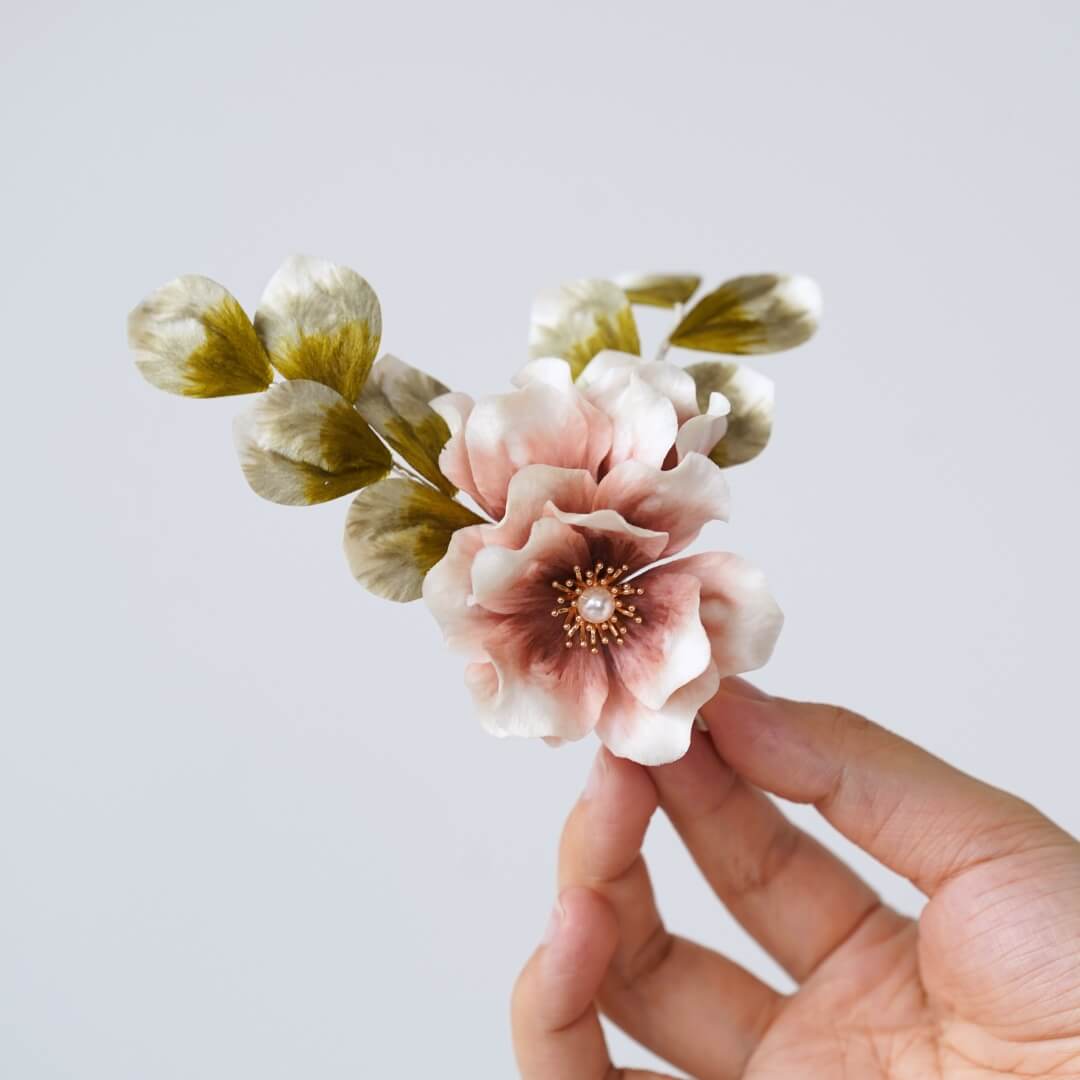
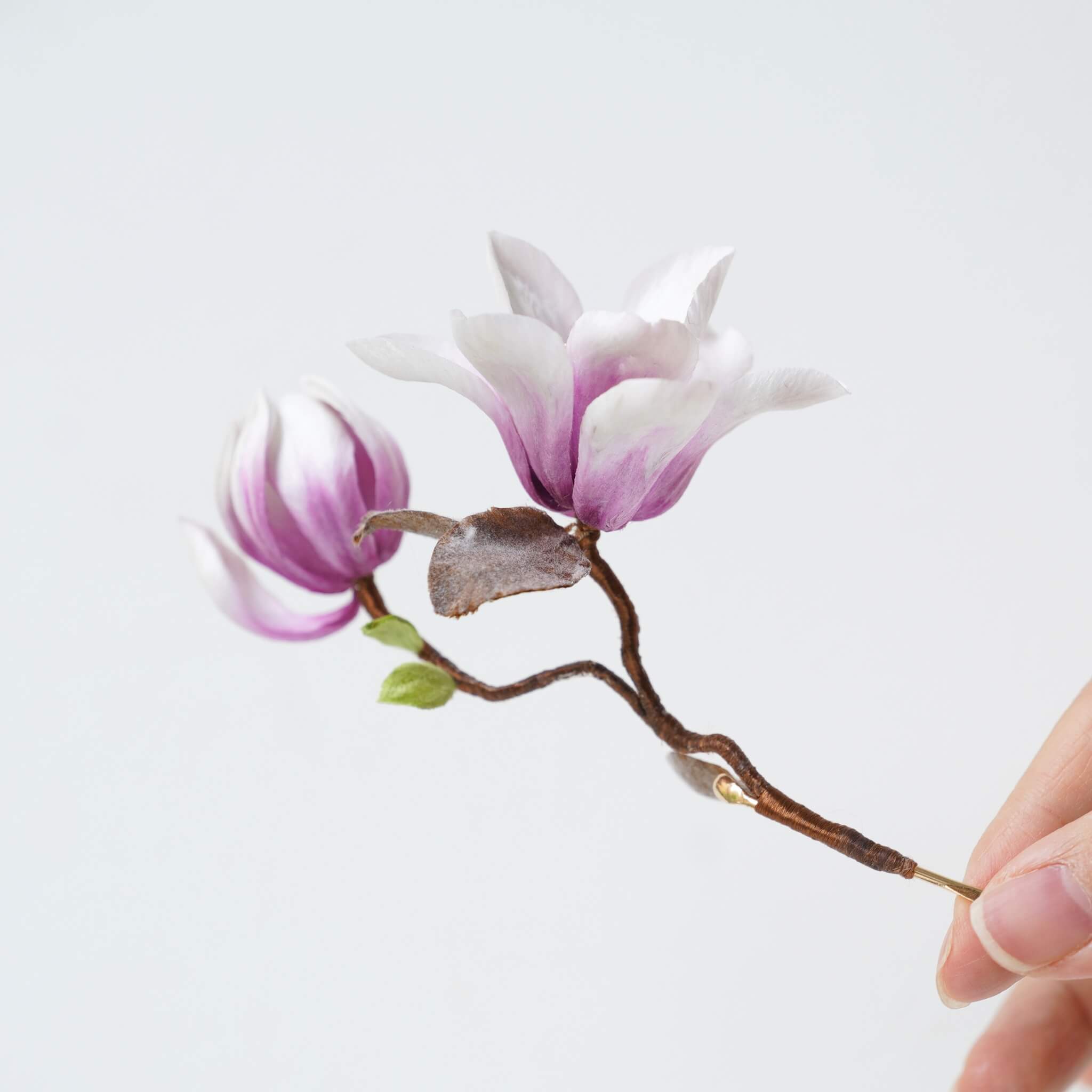
Your silk-thread lotus flower is now complete. Enjoy it as a delicate home decoration or transform it into a graceful hair accessory.



Leave a comment
All comments are moderated before being published.
This site is protected by hCaptcha and the hCaptcha Privacy Policy and Terms of Service apply.