

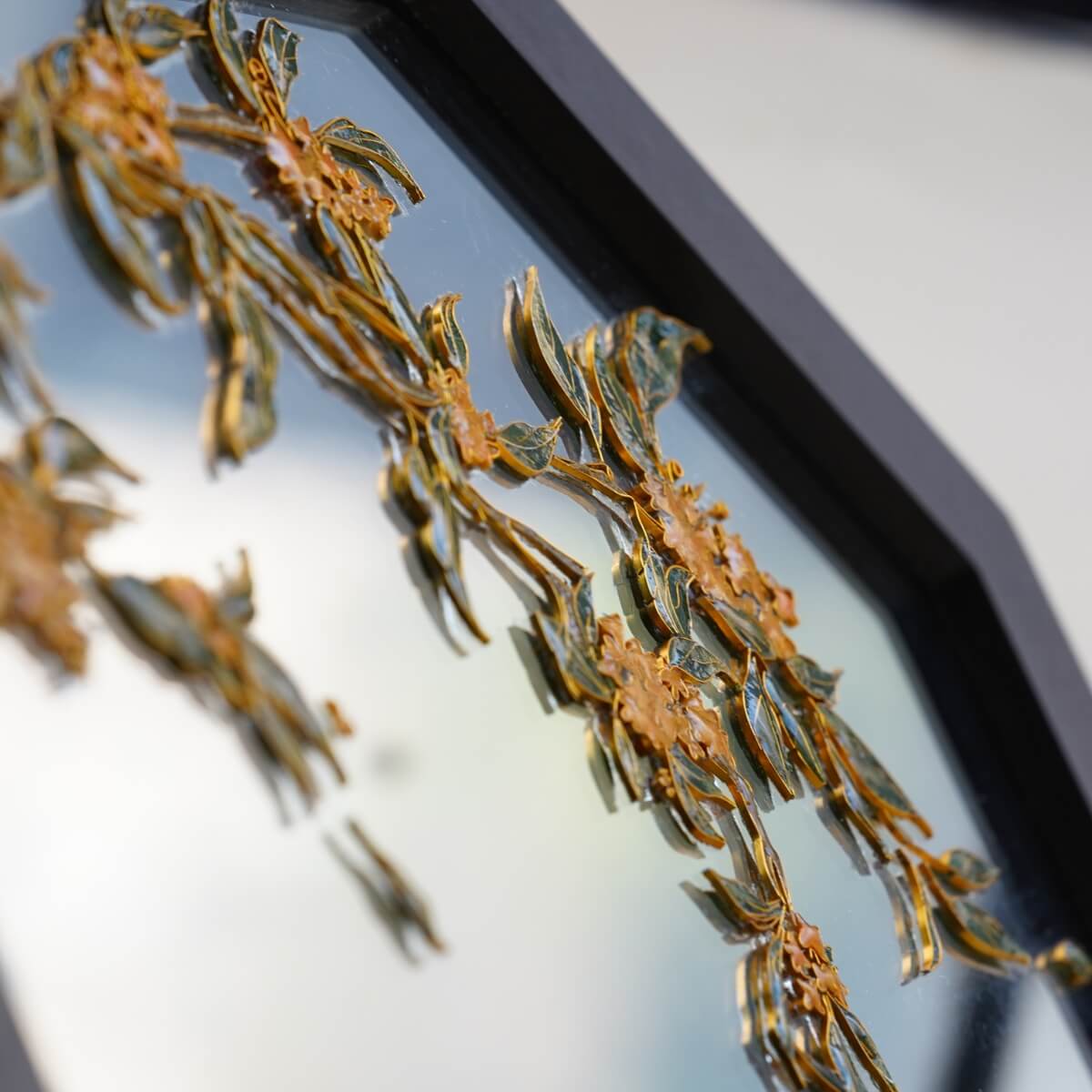
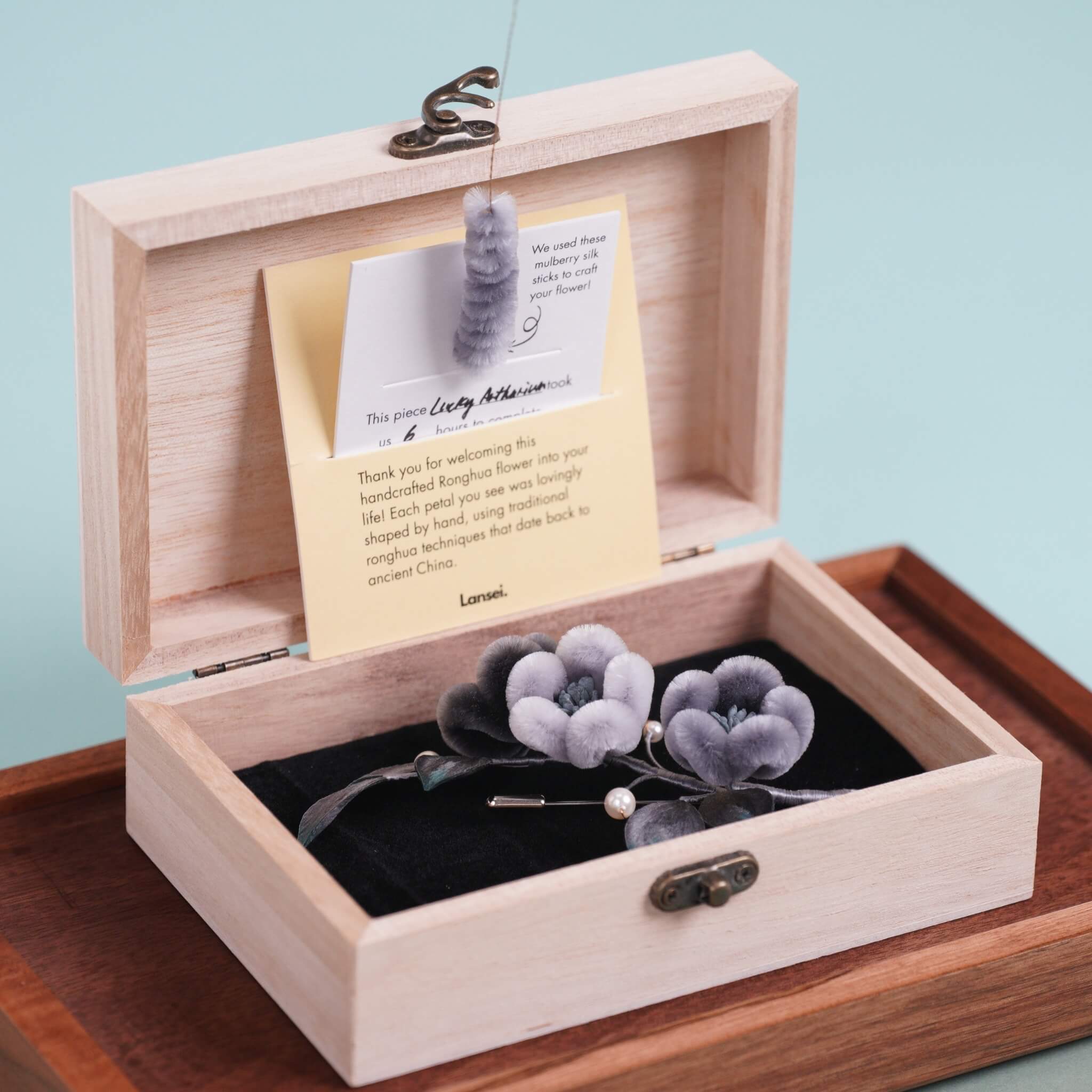

Doux comme la lumière du matin et calme comme le ciel avant le lever du soleil — Daybreak Bloom capture la beauté tranquille des premières heures. Ses pétales de soie gris-bleu et sa texture aérienne apportent un sentiment de calme, comme regarder le monde s’éveiller au ralenti.
Préparation : ce dont vous aurez besoin
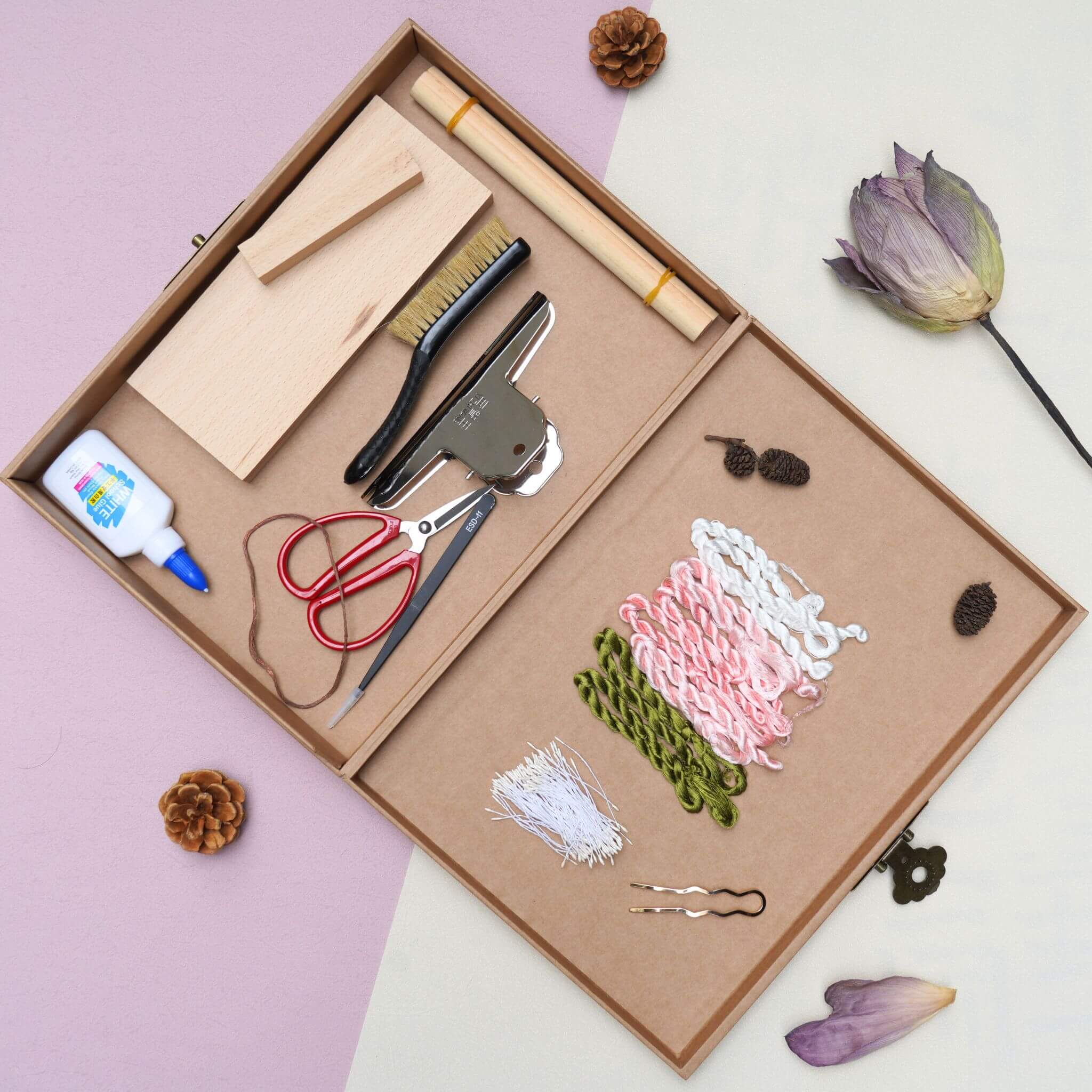
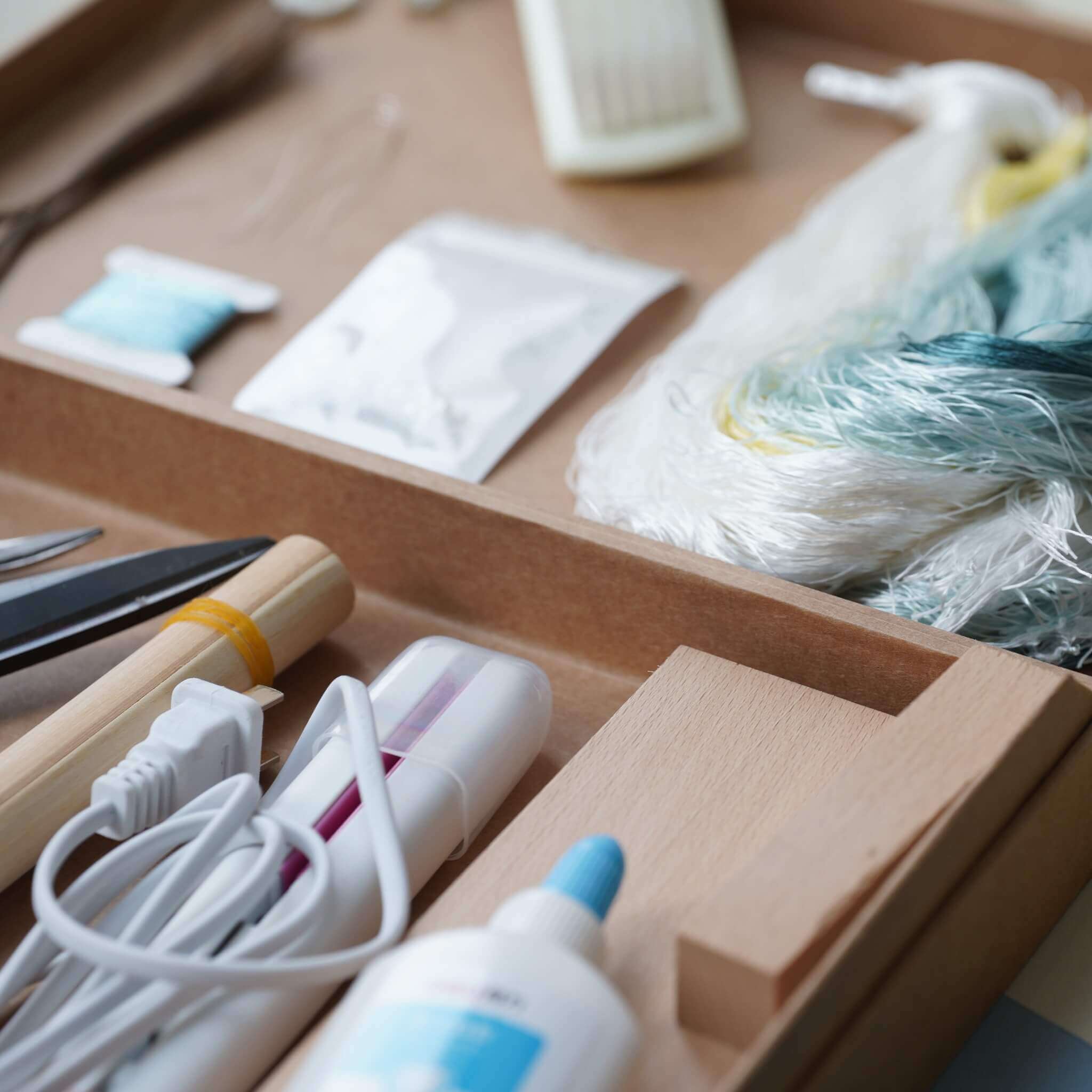
Si vous avez acheté notre Kit d’outils Ronghua, vous avez déjà tout ce qu’il faut !
Sinon, préparez les outils suivants :
- Brosse à poils (dureté moyenne à douce)
- Fer à lisser (celui que vous utilisez pour lisser vos cheveux)
- Pinces à épiler
- Au moins 2 paires de ciseaux
- Bâtons en bois / crayons / baguettes
- Laque ou colle blanche diluée (rapport 1:1,15–1:1,2)
- Grandes pinces (environ 15 cm)
- Planches à torsader et blocs en bois (pour une tension uniforme)
- Poudre antidérapante (optionnelle mais utile)
Vidéo tutoriel complète
Étape 1. Alignez et disposez les fils de soie
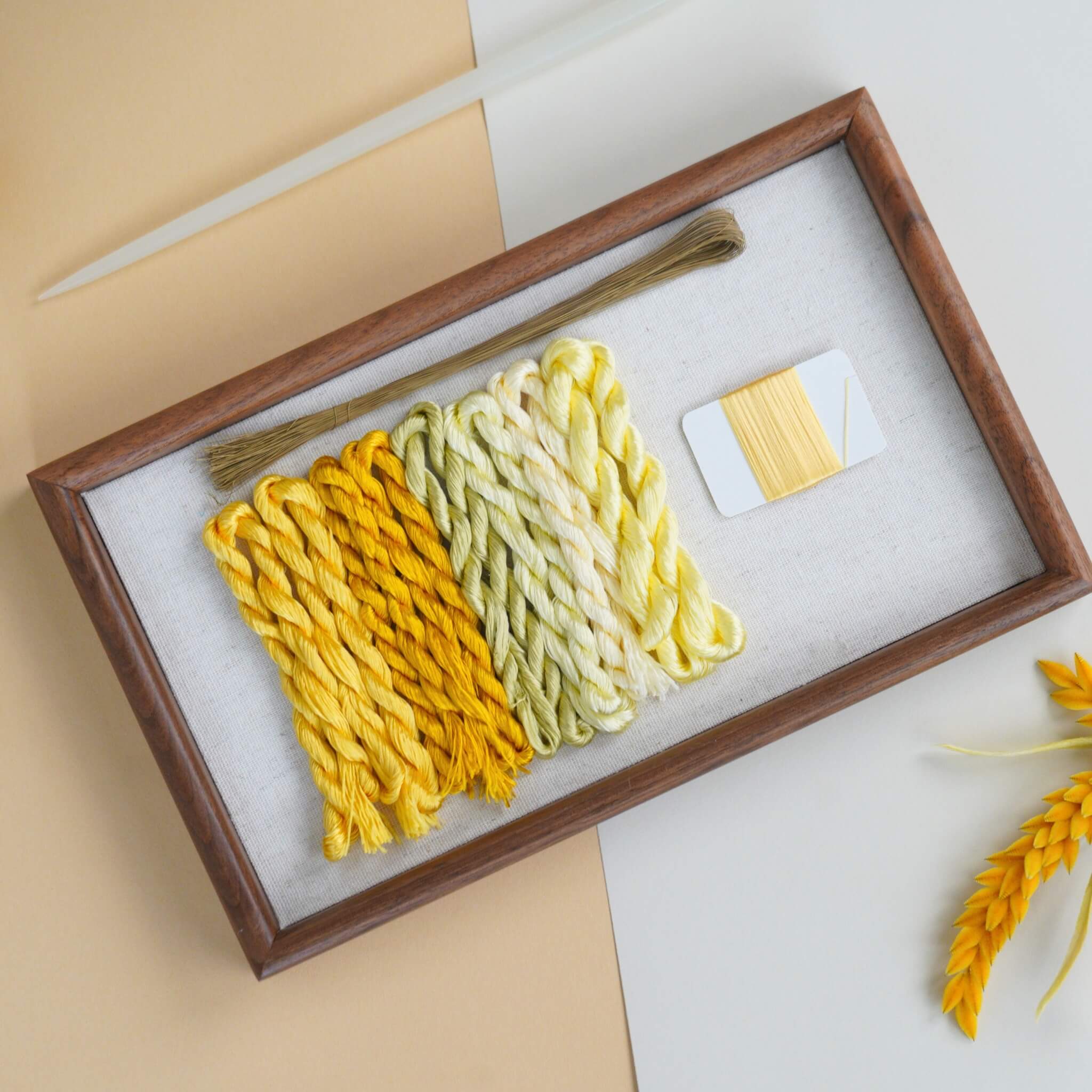
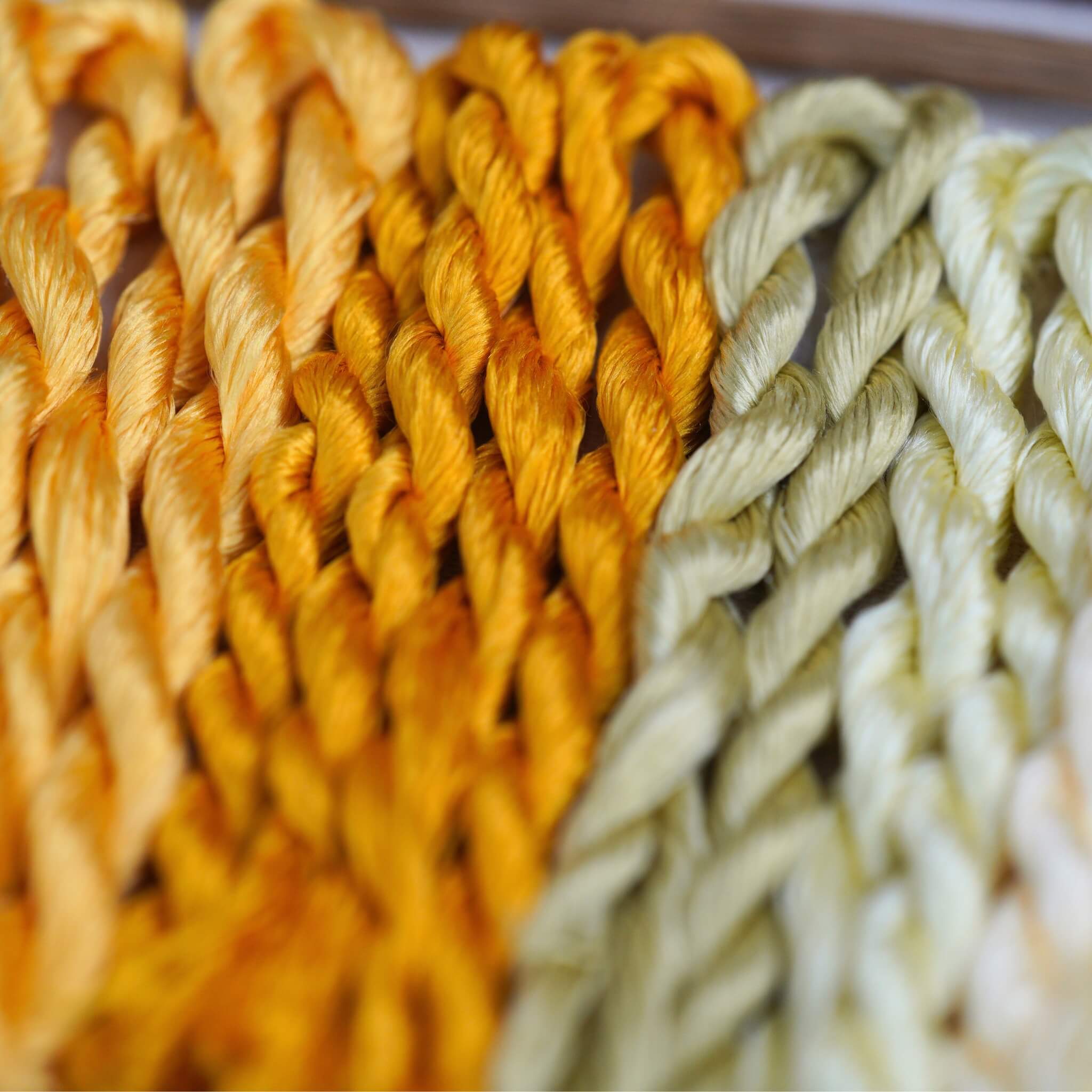
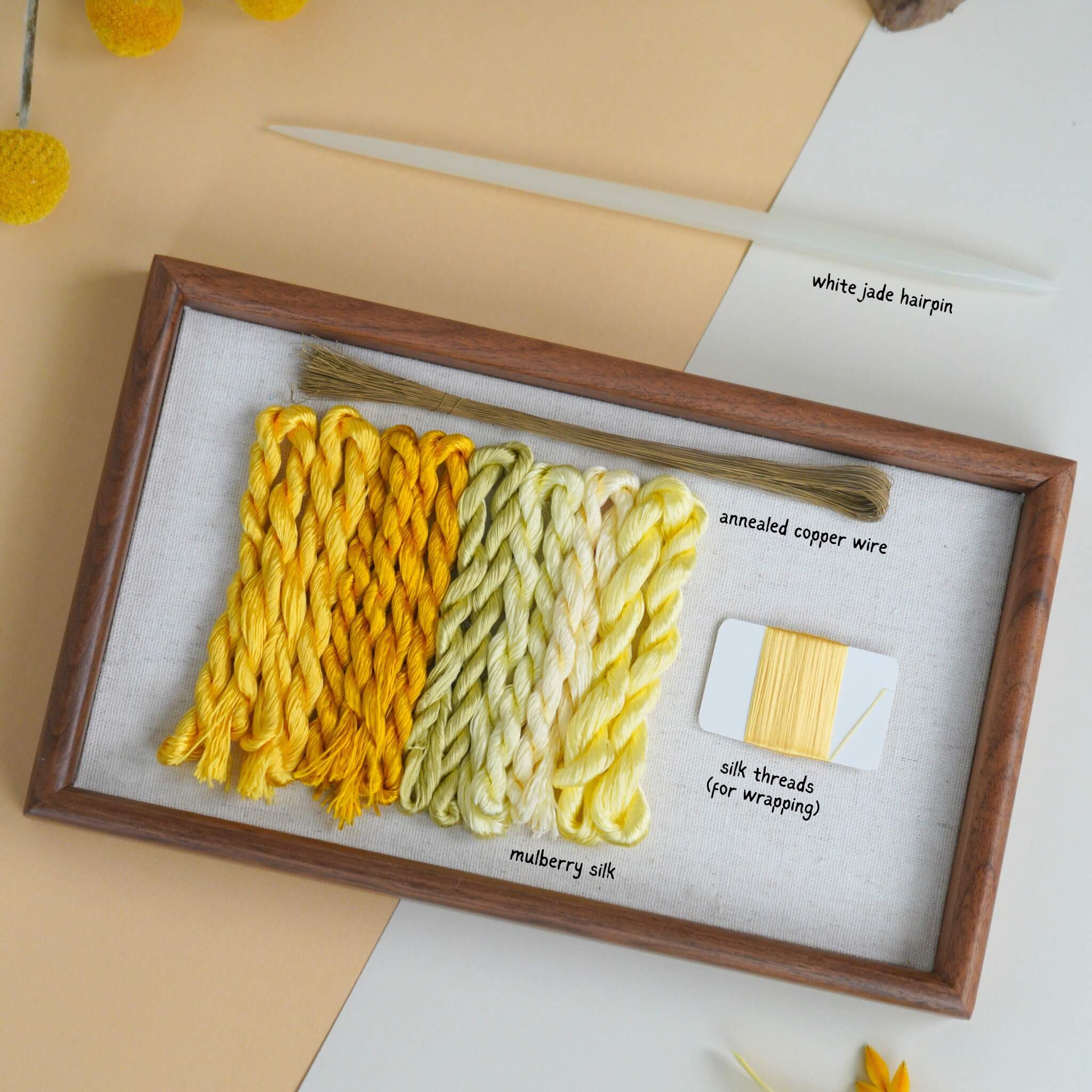
Commencez par dénouer vos fils de soie. Localisez le nœud à une extrémité de chaque faisceau et coupez-le soigneusement. Ce projet utilise 4 couleurs de soie pour créer quatre rangées de soie. La première rangée sert à fabriquer les feuilles, et elle utilise moins de mèches de fil de soie par groupe.
Référez-vous au diagramme des couleurs ci-dessous pour les détails de la combinaison des fils.

Étape 2. Regroupez et préparez les fils
Chaque faisceau de soie est composé de petites structures en forme de brins — ce sont vos brins individuels.
Alignez soigneusement toutes les mèches selon le schéma ci-dessus et attachez-les autour d’un bâton fin, en gardant les extrémités égales. Évitez les longueurs inégales — cela garantit une texture de pétale uniforme par la suite.

Étape 3. Faire les Rangées de Soie
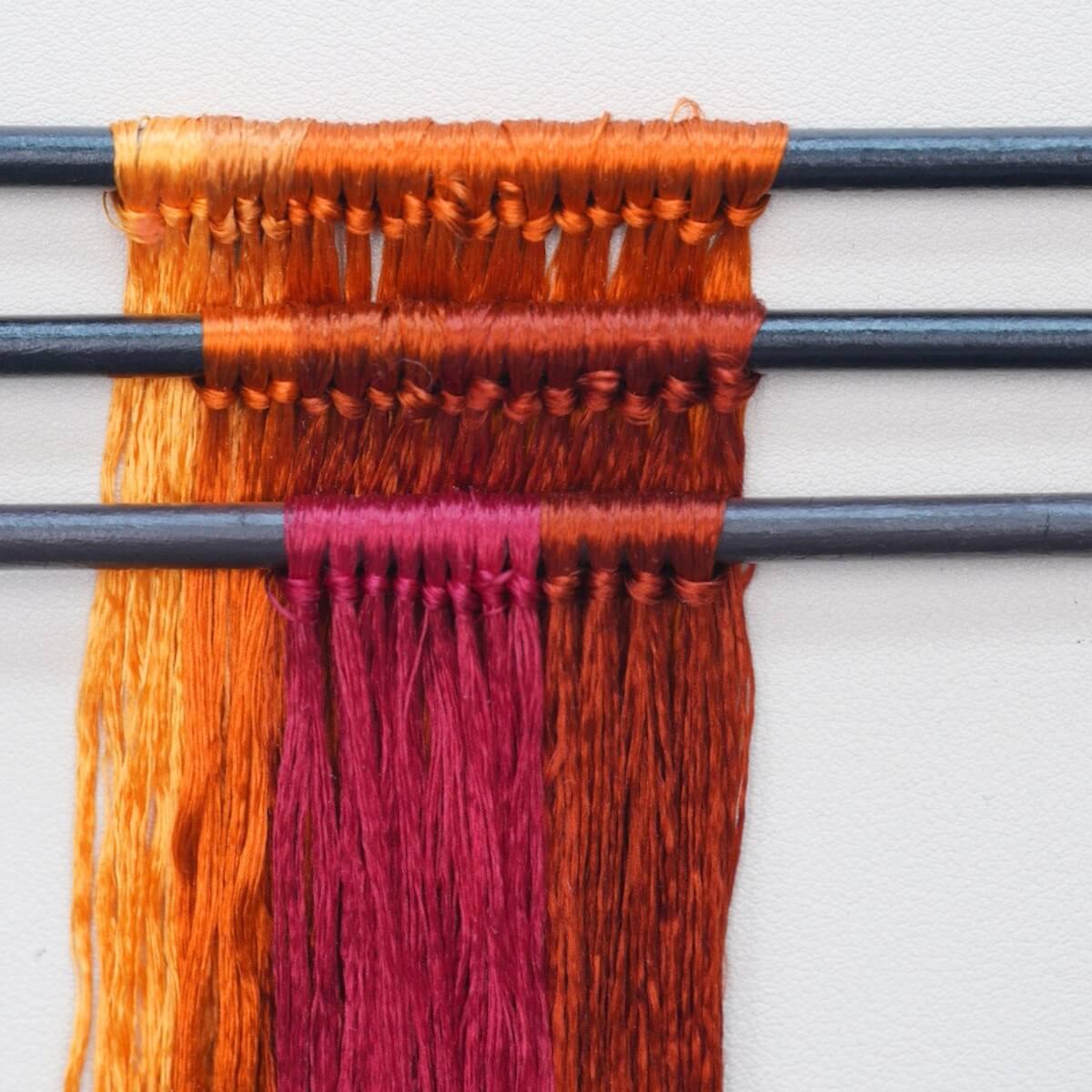
Répétez le processus ci-dessus pour créer quatre rangées de soie au total. N'oubliez pas de vous référer aux données fournies dans le diagramme pour les rangées suivantes, car chacune diffère légèrement. Voici les rangées de soie finies que nous avons réalisées.

Étape 4. Brosser les Rangées de Soie
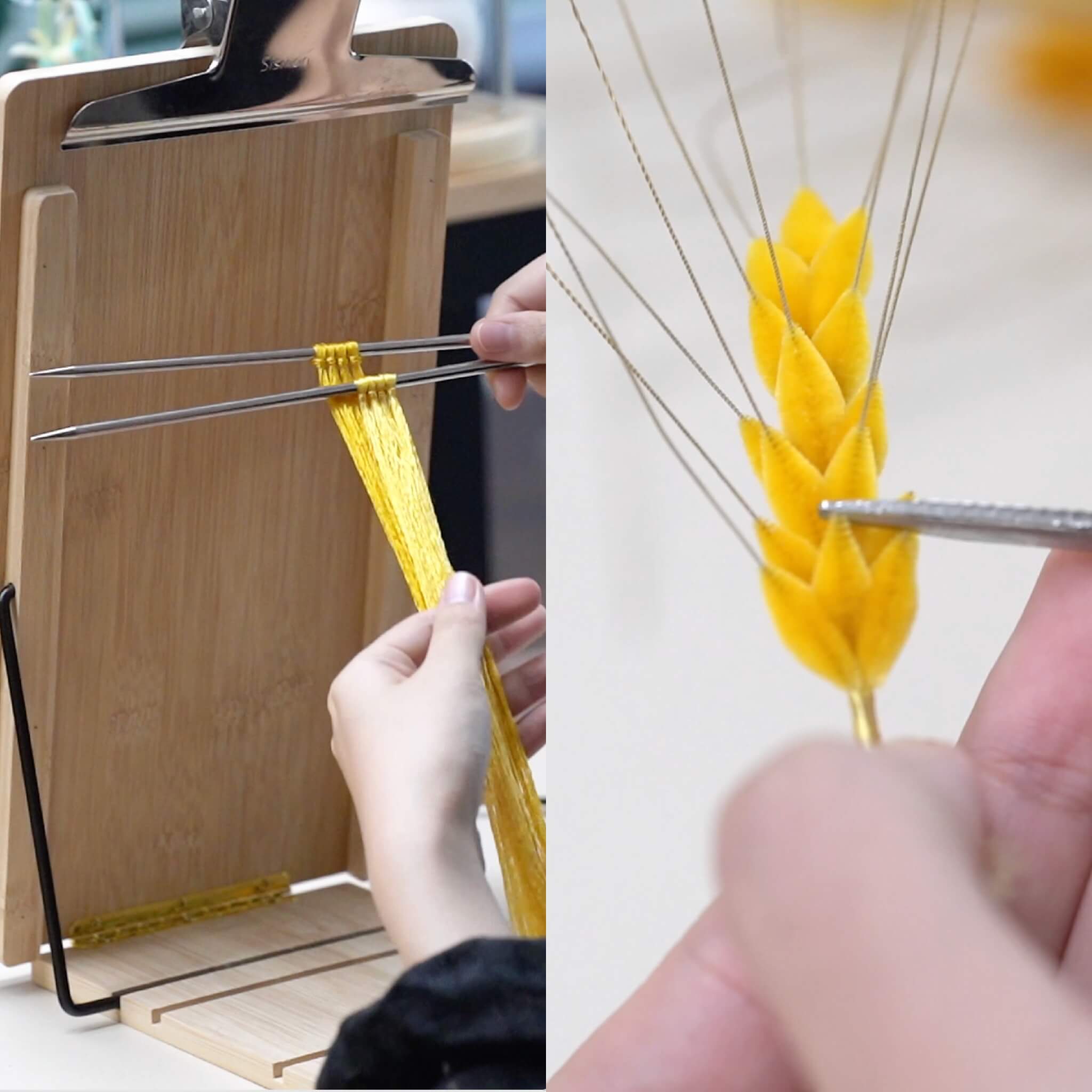
Fixez une rangée de soie sur votre support à l’aide de grandes pinces métalliques - si vous n’avez pas le support en bois ronghua, ce n’est pas grave ! Vous pouvez consulter notre vidéo sur des solutions alternatives au support.
Tenez les extrémités des fils d'une main et brossez doucement mais fermement de haut en bas. Ne soulevez pas la brosse en cours de route. Une légère brume d'eau empêchera l'électricité statique. Vous pouvez appliquer un peu de pression — les fils de soie sont plus résistants qu'ils n'en ont l'air ! Assurez-vous de brosser les deux côtés, avant et arrière, jusqu'à ce que la rangée soit lisse et duveteuse.

Chacun utilise un pinceau et une vitesse de main différents, donc le temps nécessaire pour compléter cette étape varie également. En prenant ma situation comme référence, il m'a fallu environ 10 minutes pour brosser cette rangée de soie. Lorsque vous sentez que les cheveux sont doux et duveteux, vous pouvez arrêter et vérifier. Quand il n'y a plus de distinction linéaire complète entre les fils et qu'ils commencent à se coller les uns aux autres, c'est prêt :)
Voici ce que ressent un fil de soie brossé :

Étape 5. Fixer les Fils de Cuivre
Lorsque vous sentez que la soie est suffisamment brossée, fixez sa queue avec une autre grande pince à votre table ou à tout ce qui peut aider à la tendre. Sortez un fil de cuivre recuit de l’extrémité pliée de la rangée et redressez-le. Tordez la partie pliée en une spirale d’environ 3 cm. Pincez les fils de soie entre deux fils de cuivre et tordez fermement le côté opposé. Tirez les deux fils bien tendus et continuez à tordre jusqu’à ce qu’ils fusionnent en un seul. N’oubliez pas, la direction de torsion pour les extrémités gauche et droite est opposée.

L’espace entre les fils de cuivre doit être de 1 cm.
Si vous avez de la poudre antidérapante, il sera beaucoup plus facile d'y tremper vos doigts et de les tordre.
(Nous vous recommandons vivement de regarder le tutoriel vidéo pour cette étape :)
Une fois terminé, retirez la rangée de soie du support et étalez-la à plat.
Étape 6. Couper les Bandes de Soie
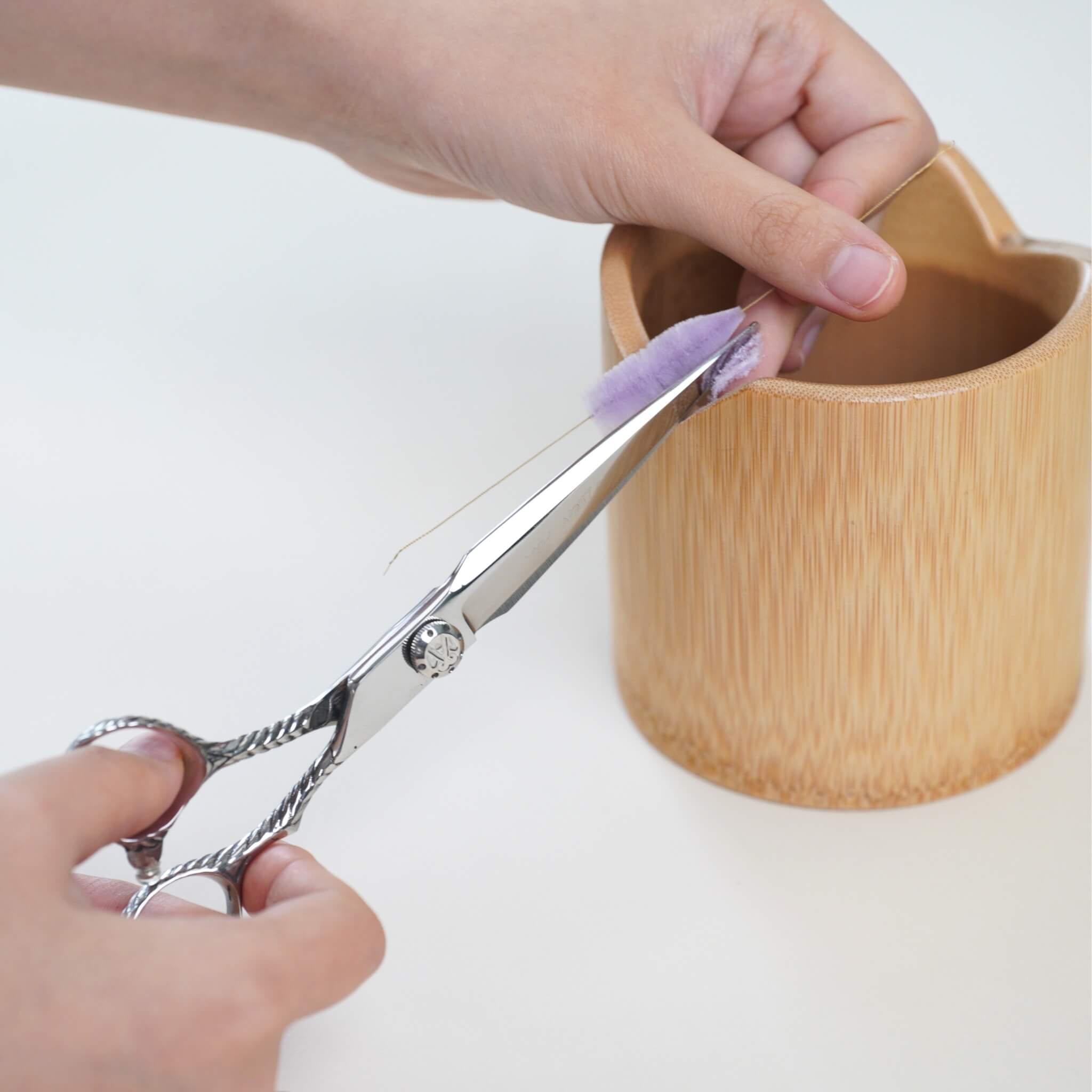
Coupez proprement l’extrémité de la rangée, puis coupez entre chaque paire de fils de cuivre pour créer des bandes de soie uniformes. Lors de la coupe, les ciseaux doivent être placés au milieu de deux fils de cuivre, sinon la largeur des bandes de soie sera inégale. Si des fils collent à vos ciseaux, nettoyez-les — c’est généralement dû à l’électricité statique ou à des résidus. Coupez rapidement et proprement pour des bords lisses. Ne touchez pas le fil ou il pourrait se déplacer.

Étape 7. Centrer et Tordre les Bandes
Alignez le fil de cuivre au centre de chaque bande en utilisant une surface plane ou un bloc de bois.
Une fois centré, tournez les deux mains dans des directions opposées pour serrer.

Ensuite, placez la partie en cuivre entre les planches de torsion et continuez à torsader dans la même direction. Arrêtez-vous lorsque le fil devient ferme — trop torsader peut le casser. Comment savoir si c’est assez serré ? Si le fil de cuivre est bien serré, il ne devrait apparaître que faiblement. S’il est très visible, ce n’est pas assez serré. Utilisez une pince à épiler pour brosser les bandes de soie. Cela aide à rendre les bandes de soie plus duveteuses.

Étape 8. Faire les Feuilles

Ensuite, nous devons renforcer les bandes aplaties.
Préparez votre solution de fixation :
- Utilisez soit de la laque, soit
- Colle blanche diluée avec de l’eau ou de l’alcool (rapport 1:1,15 ou 1:1,2)
Trempez les bandes de soie aplaties, laissez-les absorber la solution, puis grattez l'excès.

Étape 9. Faire les Pétales
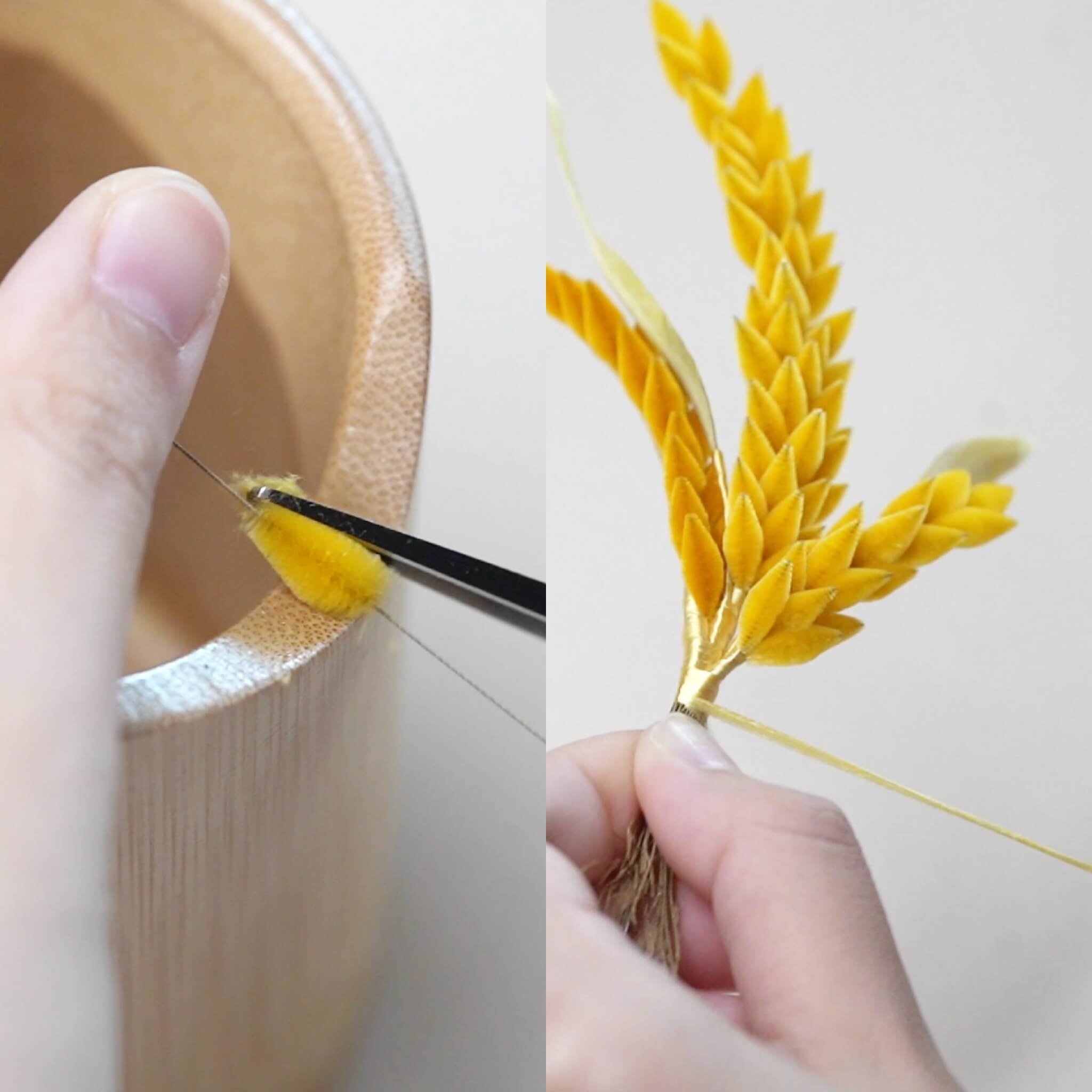
Les bandes de soie pour les petites fleurs doivent être taillées en formes pointues. Commencez à effiler à partir du centre de chaque bande — tenez les ciseaux près de la soie et inclinez-les légèrement en coupant, en faisant tourner doucement la bande pendant la coupe. Donnez à chaque bande une forme plus large au milieu et plus étroite aux deux extrémités.

Assurez-vous que toutes les bandes de soie sont coupées uniformément à la même taille. Vous aurez besoin de cinq pièces pour chaque couleur. Une fois coupées, utilisez une pince à épiler pour brosser la soie et enlever les fibres lâches pour une finition propre et douce.
Pliez chaque bande de soie en deux, alignez la base, et tordez fermement le fil de cuivre pour le sécuriser. Préparez cinq pétales pour chacune des trois couleurs que vous utilisez.

Étape 10. Faites les fleurs
Comptez sept pièces pour le cœur de la fleur et pliez-les ensemble soigneusement. Fixez le paquet avec du fil de soie, en nouant fermement à la base.
Ensuite, commencez à assembler les pétales un par un autour du cœur. Chaque fleur nécessitera cinq pétales. Après avoir attaché tous les pétales, enroulez le fil de soie vers le bas autour de la tige sur environ 2 cm et faites un nœud pour finir.

Ajustez doucement la forme des pétales et pliez légèrement la soie vers le haut pour créer une courbe douce et naturelle. Cela forme une petite fleur duveteuse. Répétez le même processus pour faire trois petites fleurs de différentes couleurs.
Étape 11. Assemblez les fleurs
Une fois les fleurs terminées, passez aux feuilles. Disposez les feuilles ensemble et insérez un morceau de fil de cuivre comme tige — la rigidité du fil vous aidera à contrôler la forme.
Enroulez le fil avec du fil de soie, et après une courte distance, ajoutez la deuxième feuille. Continuez à enrouler jusqu’à ce que trois feuilles soient attachées pour former une branche. Vous aurez besoin de deux branches au total — une avec trois feuilles et une avec deux.

Préparez deux grosses perles et une petite perle. Faites passer un morceau de fil de cuivre à travers chaque perle, puis tordez le fil fermement pour le sécuriser.

Enroulez le fil avec du fil de soie jusqu’à ce qu’il soit complètement couvert et lisse. Répétez cette étape pour toutes les perles.
Attachez les feuilles et les fils perlés ensemble pour former la structure de base. Ensuite, prenez les petites fleurs que vous avez faites et fixez-les aux feuilles.

Assemblez progressivement tous les composants — fleurs, feuilles et perles — en ajustant leurs positions pour qu’ils soient naturels et pas trop serrés. Une fois satisfait de la disposition, enroulez le fil de soie autour des tiges jusqu’à la position désirée et nouez solidement.
Coupez tout excès de fil de cuivre et pliez soigneusement la section enroulée. Continuez à enrouler avec un nouveau morceau de fil de soie si nécessaire pour obtenir une finition propre.

Étape 12. Fixez les fleurs à la base.
Vous pouvez choisir n’importe quelle base que vous souhaitez pour l’accessoire, comme une broche ou une épingle à cheveux. Utilisez du fil pour lier la base de l’accessoire avec les fleurs. Assurez-vous de bien tirer le fil de soie en attachant le tout.

Terminez en glissant le fil dans le fil de cuivre. Nous utilisons une technique spéciale pour nouer le fil sans laisser de trace. Pour cela, vous devrez prendre un petit morceau de fil de cuivre ou de fil et le plier en deux. Couvrez le fil de cuivre / le fil lorsque vous continuez à enrouler. Pour finir, passez le fil restant à travers la petite boucle du fil de cuivre. Puis tirez rapidement le fil de cuivre hors de la queue. Les extrémités du fil restent à l'intérieur des fils de soie enroulés. Vous pouvez couper en toute sécurité le fil de soie exposé et tailler tout excès.
(Nous vous recommandons vivement de regarder le tutoriel vidéo pour cette étape :)
Étape 13. Ajustements finaux
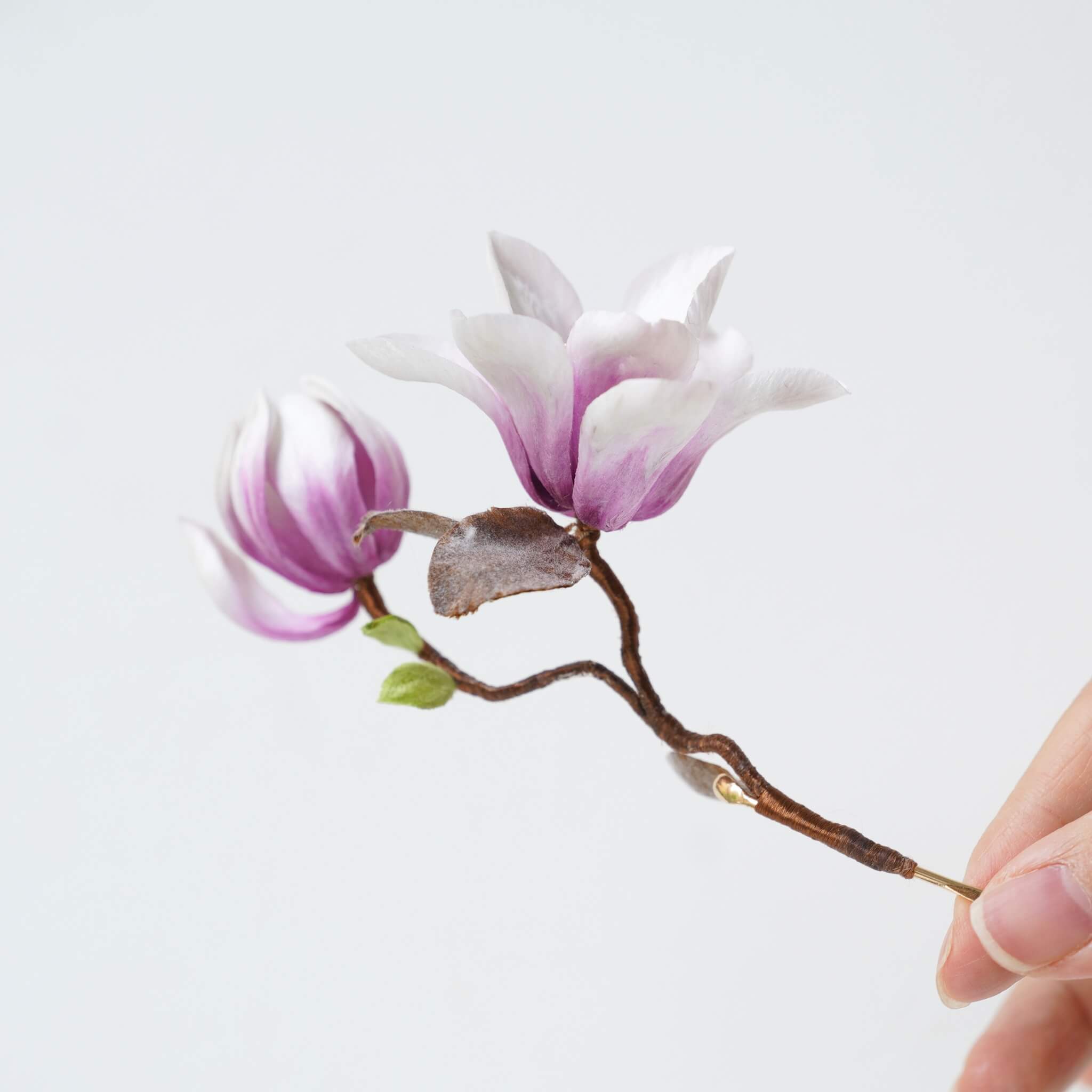
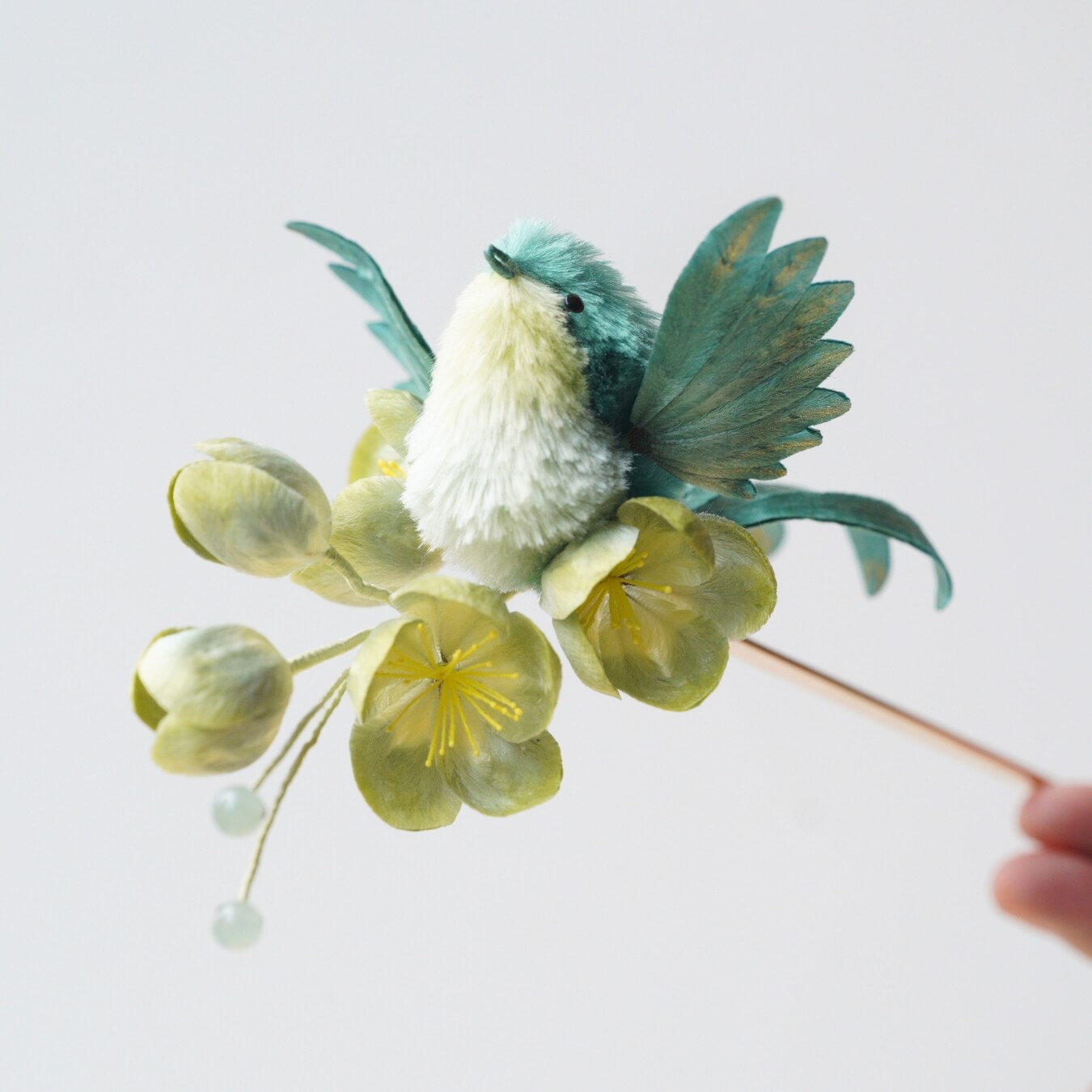
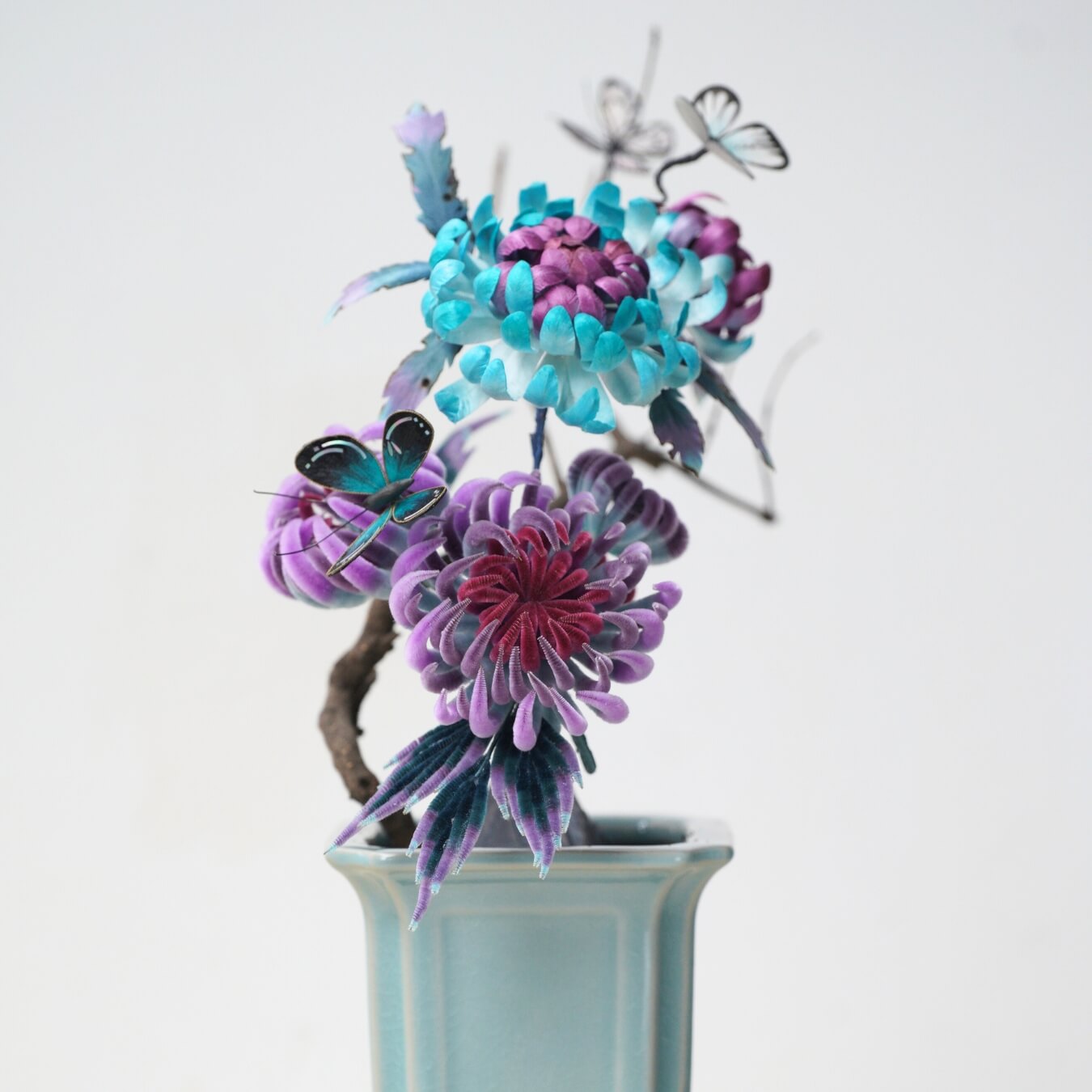
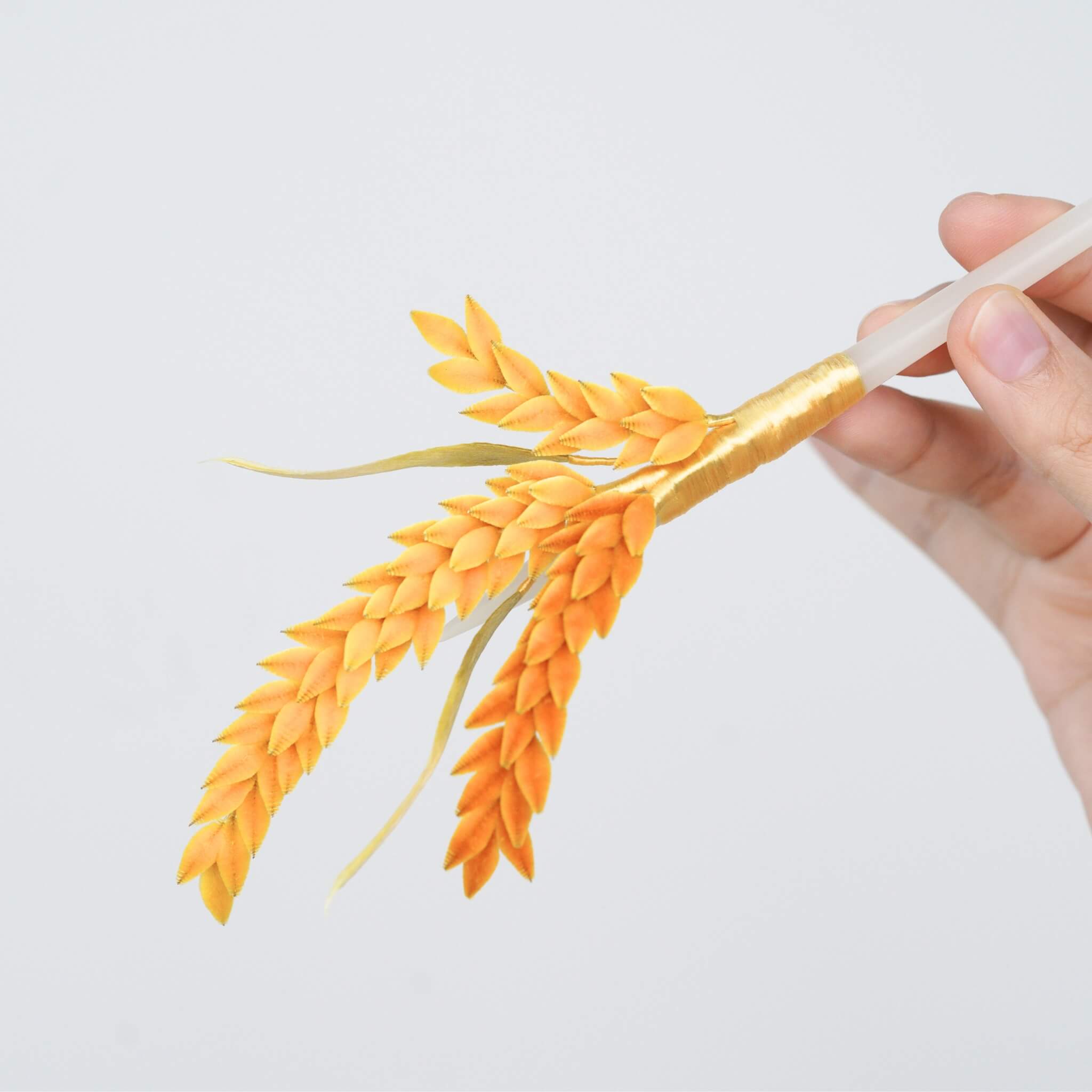
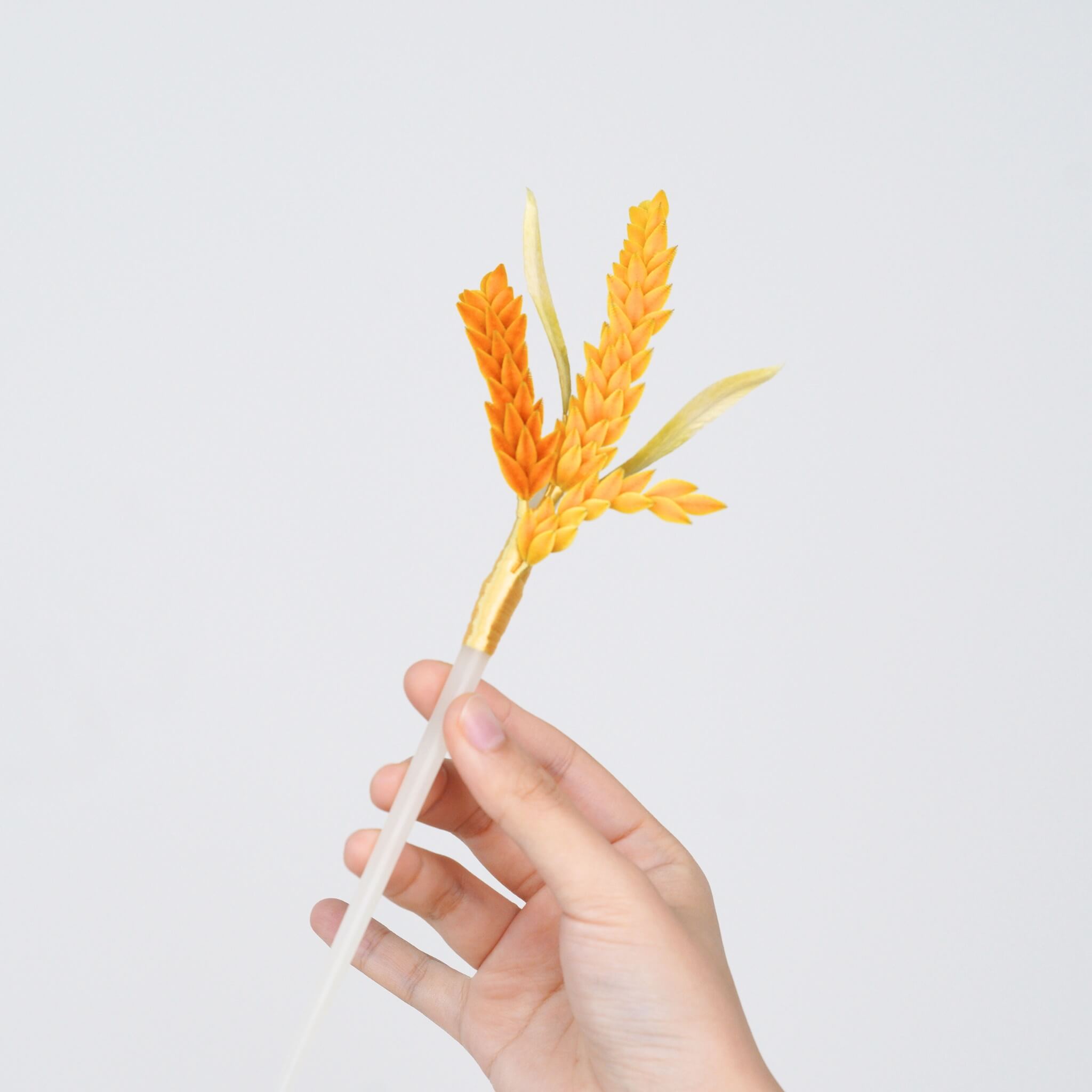
Coupez les fils excédentaires et ajustez délicatement la forme ou l’orientation des fleurs. Et voilà ! Votre broche fleur Daybreak Bloom est terminée !



Laisser un commentaire
Tous les commentaires sont modérés avant d'être publiés.
Ce site est protégé par hCaptcha, et la Politique de confidentialité et les Conditions de service de hCaptcha s’appliquent.