

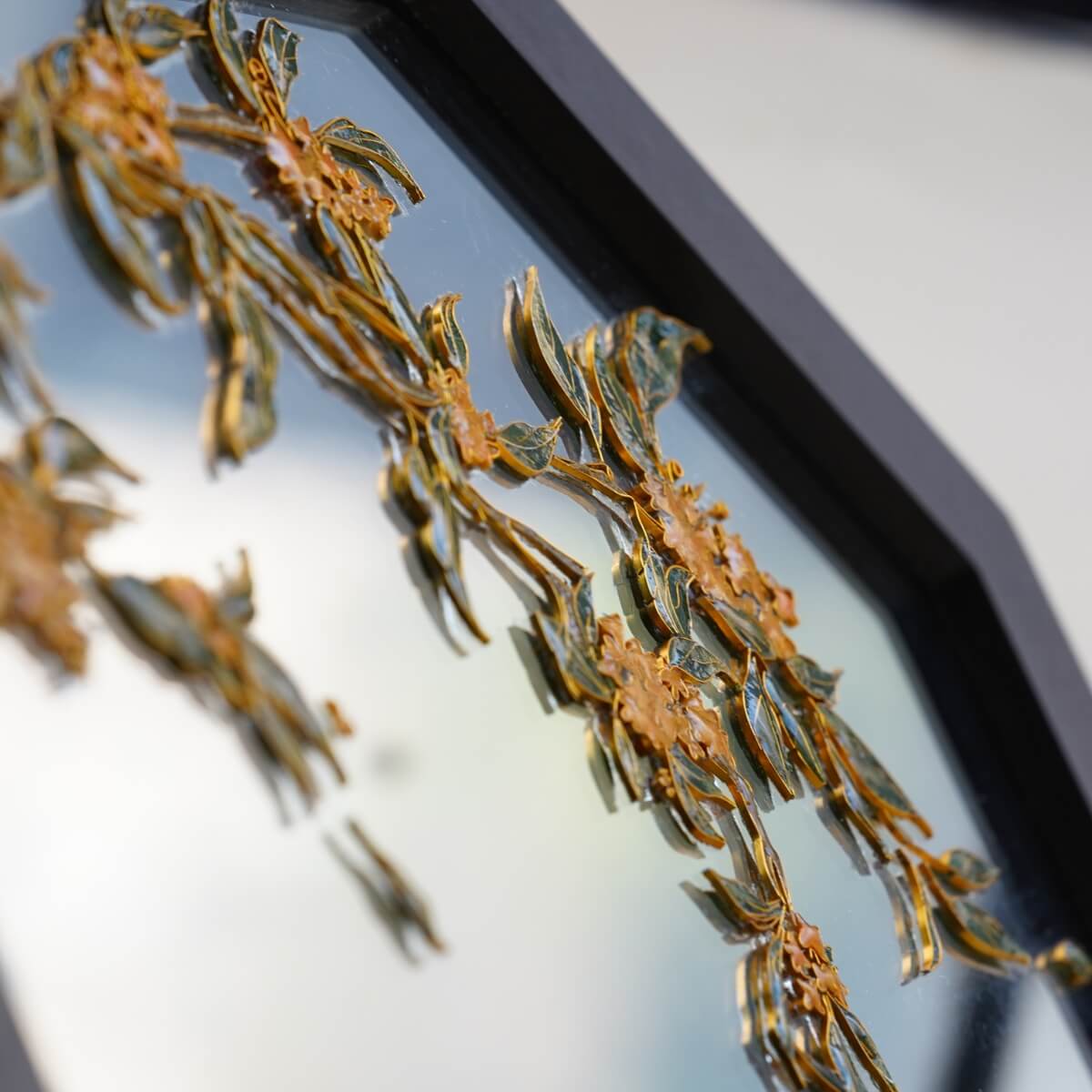
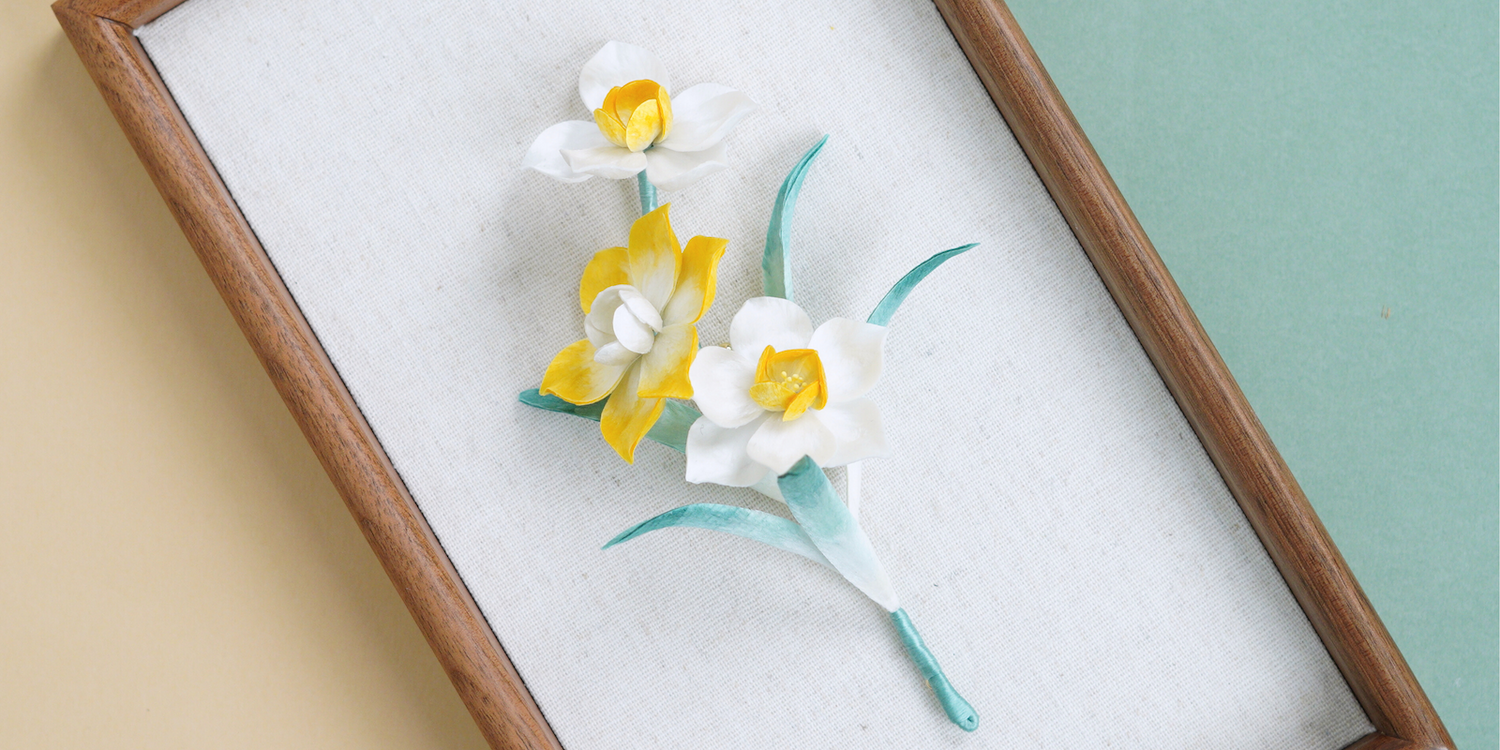
Narzissen sind die Vorboten des Frühlings und symbolisieren Wiedergeburt und das Anbrechen hellerer Tage. Ihre trompetenförmigen Blütenmitten und weichen, offenen Blütenblätter verleihen ihnen ein leichtes, heiteres Aussehen, das schlicht, aber voller Leben wirkt.
Vorbereitung: Was Sie benötigen
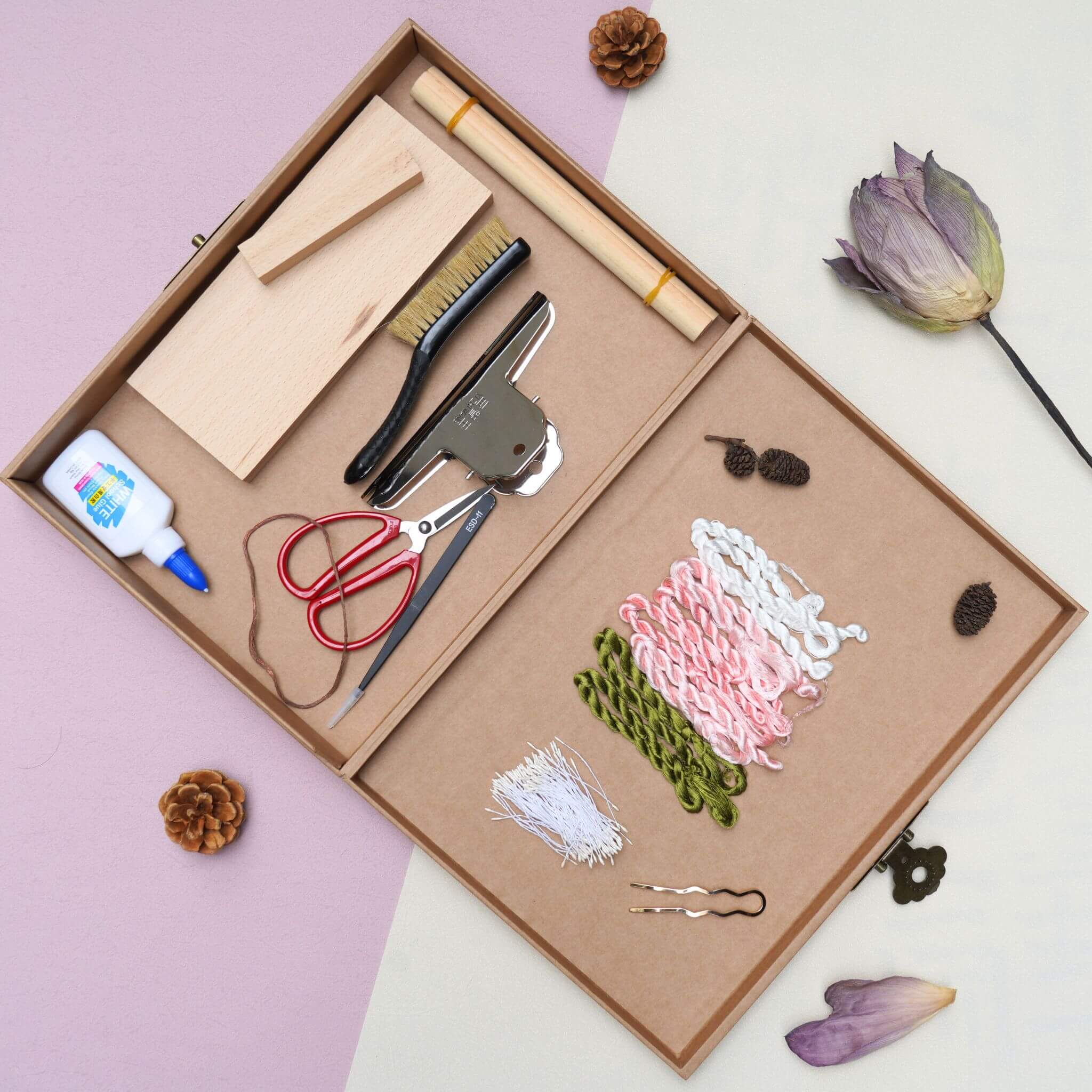
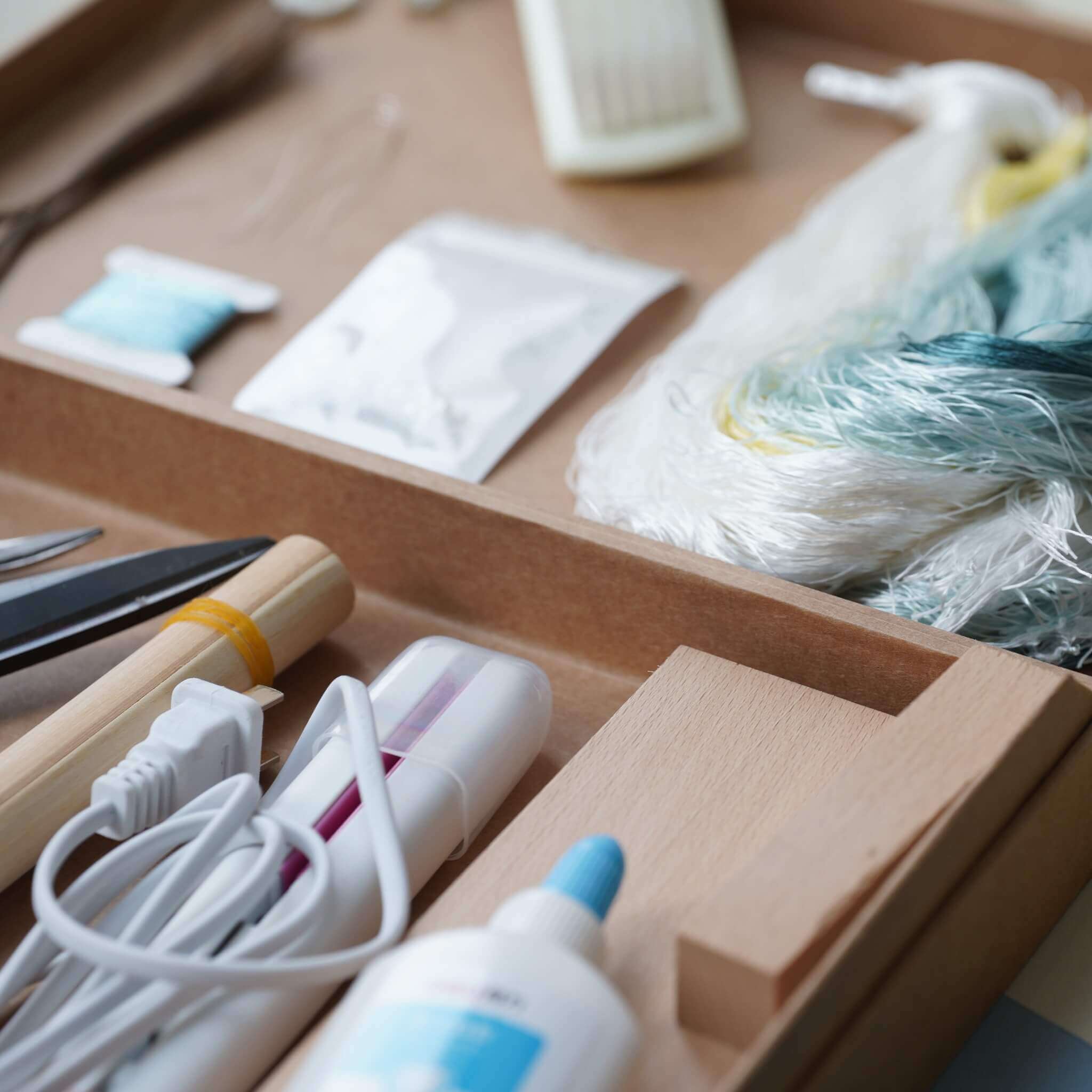
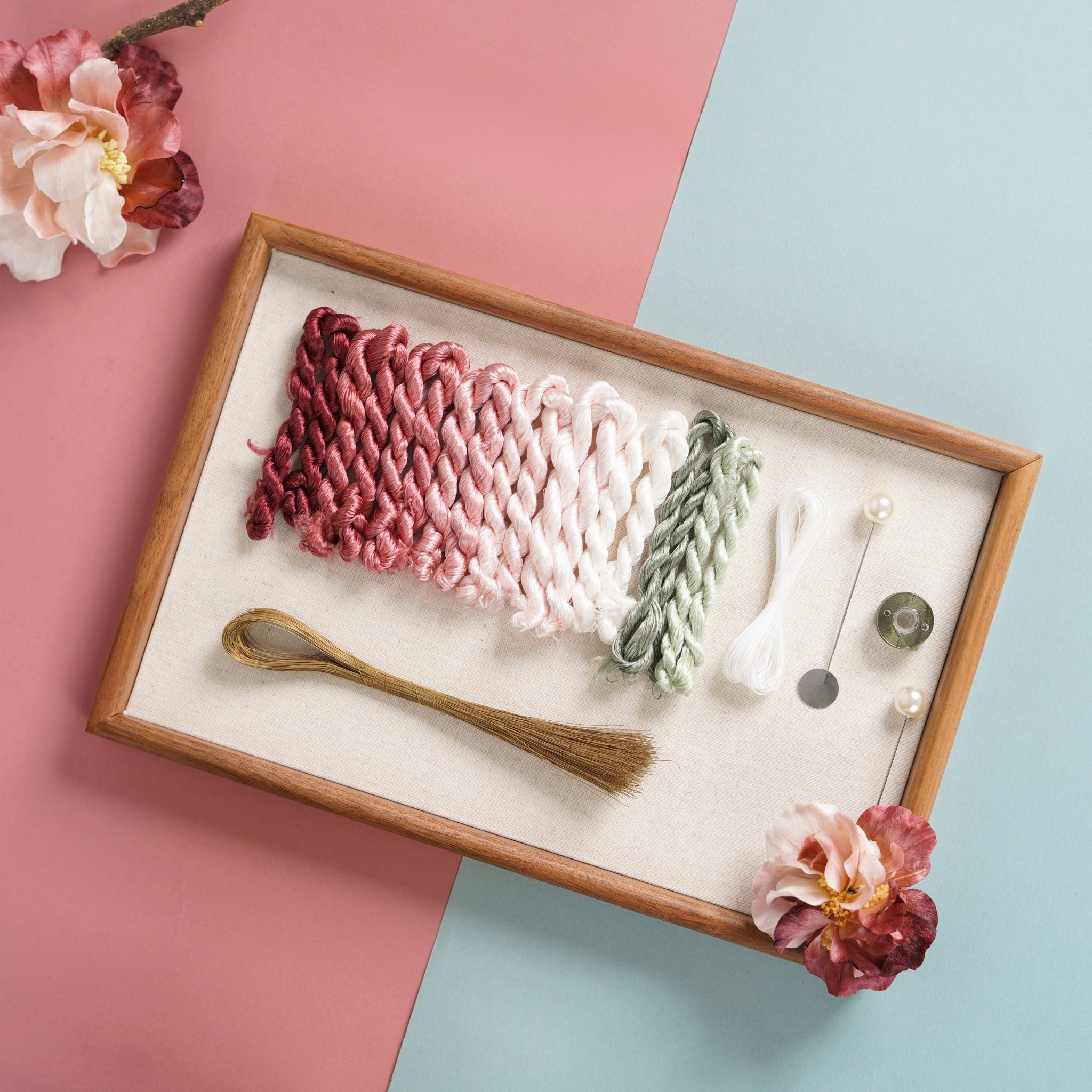
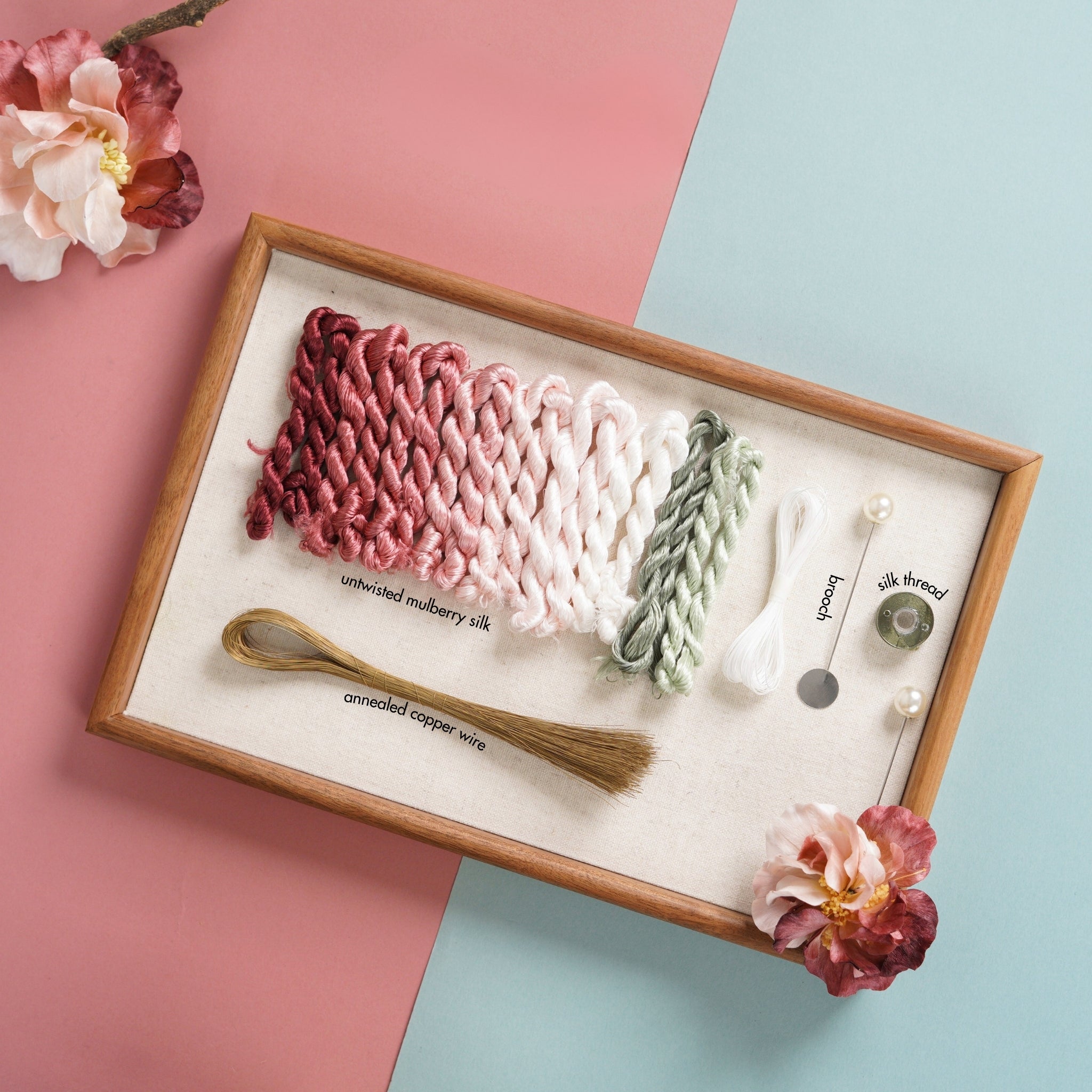
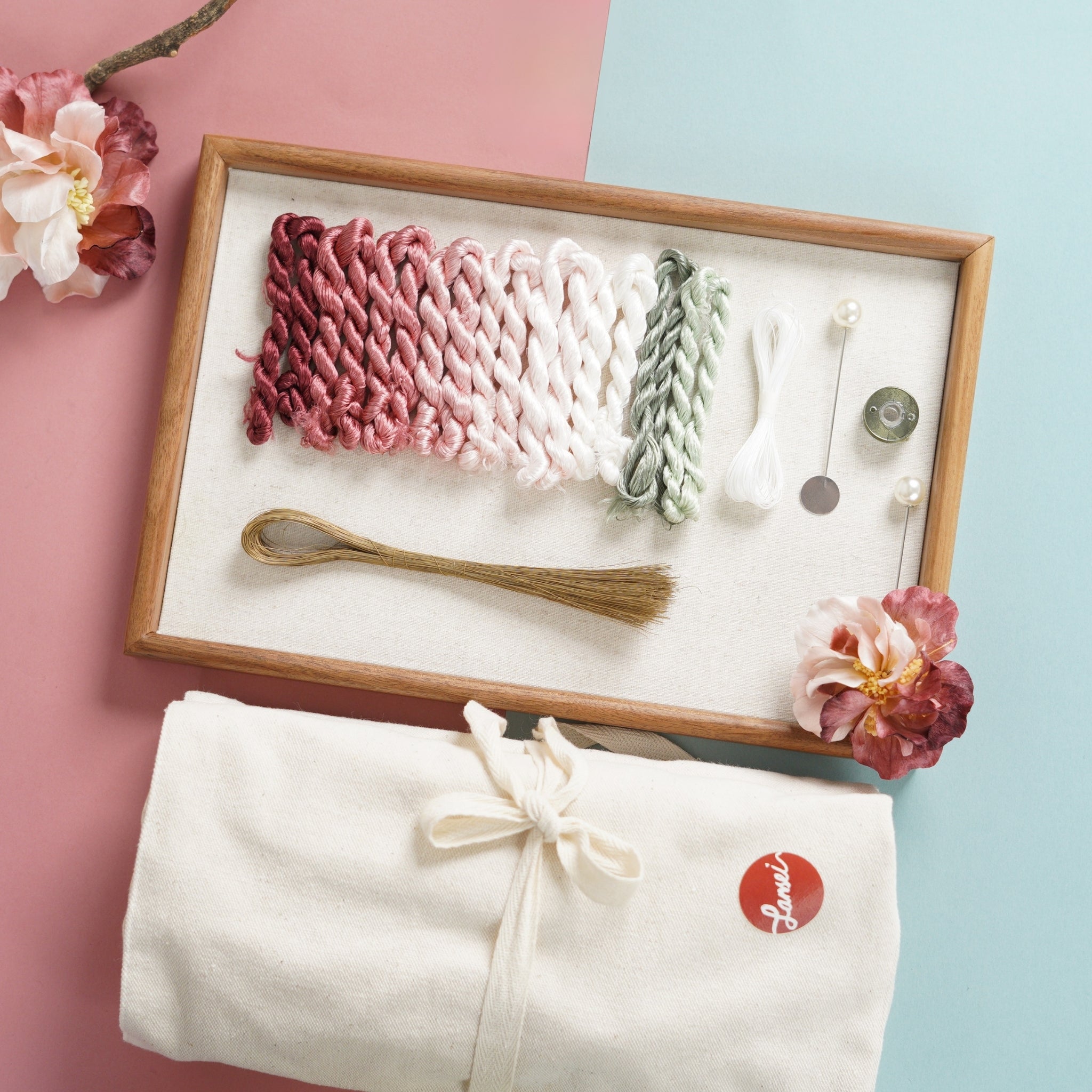
Wenn Sie unser Ronghua-Werkzeug gekauft haben, besitzen Sie bereits alles, was Sie benötigen!
Falls nicht, bereiten Sie die folgenden Werkzeuge vor:
- Borstenbürste (mittlere bis weiche Härte)
- Glätteisen (das, mit dem Sie Ihr Haar glätten)
- Pinzette
- Mindestens 2 Paar Scheren
- Holzstäbe / Bleistifte / Essstäbchen
- Haarspray oder verdünnter Weißleim (Verhältnis 1:1.15–1:1.2)
- Große Klammern (etwa 15 cm)
- Drehbretter und Holzblöcke (für gleichmäßige Spannung)
- Rutschfestes Pulver (optional, aber hilfreich)
Vollständiges Anleitungsvideo
Schritt 1. Seidenfäden ausrichten und anordnen
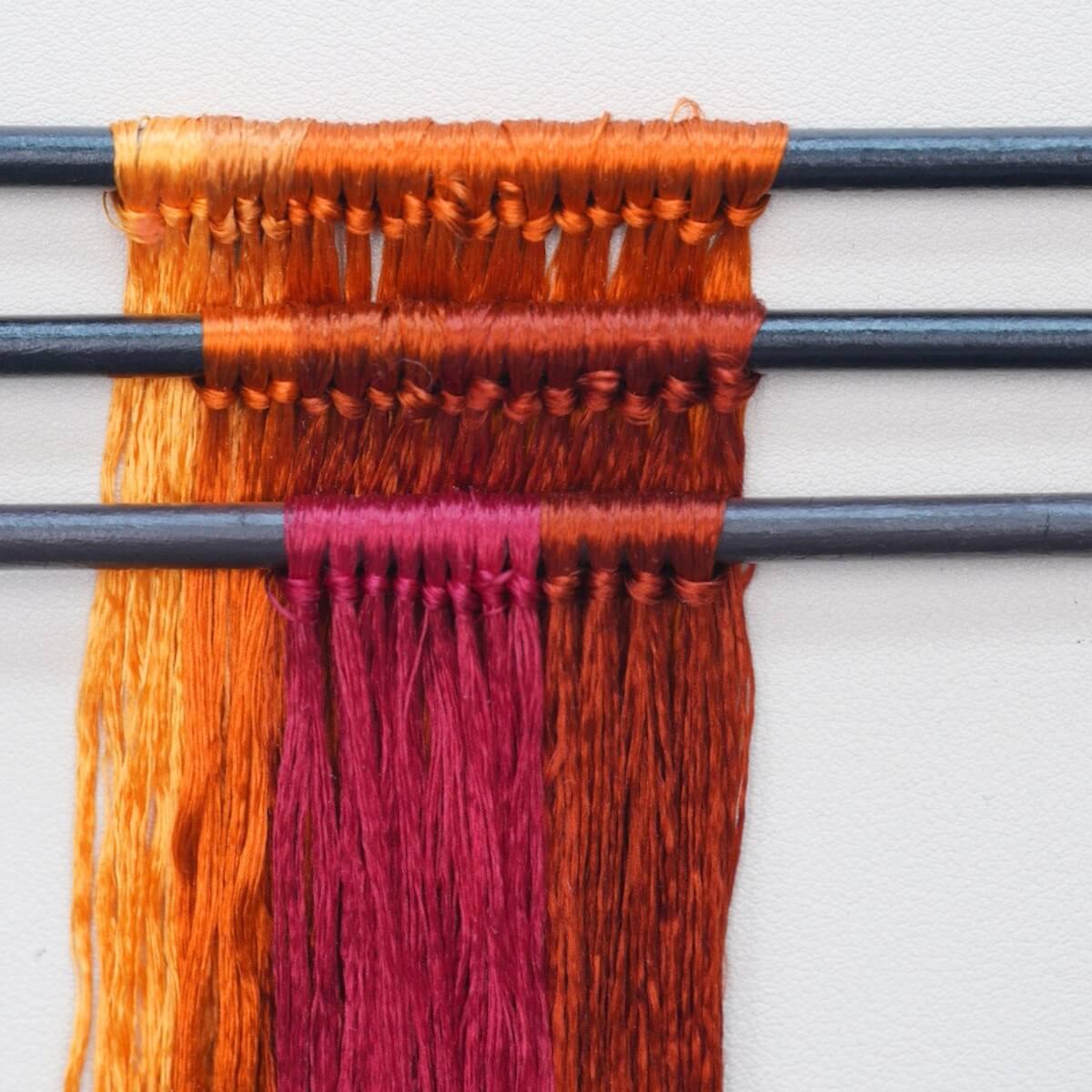
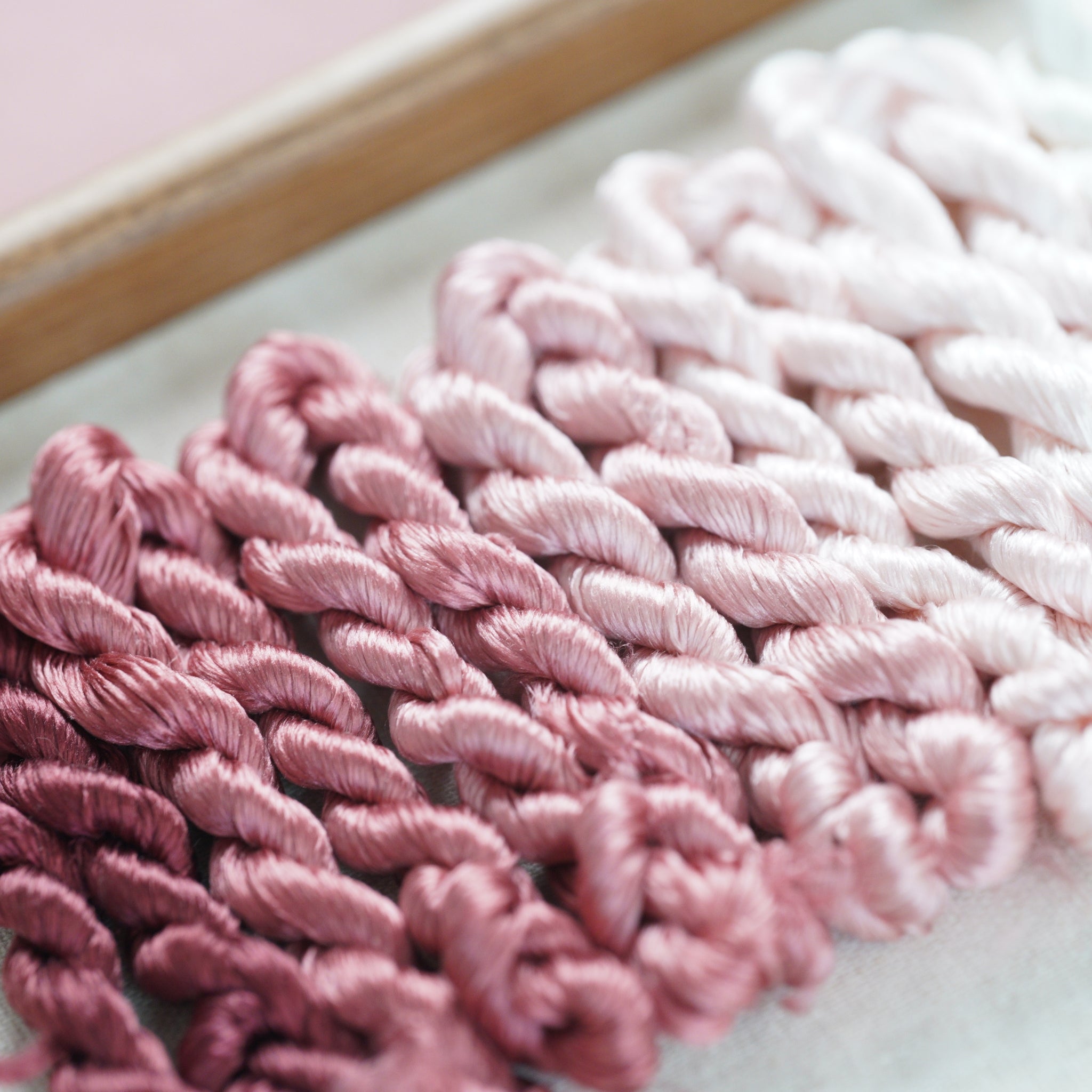
Beginnen Sie damit, Ihre Seidenfäden zu entknoten. Suchen Sie den Knoten an einem Ende jedes Bündels und schneiden Sie ihn vorsichtig auf. Falten Sie sie in der Mitte und schneiden Sie sie erneut durch, da wir für dieses Projekt nicht so viel Seide benötigen. Orientieren Sie sich am folgenden Farbdiagramm.

Schritt 2. Fäden gruppieren und vorbereiten
Jedes Seidenbündel besteht aus winzigen, fadenartigen Strukturen - das sind Ihre einzelnen Fäden. Richten Sie alle Fäden ordentlich aus und binden Sie sie um einen dünnen Stab, wobei die Enden gleich lang bleiben. Vermeiden Sie ungleichmäßige Längen - so wird später eine gleichmäßige Struktur gewährleistet.

Schritt 3. Seidenreihen herstellen
Wiederholen Sie den obigen Vorgang, um Ihre Seidenreihen herzustellen. Beachten Sie die Angaben im Diagramm für die folgenden Reihen, da jede leicht unterschiedlich sein wird. Unten sehen Sie die fertigen Seidenreihen, die wir hergestellt haben.

Schritt 4. Die Seide bürsten
Kämmen Sie die Seidenreihen mit Ihrer Borstenbürste. Bürsten Sie etwa 10 Minuten weiter, bis die Seide glatt, flauschig und frei von Verwicklungen ist. Wenn sich die Seide statisch auflädt, besprühen Sie die Luft leicht mit einer Sprühflasche (nicht die Seide direkt) mit Wasser.

Schritt 5. Kupferdrähte befestigen
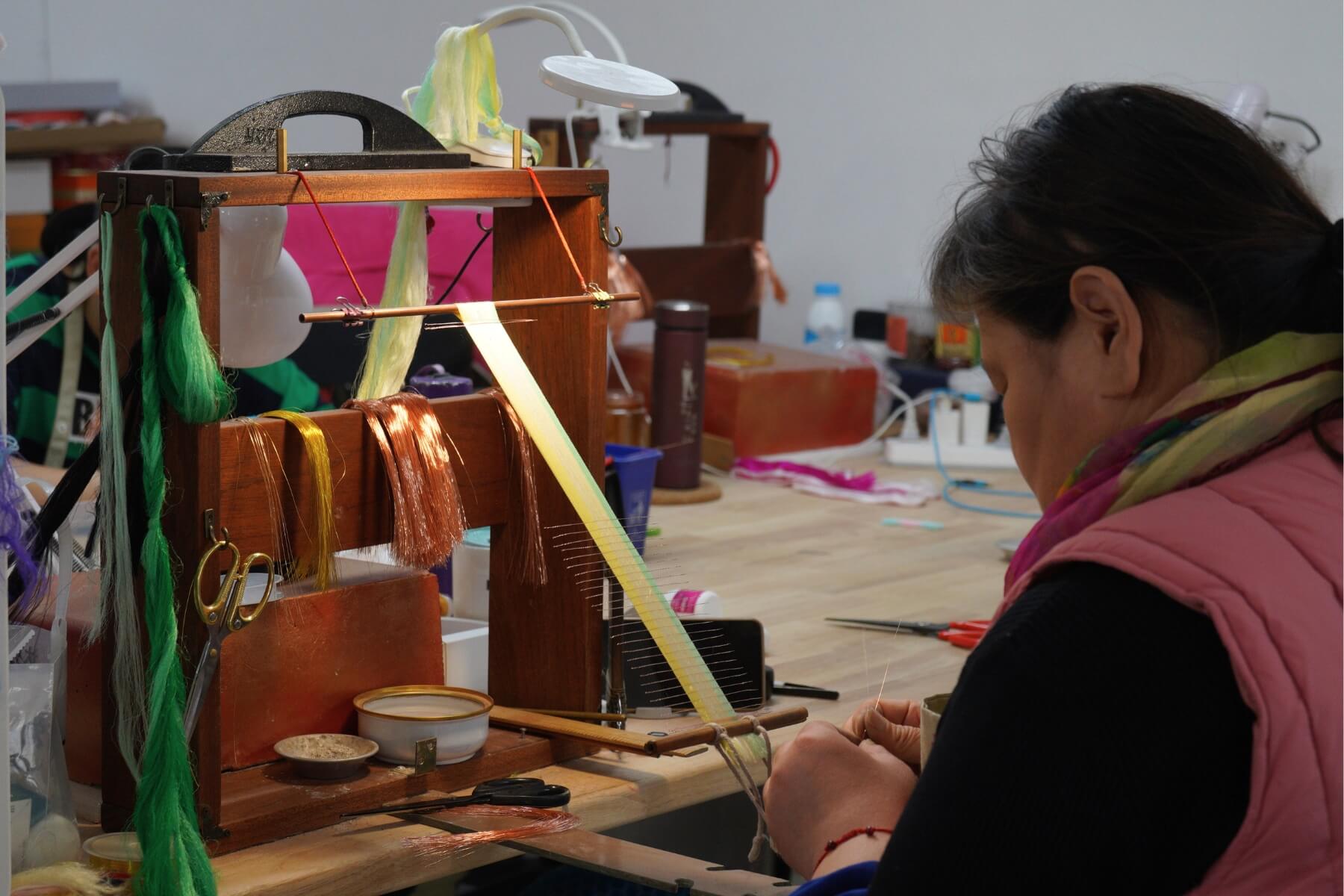
Wenn Sie das Gefühl haben, dass die Seide ausreichend gebürstet ist, befestigen Sie ihr Ende mit einer weiteren großen Klammer an Ihrem Tisch oder an etwas anderem, das dabei hilft, sie straff zu spannen. Nehmen Sie einen Kupferdraht aus dem gefalteten Ende der Reihe und richten Sie ihn gerade. Drehen Sie den gefalteten Teil zu einer Spirale von etwa 3 cm. Klemmen Sie die Seidenfäden zwischen zwei Kupferdrähten fest und verdrehen Sie die gegenüberliegende Seite fest. Spannen Sie beide Drähte und drehen Sie weiter, bis sie zu einem einzigen Draht verschmelzen. Denken Sie daran, dass die Drehrichtung am linken und rechten Ende entgegengesetzt ist.
Der Abstand sollte so sein, wie in Schritt 1 gezeigt.
Wenn Sie Anti-Rutsch-Puder haben, ist es viel einfacher, Ihre Finger hineinzutauchen und den Streifen zu verdrehen.
Wir empfehlen Ihnen dringend, sich für diesen Schritt das Video-Tutorial anzusehen:)
Nehmen Sie die Seidenreihe anschließend vom Ständer und legen Sie sie flach hin.
Schritt 6. Die Seidenstreifen schneiden
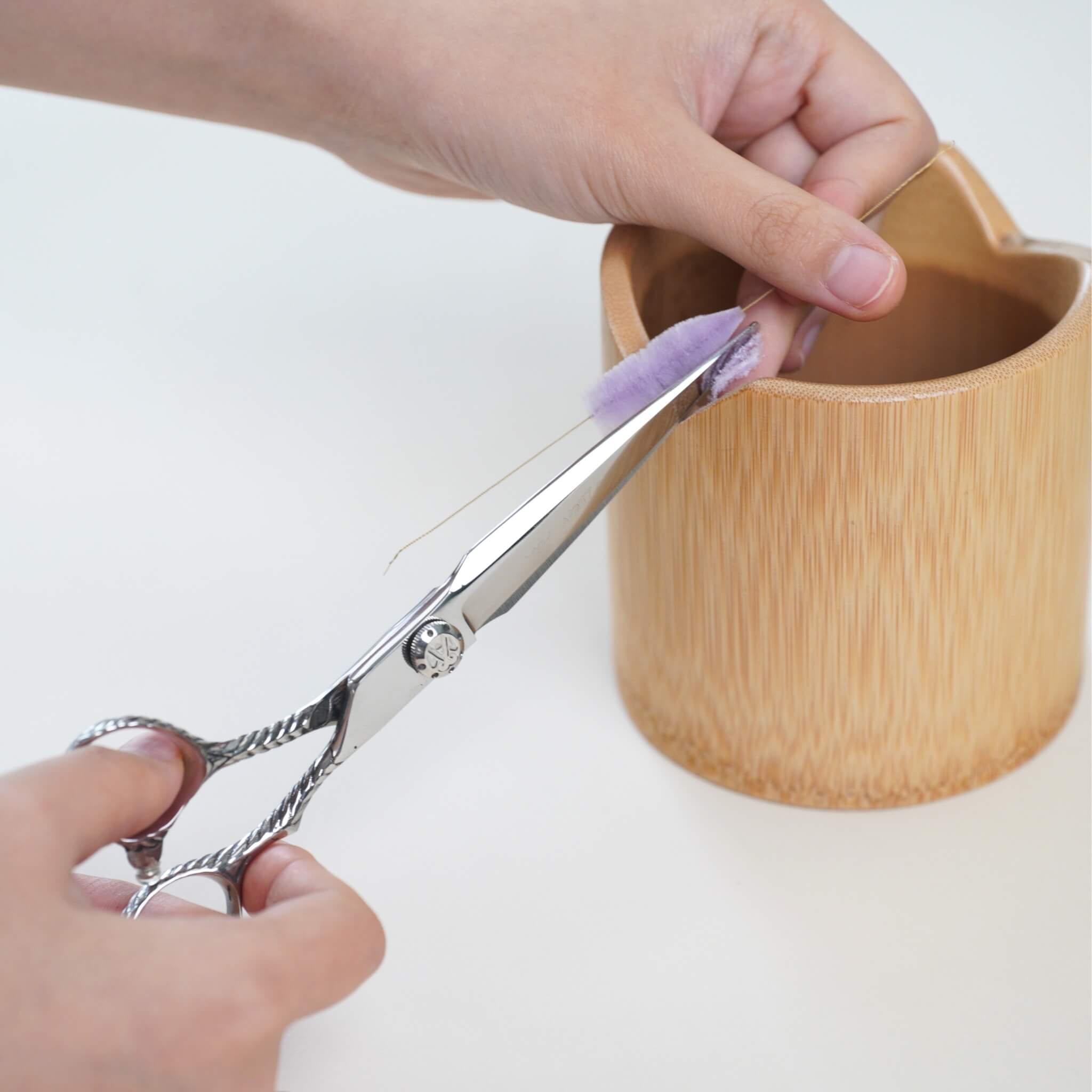
Schneiden Sie das Ende der Reihe sauber zurecht und schneiden Sie zwischen jedem Kupferdrahtpaar , um gleichmäßige Seidenstreifen zu erhalten. Beim Schneiden muss sich die Schere in der Mitte zwischen zwei Kupferdrähten befinden, andernfalls wird die Breite der Seidenstreifen uneinheitlich.

Wenn Fäden an Ihrer Schere haften, reinigen Sie sie - das wird normalerweise durch statische Aufladung oder Rückstände verursacht. Schneiden Sie schnell und sauber, um glatte Kanten zu erhalten. Berühren Sie den Draht nicht, sonst kann er verrutschen.
Schritt 7. Die Streifen mittig ausrichten und verdrehen
Richten Sie den Kupferdraht mithilfe einer flachen Oberfläche oder eines Holzklotzes mittig auf jedem Streifen aus.
Sobald er mittig ausgerichtet ist, drehen Sie mit beiden Händen in entgegengesetzte Richtungen, um ihn festzuziehen.

Legen Sie anschließend den Kupferteil zwischen die Verzwirnbretter und drehen Sie weiter in dieselbe Richtung. Hören Sie auf, sobald sich der Draht fest anfühlt - zu starkes Verdrehen kann dazu führen, dass er bricht. Woran erkennen Sie, ob er fest genug ist? Wenn der Kupferdraht richtig festgezogen ist, sollte er nur schwach sichtbar sein. Wenn der Kupferdraht sehr deutlich zu sehen ist, ist er nicht fest genug.

Schritt 8. Die Streifen abflachen
Falten Sie als Nächstes alle für die Blütenblätter verwendeten Seidenstreifen in der Mitte. Richten Sie die Unterseiten sorgfältig aus und verdrehen Sie den Kupferdraht fest. Heben Sie die Seide dabei mit einer Pinzette vorsichtig nach oben. Narzissenblätter benötigen eine präzise Basis, damit die Schichten sauber zusammenliegen. Sobald sie ausgerichtet sind, drücken Sie die Seidenstreifen mit einem erhitzten Glätteisen flach. Drücken Sie immer von hinten nach vorne. Schneiden Sie bei den Blattstreifen vor dem Abflachen ein Ende des Kupferdrahts ab. Alle Seidenstreifen müssen flachgedrückt werden.

Anschließend müssen wir die abgeflachten Streifen einweichen.
Bereiten Sie Ihre Fixierlösung vor:
- Verwenden Sie entweder Haarspray oder
- Mit Wasser oder Alkohol verdünnter Weißleim (Verhältnis 1:1.15 oder 1:1.2)
Weichen Sie die abgeflachten Streifen in einer Haar-Gel-Lösung ein und stellen Sie sicher, dass die Flüssigkeit vollständig in die Fasern eindringt. Wischen Sie überschüssiges Gel ab.

Schritt 9. Blütenblätter und Blätter formen
Um jedes Blütenblatt zu formen, drücken Sie die Basis leicht nach außen, rollen Sie den oberen Teil nach innen und schieben Sie beide Seiten sanft zur Mitte. Die Spitze sollte eine weiche Spitze bilden. Stellen Sie die geformten Blütenblätter anschließend aufrecht in eine Bürste zum Trocknen.

Kleine Blütenblätter für die Mitte sind noch einfacher - formen Sie sie zu einer winzigen Löffelform. Der Formgebungsprozess ist für gelbe und weiße Blütenblätter gleich.

Forme als Nächstes die Blätter. Gib jedem Blatt eine leichte Kurve und drücke anschließend beide Seiten nach innen, um seine Form zu definieren. Stecke die Blätter zum Trocknen aufrecht ein und variiere die Krümmung leicht, damit sie natürlicher wirken.

Schritt 10. Kanten zuschneiden
Beginne mit dem Zuschneiden, sobald alles vollständig getrocknet und ausgehärtet ist. Forme die Blätter so, dass sie in der Mitte breiter, an beiden Enden schmaler und leicht länglich sind. Runde die Spitzen vorsichtig ab, statt sie spitz zu formen. Insgesamt benötigst du fünf Blätter. Folge beim Zuschneiden der ursprünglichen Kontur der Blütenblätter und entferne lediglich ausgefranste Kanten.

Schritt 11. Staubblätter vorbereiten
Nimm fünf Staubblätter, falte sie in der Mitte und schneide sie anschließend erneut in der Mitte durch. Verwende zum Zusammensetzen den dunkelsten Seidenfaden. Befestige die Staubblätter mit dem Faden.

Schritt 12. Die Narzissen zusammensetzen
Befestige die kleinen Blütenblätter rund um die Staubblätter. Wickle den Faden für jedes hinzugefügte Blütenblatt einmal herum und halte die kleinen Blütenblätter dicht beieinander. Jede Blüte benötigt fünf kleine Blütenblätter.
Für die zweite Lage verwendest du weiße (oder gelbe) Blütenblätter, mit drei Blütenblättern pro Lage. Platziere die dritte Lage aus drei Blütenblättern in den Zwischenräumen der Blütenblätter der zweiten Lage. Jede Blüte sollte insgesamt fünf kleine und sechs größere Blütenblätter haben. Wickle den Faden etwa 2 cm weiter nach unten, schneide dann den Kupferdraht diagonal ab und richte die Blütenblätter aus.

Du stellst zwei weiße Narzissen und eine gelbe Narzisse her. Führe zwei 10 cm lange Stahldrähte zwischen die Kupferdrähte ein, um den Stiel zu verlängern, und fahre anschließend mit dem Zusammensetzen aus drei oder vier Seidenfäden fort. Lass zwischen der ersten und zweiten Blüte etwas Abstand, damit sie nicht zu dicht beieinander sitzen.

Setze die dritte Blüte zusammen und befestige die Blätter, indem du sie vertikal versetzt anordnest, statt sie auf gleicher Höhe zu platzieren. Die letzten beiden Blätter sollten vorne positioniert werden, sodass sie die Blüten sanft einrahmen.

Wenn die Umwicklung das untere Ende des Stiels erreicht, wickle wieder nach oben. Schneide überschüssigen Stahldraht ab, biege den Kupferdraht nach hinten und wickle weiter, bis alles vollständig bedeckt ist. Verwende zum Abschluss die „Schlaufen“-Methode: Lege einen gefalteten Kupferdraht mit dem offenen Ende nach oben am Stiel entlang, wickle darüber, fädle den Seidenfaden durch die Drahtschlaufe und ziehe den Draht heraus, um das Ende zu sichern.
Für diesen Schritt kannst du dir unser Video-Tutorial ansehen:)
Schritt 13. Das Stück am Accessoire befestigen
Um die Broschennadel anzubringen, befestige neuen Seidenfaden am Stiel und sichere die Nadel, indem du den Faden für mehr Stabilität fest anziehst. Trage eine kleine Menge Schmuckkleber auf, um die Blüte mit der Basis zu verbinden, und wickle anschließend Seidenfaden über den geklebten Bereich, um ihn abzudecken. Schließe die Umwicklung mit der Schlaufenmethode ab und schneide überschüssigen Faden ab.

Forme schließlich die Blüten und sprühe leicht Haarspray über die umwickelten Bereiche, um ein Ausfransen zu verhindern. Dein Narzissenstück ist fertig!

Kommentar hinterlassen
Alle Kommentare werden vor der Veröffentlichung moderiert.
Diese Website ist durch hCaptcha geschützt und es gelten die allgemeinen Geschäftsbedingungen und Datenschutzbestimmungen von hCaptcha.