

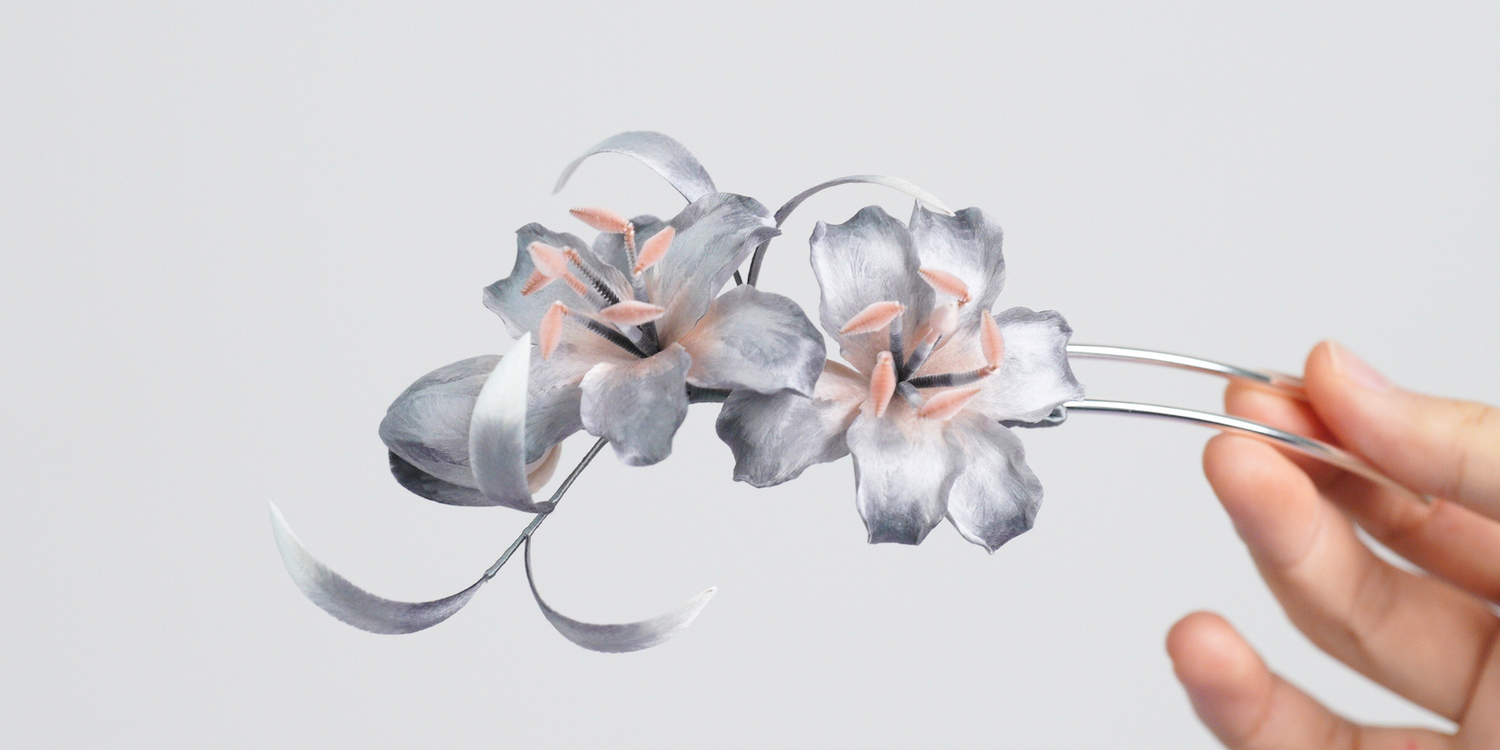
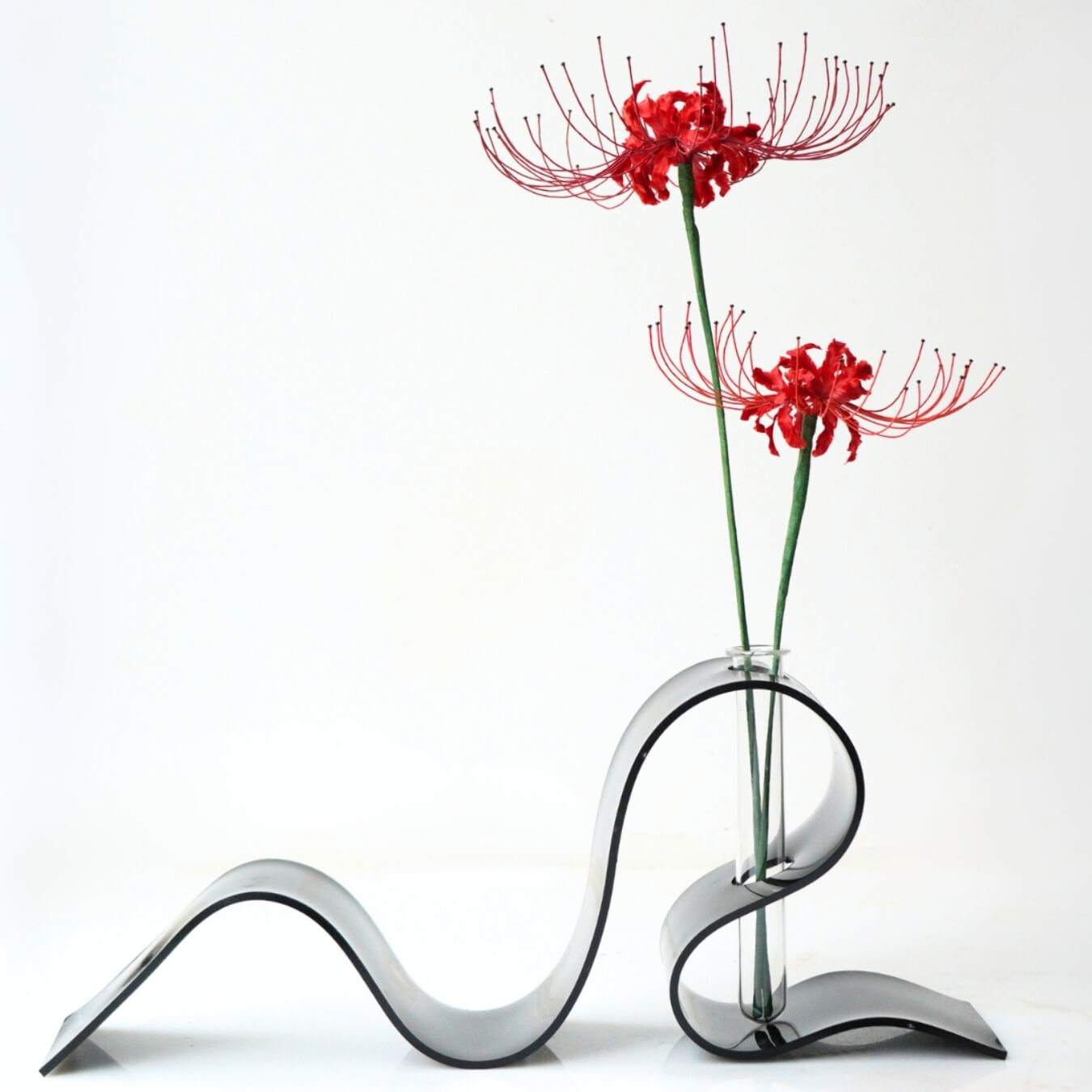
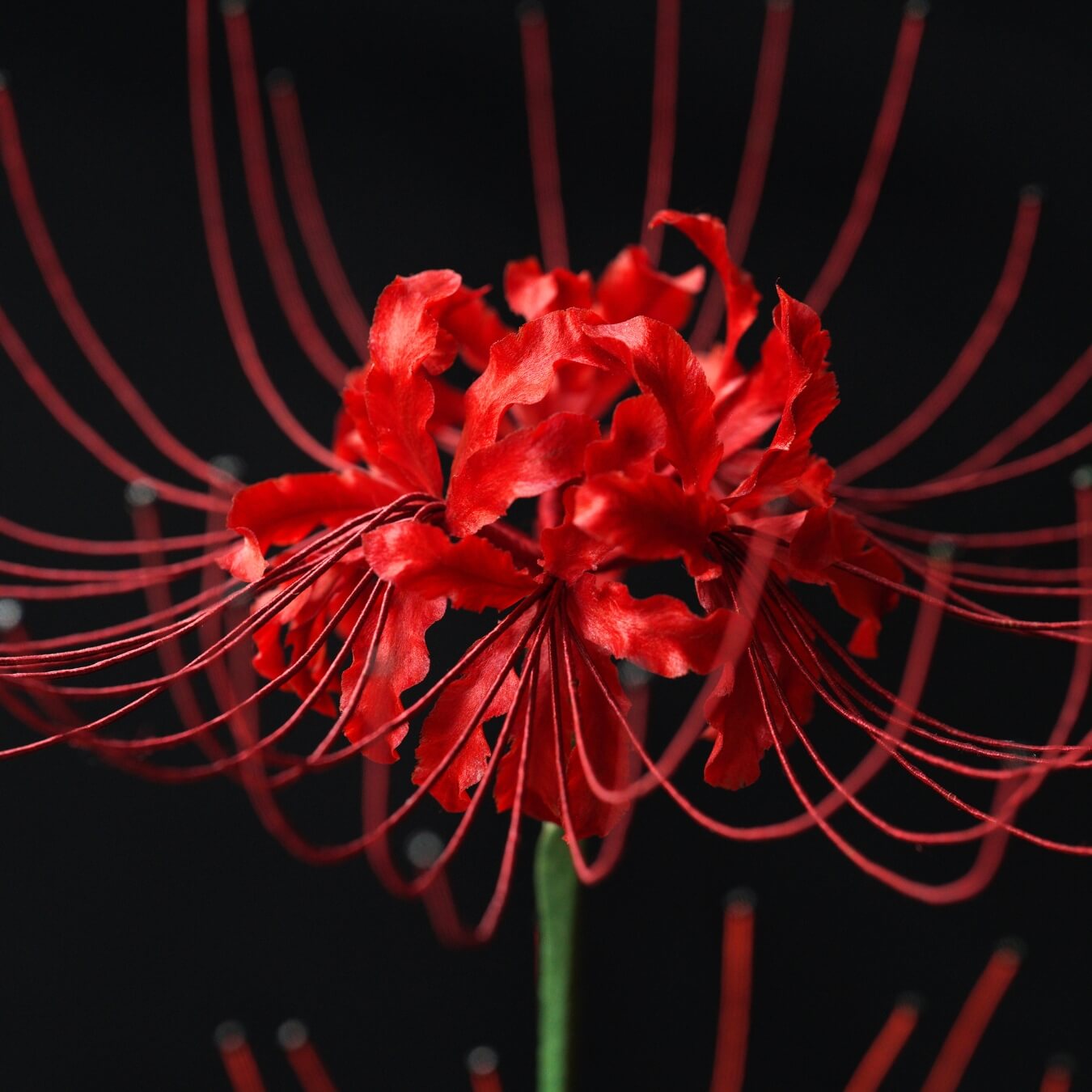
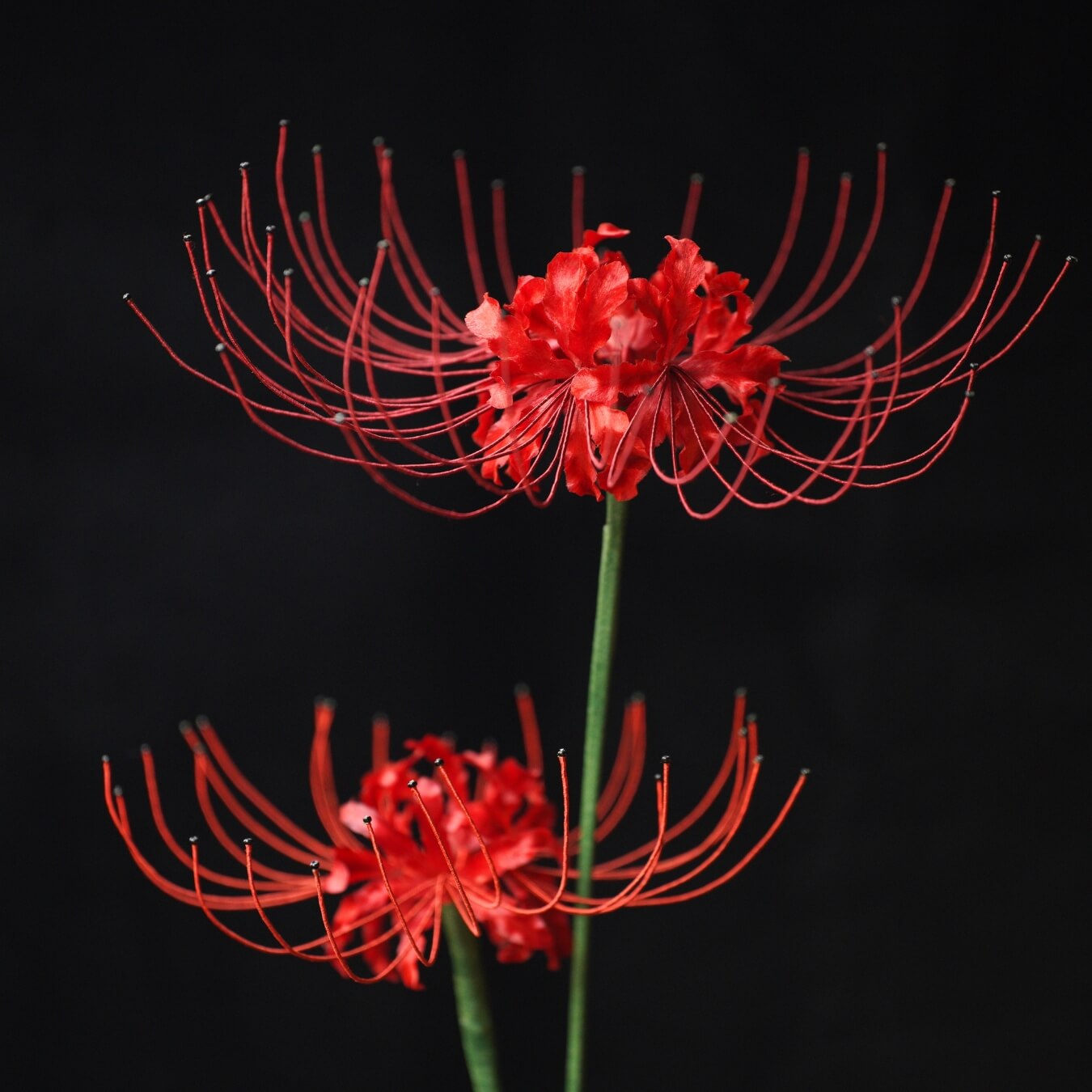
Eine Lilie, die vom frühen Frost berührt wurde – kühl, sanft und leise leuchtend. Der Frost’s Descent Lily Haarnadel fängt den friedlichen Übergang in den Winter ein, wo alles ruhig und frisch vom kalten Luftzug gewaschen wirkt.
Vorbereitung: Was Sie benötigen
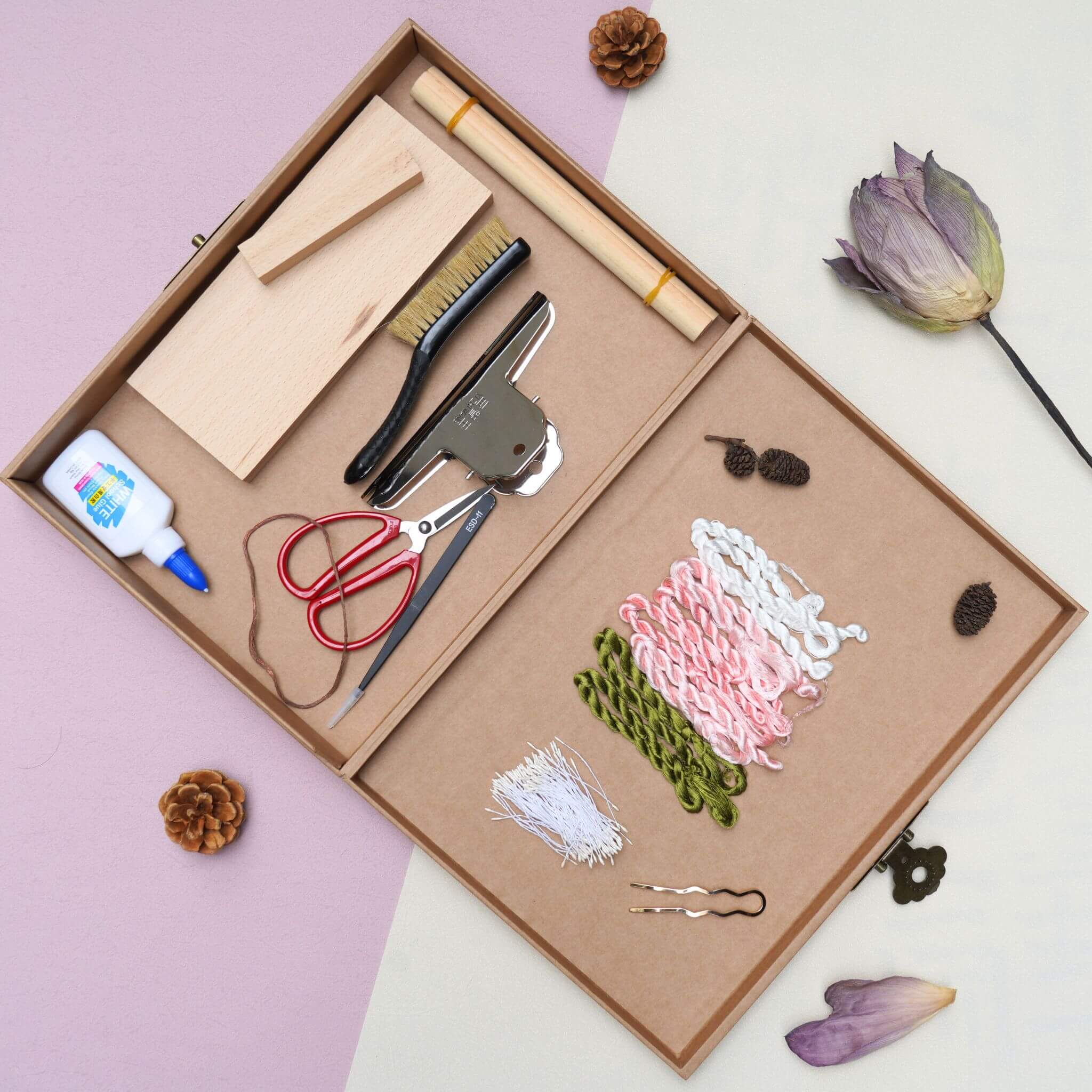
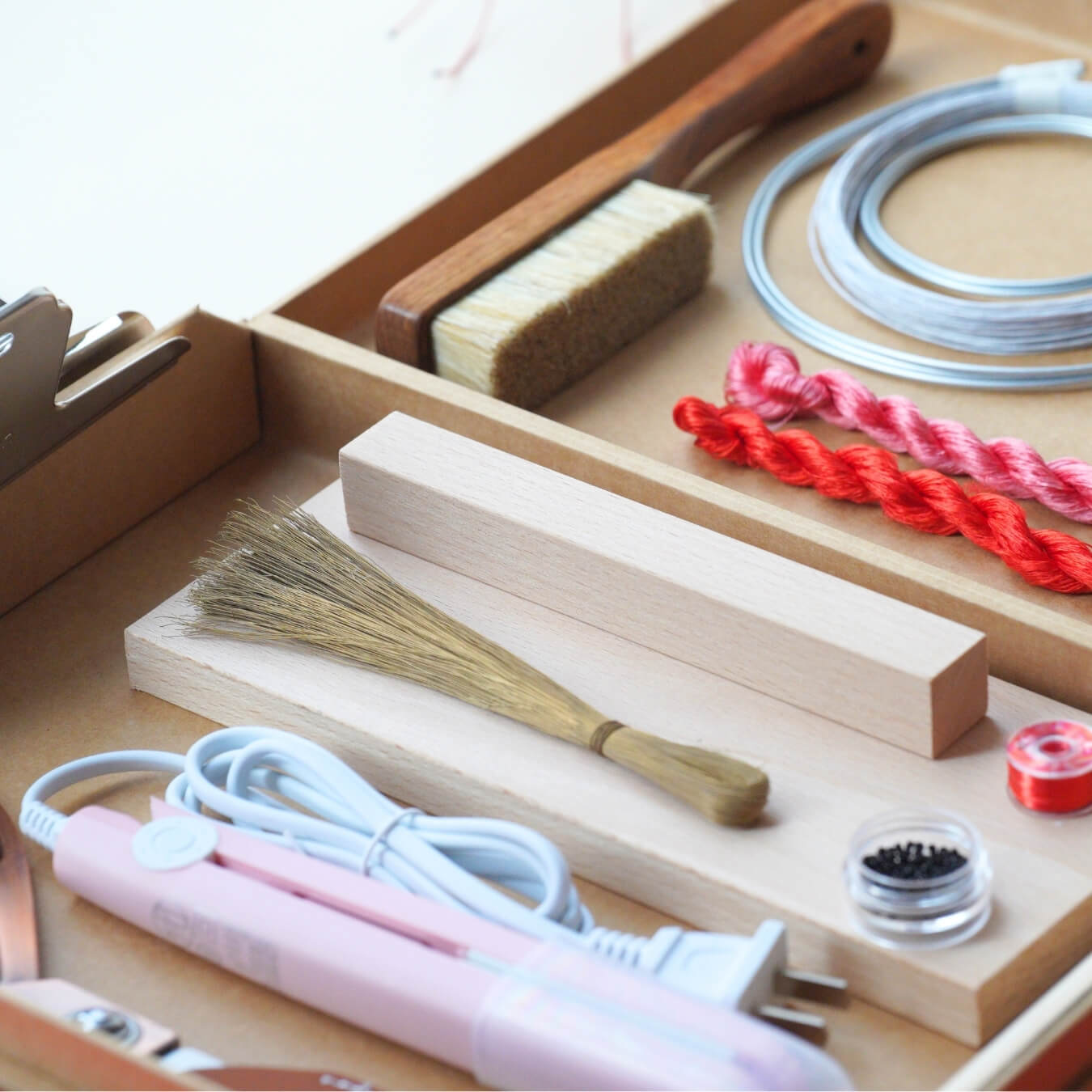
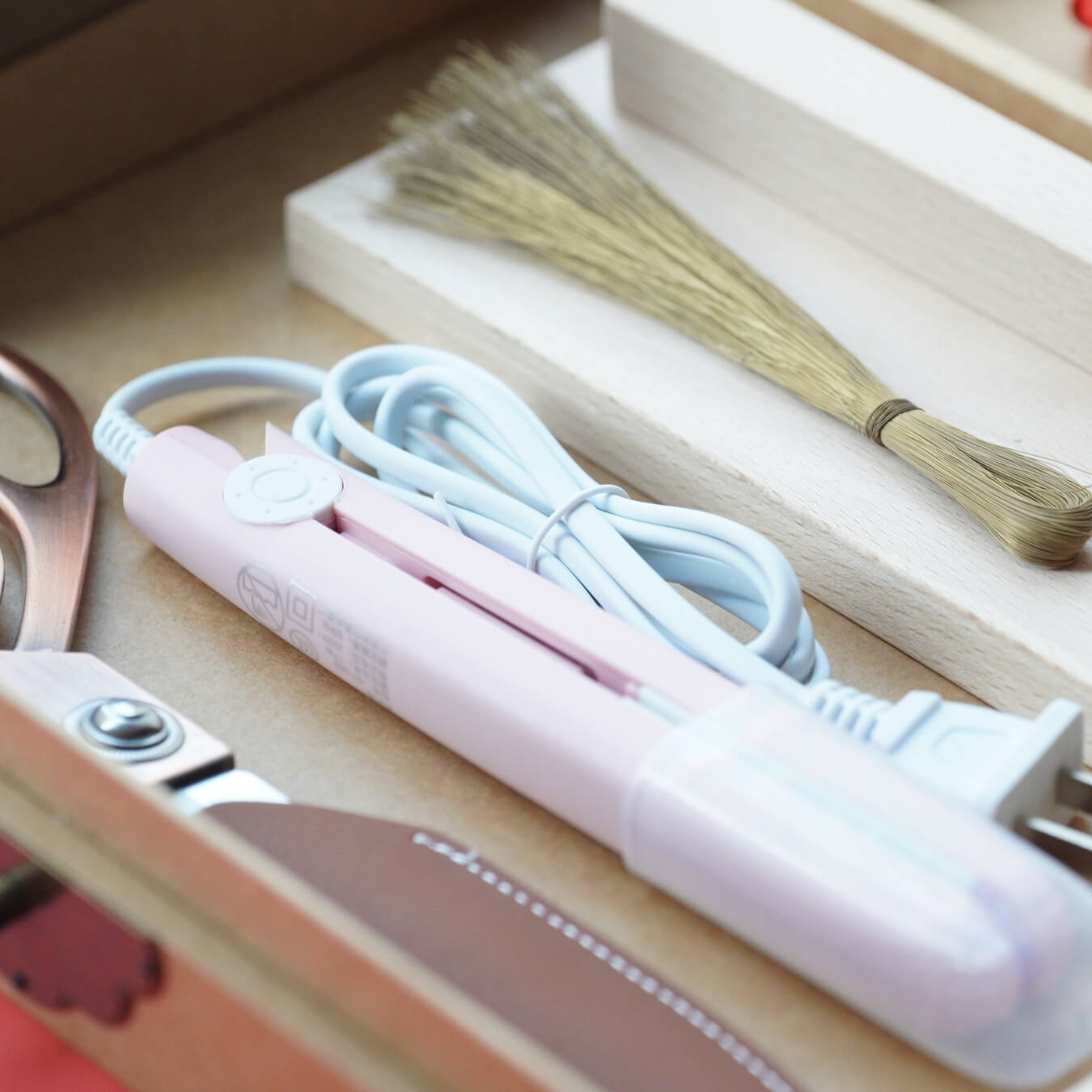
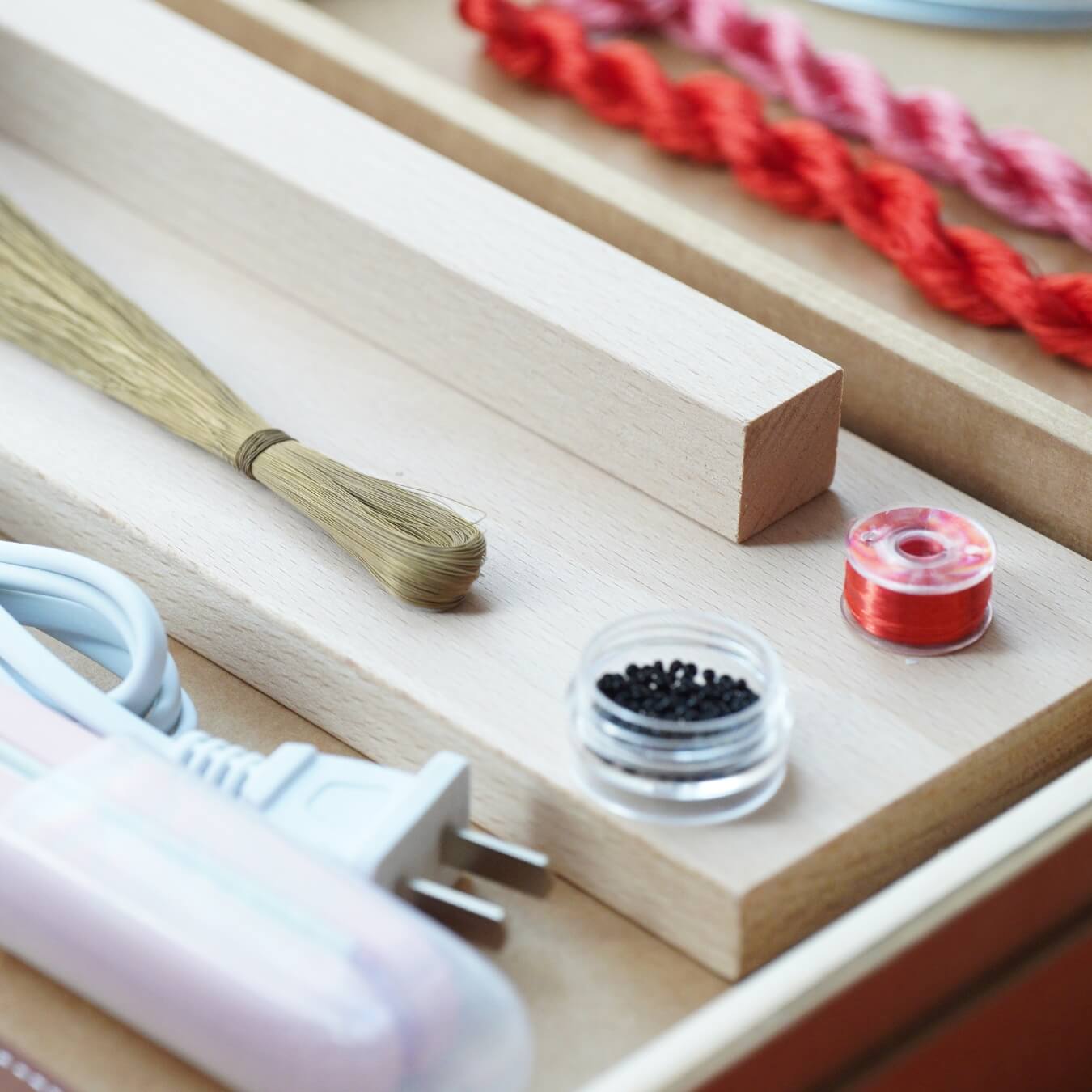
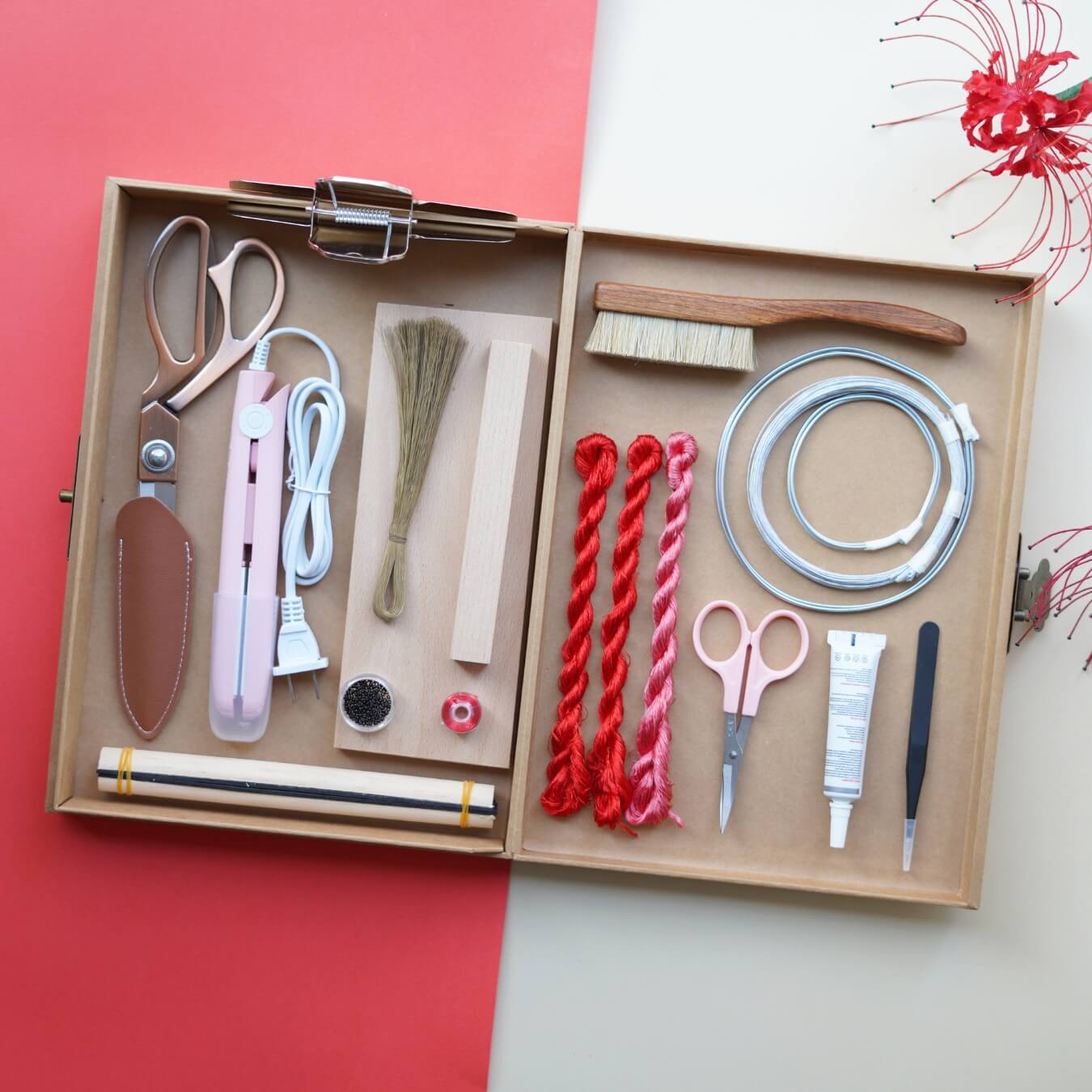
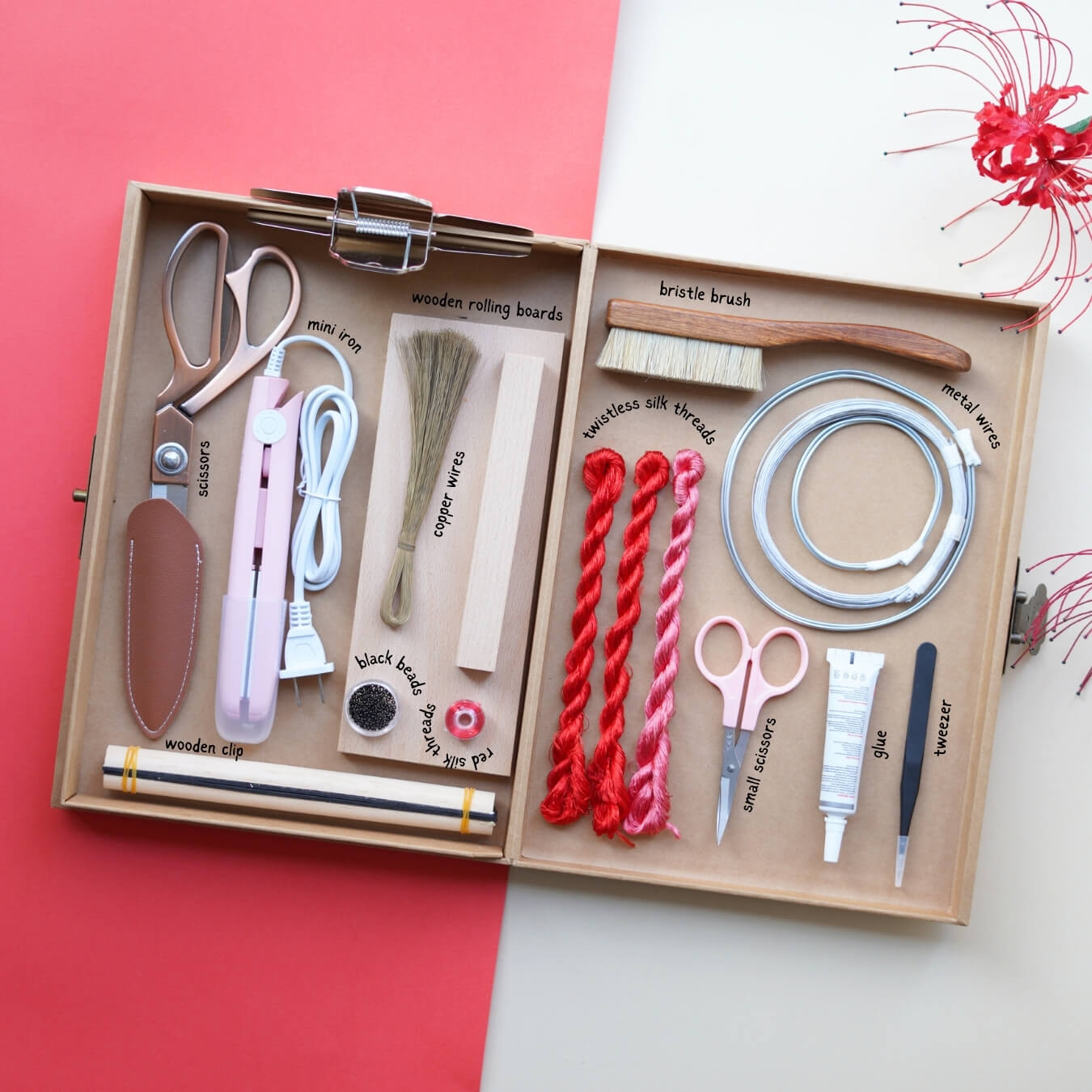
Wenn Sie unser Ronghua Toolkit gekauft haben, haben Sie bereits alles, was Sie brauchen!
Falls nicht, bereiten Sie die folgenden Werkzeuge vor:
- Bürste mit Borsten (mittel bis weich)
- Glätteisen (das, mit dem Sie Ihr Haar glätten)
- Pinzette
- Mindestens 2 Paar Scheren
- Holzstäbchen / Bleistifte / Essstäbchen
- Haarspray oder verdünnter Weißleim (Verhältnis 1:1,15–1:1,2)
- Große Klammern (ca. 15cm)
- Drehbretter und Holzklötze (für gleichmäßige Spannung)
- Anti-Rutsch-Pulver (optional, aber hilfreich)
Vollständiges Tutorial-Video
Schritt 1. Ausrichten und Anordnen der Seidenfäden
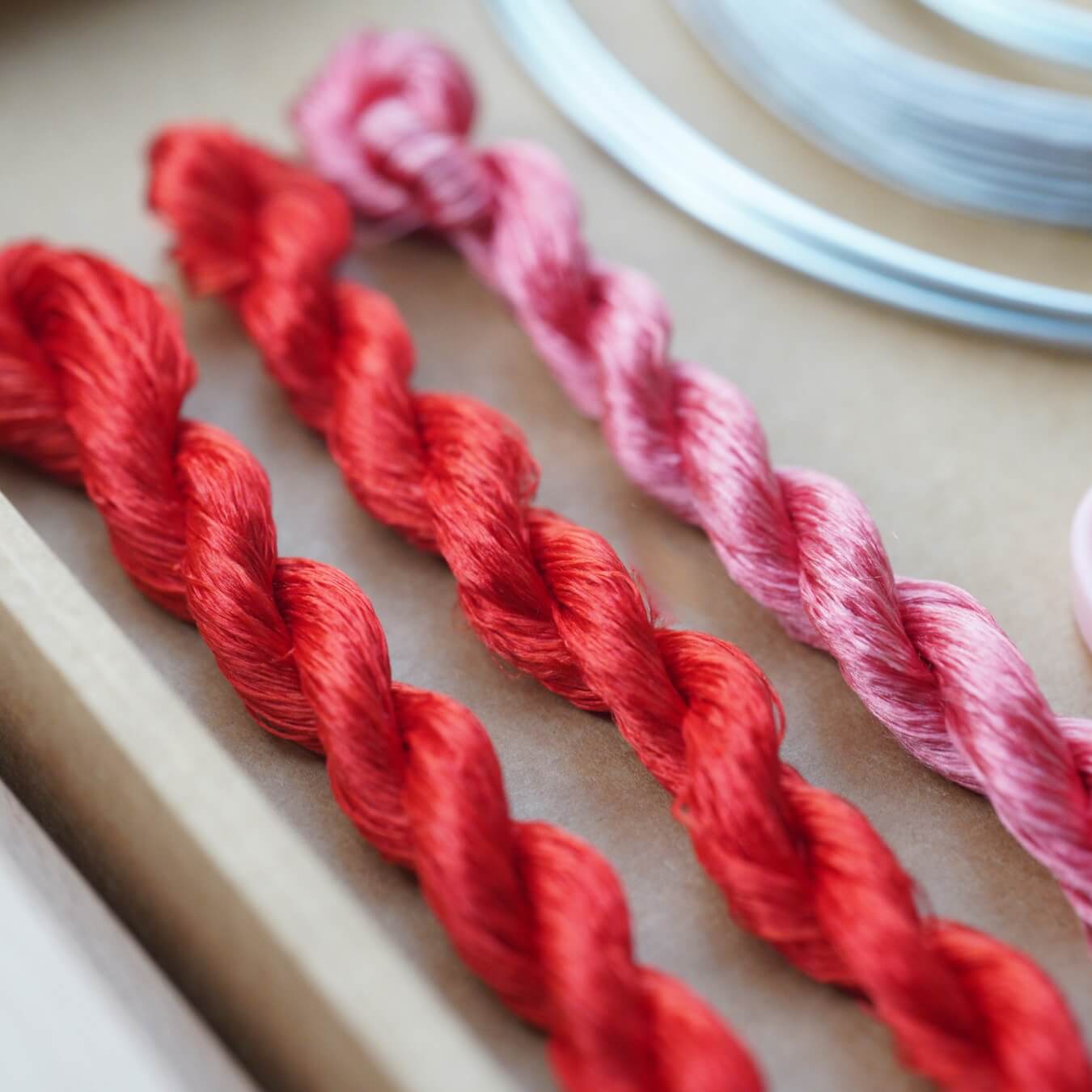
Beginne damit, deine Seidenfäden zu entwirren. Finde den Knoten an einem Ende jedes Bündels und schneide ihn vorsichtig auf. Für dieses Projekt werden 8 Farben von Seide verwendet, um 3 Seidenreihen zu erstellen. Siehe das Farbdiagramm unten für Details zur Fadenkombination.

Schritt 2. Gruppieren und Vorbereiten der Fäden
Jedes Seidenbündel besteht aus winzigen, fadenähnlichen Strukturen – das sind Ihre einzelnen Stränge.
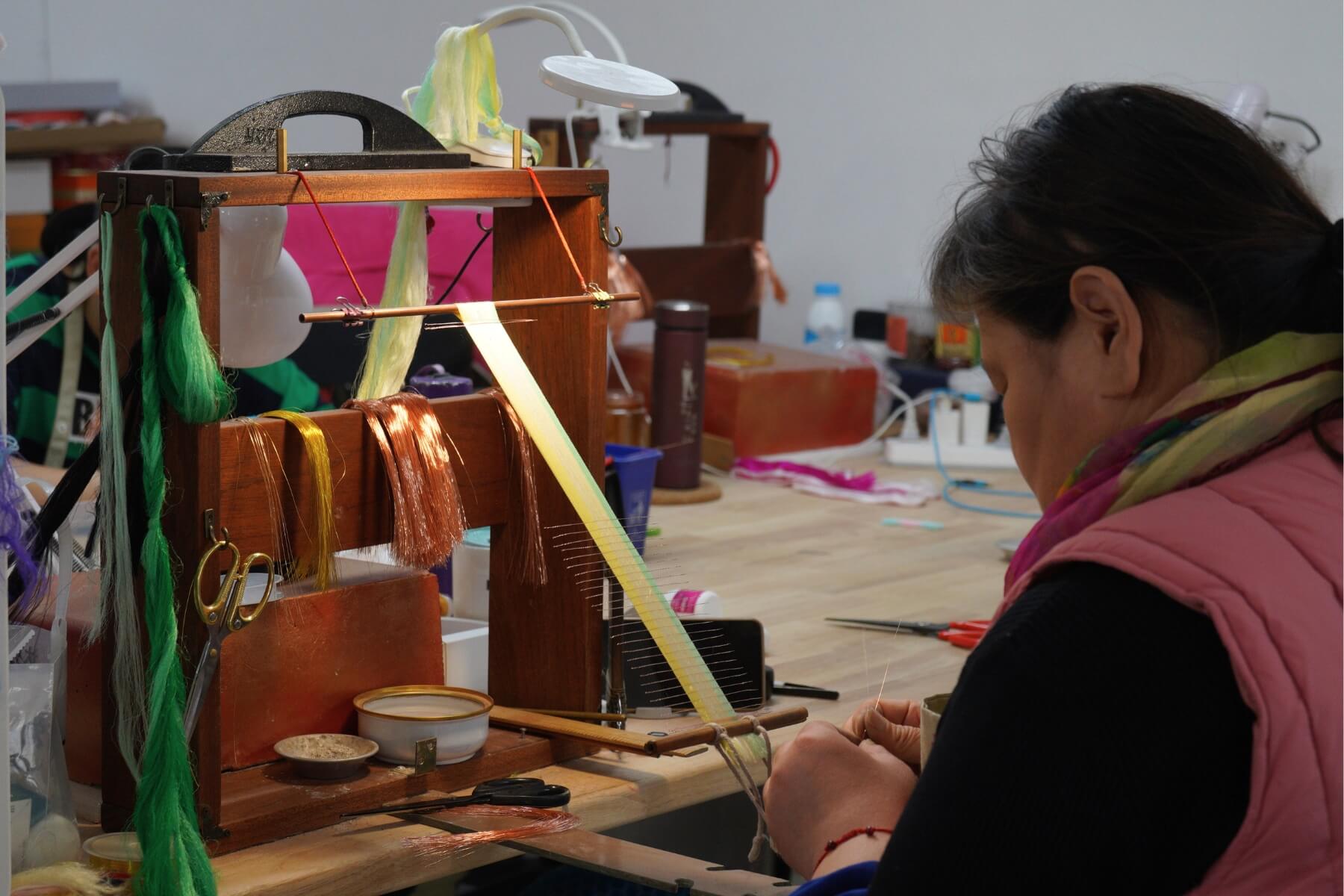
Richten Sie alle Stränge ordentlich aus und binden Sie sie um einen dünnen Stock, wobei die Enden gleichmäßig bleiben. Vermeiden Sie ungleichmäßige Längen – das sorgt später für eine gleichmäßige Textur.

Schritt 3. Seidenreihen herstellen
Wiederhole den obigen Vorgang, um insgesamt drei Seidenreihen zu erstellen. Denke daran, für die folgenden Reihen auf die im Diagramm angegebenen Daten zurückzugreifen, da jede leicht unterschiedlich sein wird. Unten sind die fertigen Seidenreihen, die wir gemacht haben.

Schritt 4. Bürsten Sie die Seidenreihen
Befestigen Sie eine Seidenreihe mit großen Metallklammern an Ihrem Ständer – wenn Sie keinen hölzernen Ronghua-Ständer haben, ist das völlig in Ordnung! Sie können sich unser Video zu alternativen Lösungen zum Ständer ansehen.
Halten Sie die Enden der Fäden mit einer Hand und bürsten Sie sanft, aber fest von oben nach unten. Heben Sie die Bürste nicht zwischendurch an. Ein leichter Wassernebel verhindert statische Aufladung. Sie können etwas Druck ausüben – Seidenfäden sind stärker, als sie aussehen! Bürsten Sie sowohl die Vorder- als auch die Rückseite, bis die Reihe glatt und flauschig aussieht.

Jeder verwendet eine andere Bürste und Handgeschwindigkeit, daher variiert auch die Zeit, die für diesen Schritt benötigt wird. Bei mir hat es etwa 10 Minuten gedauert, diese Seidenreihe zu bürsten. Wenn Sie das Gefühl haben, dass das Haar weich und flauschig ist, können Sie aufhören und nachsehen. Wenn es keine klare lineare Abgrenzung zwischen den Fäden mehr gibt und sie anfangen, aneinander zu haften, ist es fertig:)

Schritt 5. Kupferdrähte anbringen
Wenn du das Gefühl hast, dass die Seide genug gebürstet ist, befestige ihren Schwanz mit einer weiteren großen Klammer an deinem Tisch oder etwas, das hilft, sie straff zu ziehen. Ziehe einen Kupferdraht aus dem gefalteten Ende der Reihe heraus und richte ihn gerade. Drehe den gefalteten Teil zu einer Spirale von etwa 3 cm. Klemme die Seidenfäden zwischen zwei Kupferdrähte und drehe die gegenüberliegende Seite fest. Ziehe beide Drähte straff und drehe weiter, bis sie zu einem verschmelzen. Denk daran, dass die Drehrichtung für das linke und rechte Ende entgegengesetzt ist.

Der Abstand sollte wie in Schritt 1 gezeigt sein.
Wenn du Anti-Rutsch-Puder hast, wird es viel einfacher sein, deine Finger darin zu tauchen und zu drehen. Wir empfehlen dir dringend, das Video-Tutorial für diesen Schritt anzusehen :)
Sobald Sie fertig sind, nehmen Sie die Seidenreihe vom Ständer und legen Sie sie flach hin.
Schritt 6. Schneiden Sie die Seidenstreifen
Schneiden Sie das Ende der Reihe sauber ab, dann schneiden Sie zwischen jedem Kupferdrahtpaar , um gleichmäßige Seidenstreifen zu erzeugen. Beim Schneiden müssen die Scheren in der Mitte zwischen zwei Kupferdrähten platziert werden, sonst wird die Breite der Seidenstreifen ungleichmäßig sein. Wenn Fäden an Ihren Scheren kleben, reinigen Sie diese – das wird meist durch statische Aufladung oder Rückstände verursacht. Schneiden Sie schnell und sauber für glatte Kanten. Berühren Sie den Draht nicht, da er sonst verrutschen kann.

Schritt 7. Die Streifen zentrieren und drehen
Richten Sie den Kupferdraht mit einer ebenen Fläche oder einem Holzblock in der Mitte jedes Streifens aus.
Sobald zentriert, drehen Sie beide Hände in entgegengesetzte Richtungen, um zu spannen.

Als Nächstes legen Sie den Kupferteil zwischen die Drehbretter und drehen weiter in dieselbe Richtung. Stoppen Sie, wenn sich der Draht fest anfühlt – zu starkes Drehen kann ihn brechen. Woran erkennen Sie, ob er fest genug ist? Wenn der Kupferdraht richtig festgezogen ist, sollte er nur schwach sichtbar sein. Wenn der Kupferdraht sehr sichtbar ist, ist er nicht fest genug.

Schritt 8. Formen Sie das Blumeninnere
Die Staubblattstreifen müssen nicht flach gedrückt, sondern zugespitzt werden. Beim Schneiden der Spitze ist es am besten, scharfe Scheren zu verwenden. Beginne damit, die Kanten zu säubern, schneide langsam und drehe den Streifen dabei, damit die Form gleichmäßig bleibt. Nimm dir Zeit für das Zuspitzen – kleine, geduldige Schnitte ergeben ein saubereres Ergebnis. Forme den Streifen zu einer sanften Spitze wie im Referenzbild. Du benötigst 12 Stück, 6 für jede Blume.

Schritt 9. Die Streifen flachdrücken
Alle anderen Streifen müssen flach gedrückt werden.
Für die andere grau-rosa Reihe falte die Streifen in der Mitte, richte sie perfekt aus und drehe dann die Kupferdrähte wieder zusammen. Sie werden für die Blütenblätter verwendet.

Bei diesen weißen und grauen Streifen schneide den Kupferdraht am weißen Ende ab.

Flach den Streifen mit einem Glätteisen. Erhitze dein Glätteisen und presse den Streifen sanft von unten nach oben. Bewege dich langsam und gleichmäßig.

Dann müssen wir die flachen Streifen einweichen.
Bereiten Sie Ihre Fixierlösung vor:
- Verwenden Sie entweder Haarspray oder
- Verdünnter Weißleim mit Wasser oder Alkohol (Verhältnis 1:1,15 oder 1:1,2)
Weichen Sie die flachgedrückten Seidenstreifen ein, lassen Sie sie die Lösung aufnehmen und kratzen Sie dann den Überschuss ab.

Schritt 10. Formen Sie die Blütenblätter
Wir benötigen drei Formen von flachen Streifen: einen für die Blütenblätter, einen für die Knospe, einen für die Blätter. Formen Sie sie, solange das Haarspray noch nicht getrocknet ist.
Für die Blütenblätter, Biegen Sie die Blütenblätter vorsichtig mit einer Pinzette nach hinten. Falten Sie die Kanten leicht nach innen und formen Sie jedes Blütenblatt. Machen Sie insgesamt 12 Blütenblätter und legen Sie sie zum Trocknen beiseite. Sobald die Blütenblätter vollständig getrocknet sind, verwenden Sie ein Glätteisen, um eine leichte wellige Kante zu erzeugen. Schneiden Sie danach die Kanten leicht zu, aber schneiden Sie die Wellen nicht ab.
Wir empfehlen Ihnen dringend, das Video-Tutorial anzusehen :)
Für die Knospenblätter benötigen Sie nur 3. Die Knospe hat eine nach innen gebogene ovale Form, drücken Sie sie daher leicht mit einer Pinzette oder den Fingern.
 Schneiden Sie auch die ungleichmäßigen Kanten ab, damit es mehr wie ein Knospenblatt aussieht.
 Die Blätter benötigen nur eine einfache Kurve, und Sie brauchen insgesamt 5. Schneiden Sie sie auch etwas zu, damit sie an beiden Enden spitz wie ein Blatt aussehen.
Schritt 11. Bauteile zusammenbauen
Beginnen Sie mit dem Zusammenbauen der Lilie. Jede Blume benötigt sechs Staubblätter, die einzeln zusammengesetzt werden. Diese Lilie hat zwei Blütenblattebenen, drei Blütenblätter pro Ebene. Setzen Sie die zweite Ebene in die Lücken zwischen den Blütenblättern der ersten Ebene ein.
Für das Stängelwickeln verwenden Sie mehrere Fäden zusammen, damit das Wickeln schneller und gleichmäßiger geht. Wickeln Sie etwa 2 cm nach unten und machen Sie einen Knoten zum Abschluss. Machen Sie insgesamt zwei Lilien. Passen Sie die Staubblätter so an, dass sie sich natürlich ausbreiten, wobei das mittlere Staubblatt aufrecht bleibt.

Die Knospe benötigt nur die 3 Knospenblätter, die zusammengefügt werden. Glätten Sie verdrehte Fäden.

Beim Zusammenfügen der Blätter fügen Sie einen zusätzlichen Stahl- oder Kupferdraht hinzu, um die Formgebung zu ermöglichen. Machen Sie ein weiteres Blattset mit nur zwei Blattstücken.

Schritt 12. Das Teil zusammensetzen
Zuerst die Blätter und die Knospe zusammenfügen, dann die Lilien an passenden Stellen hinzufügen. Fügen Sie die zweite Blattgruppe hinzu. Ziehen Sie den Faden beim Binden straff. Ordnen Sie die zwei Lilien versetzt an – eine leicht links, eine leicht rechts – und nicht auf derselben horizontalen Linie.

Schneiden Sie überschüssigen Kupferdraht ab; er muss nicht lang sein. Falten Sie den Draht zurück und wickeln Sie ihn fest, um ihn zu sichern.
Schritt 13. Befestigen Sie das Teil an der Broschennadel
Fügen Sie die Haarnadelbasis hinzu und binden Sie sie zusammen mit dem Anthurium mit Seidenfaden.

Zum Abschluss den Faden in den Kupferdraht stecken. Wir verwenden eine spezielle Technik, um den Faden ohne Spuren zu binden. Dazu benötigen Sie ein kleines Stück Kupferdraht oder Faden, das Sie in der Mitte falten. Bedecken Sie den Kupferdraht / Faden beim weiteren Wickeln. Zum Fertigstellen führen Sie den verbleibenden Faden durch die kleine Schlaufe des Kupferdrahts. Ziehen Sie dann schnell den Kupferdraht aus dem Ende heraus. Die Fadenenden bleiben innerhalb der umwickelten Seidenfäden. Sie können den freiliegenden Seidenfaden sicher abschneiden und überschüssiges Material entfernen.
(Wir empfehlen dringend, das Video-Tutorial für diesen Schritt anzusehen:)
Schritt 14. Letzte Anpassungen
Zum Schluss die Positionen der Lilien anpassen.
Ihr Frost's Descent Lily Haarnadel ist fertig!

Einen Kommentar hinterlassen
Alle Kommentare werden vor der Veröffentlichung moderiert.
Diese Website ist durch hCaptcha geschützt und es gelten die allgemeinen Geschäftsbedingungen und Datenschutzbestimmungen von hCaptcha.